Myth busting
We debunk some common myths about arrivals in Ceuta in the summer of 2026, and set out what the evidence actually shows.
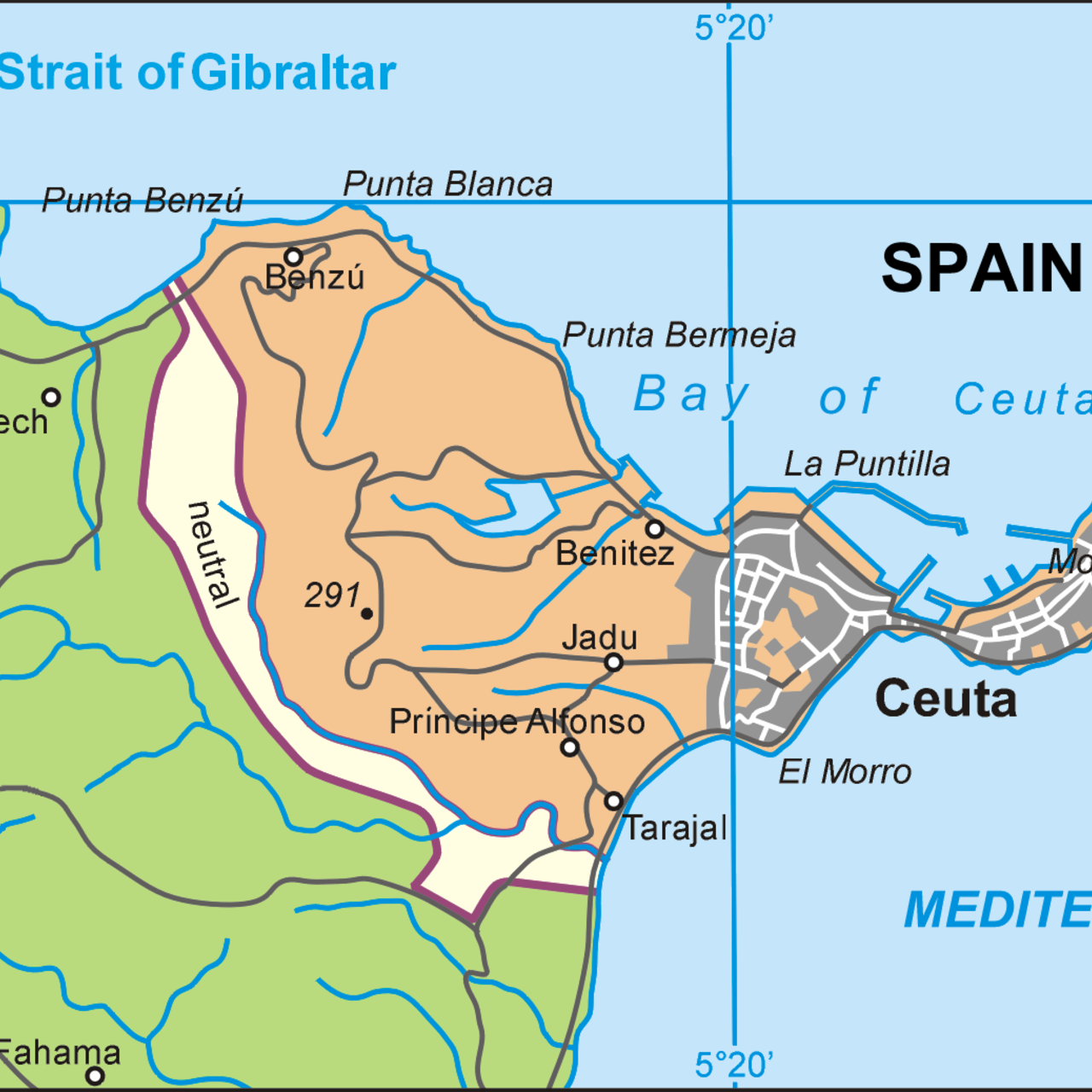
Ceuta is one of Spain's two enclaves on the North African coast (along with Melilla) — small pieces of EU territory, on the African continent, bordering Morocco. In late July 2026, an estimated 72,000 people crossed from Morocco into Ceuta in less than 48 hours - the largest such crossing in the territory's history. Most crossed the border on foot or swam around coastal barriers, with many people losing their lives in the process. Up to 141 people are reported to have died while attempting the crossing, with death toll numbers varying depending on the source and date reported.
The vast majority of those who reached Ceuta quickly returned to Morocco - with more than 70,000 thought to have left by the 4th August. While a few different numbers are being reported, approximately 2,000 people are thought to remain in the city, of which around 43% have been registered as unaccompanied children. Those remaining include people from countries currently experiencing armed conflict and humanitarian crisis such as Sudan, Somalia, and Mali, alongside Moroccans and other nationals.
Fact: Ceuta and Melilla have seen recurring border crossing attempts for many years, including roughly 8,000 people in a single incident in May 2021 and a deadly crossing attempt at Melilla's fence in 2022. What's different this time is the scale.
The full facts of how this incident unfolded at a closed and highly securitised border have yet to be established. However, analysts have noted that a crossing of this scale would be difficult without some reduction in controls on the Moroccan side of the border, given the normally high level of cooperation between the two countries. Morocco's government denies deliberately tolerating the crossings.
Distorted versions of the event have circulated on social media, with some far-right and anti-migrant groups weaponising the story - including framing it as an "invasion" to push their own narratives.
The reality is that despite the scale of the event, Spanish authorities brought the situation under control within about 24 hours of the peak, and the vast majority of people had returned to Morocco within hours or days. In fact, the incident and how quickly it was controlled contradict the far-right narrative that European borders are porous or easily overwhelmed.
Fact: Not a single person to have reached Ceuta during this incident is believed to have reached mainland Spain, let alone other European countries.
Ceuta is outside the Schengen area - the EU’s open-travel zone. A person who enters Ceuta without the appropriate documentation has no way to enter the Schengen area: anyone travelling from Ceuta to mainland Spain still needs to pass identity and document checks, which have been strongly upheld throughout this episode.
While the Italian government suspended the Schengen border agreement with Spain, critics - including domestic opposition figures in Italy - have noted this is largely symbolic.
There is no evidence of anyone from Ceuta reaching mainland Europe. The people who remain in Ceuta with the intention of applying for international protection are now in a legal and practical limbo, with limited access to support or clear pathways to request protection.
Fact: A group of 22 EU governments has written a letter claiming that the Spanish government’s regularisation programme, designed to grant legal status to undocumented people in the country, was a “pull factor” which sparked this episode. However, there is currently no evidence linking the policy to this specific event. The regularisation programme only applied to people already living in Spain before the end of 2025 and the deadline for applications was in June 2026 - so it would not apply to anyone arriving after that date.
Spain's Foreign Ministry has rejected the claim directly, stating the incident “has nothing to do with the regularisation of migrants” whilst Prime Minister Pedro Sánchez called the response of his EU allies “selfish, polarising and unlawful”.
In general, framing people’s irregular movements as a problem caused by “permissive” domestic policies ignores the reality that, in many contexts, people have no access to safe and legal routes to cross borders and seek protection.
Fact: Seeking asylum is not a crime. Under international and EU law, the right to seek asylum applies regardless of how someone enters a country or where they are from. The reality is that there are very few legal ways for people seeking safety to reach Europe, and they are often difficult - if not near impossible - to access. If the EU and its member states expanded and created more safe routes, people would not be forced to risk their lives on dangerous journeys in search of protection.
Human Rights organisations are calling for Spanish and Moroccan authorities to ensure access to the asylum system for those who request it, provide urgent humanitarian assistance to those in need and uphold international law and human rights irrespective of mode of arrival, without discrimination.