Syrian refugees
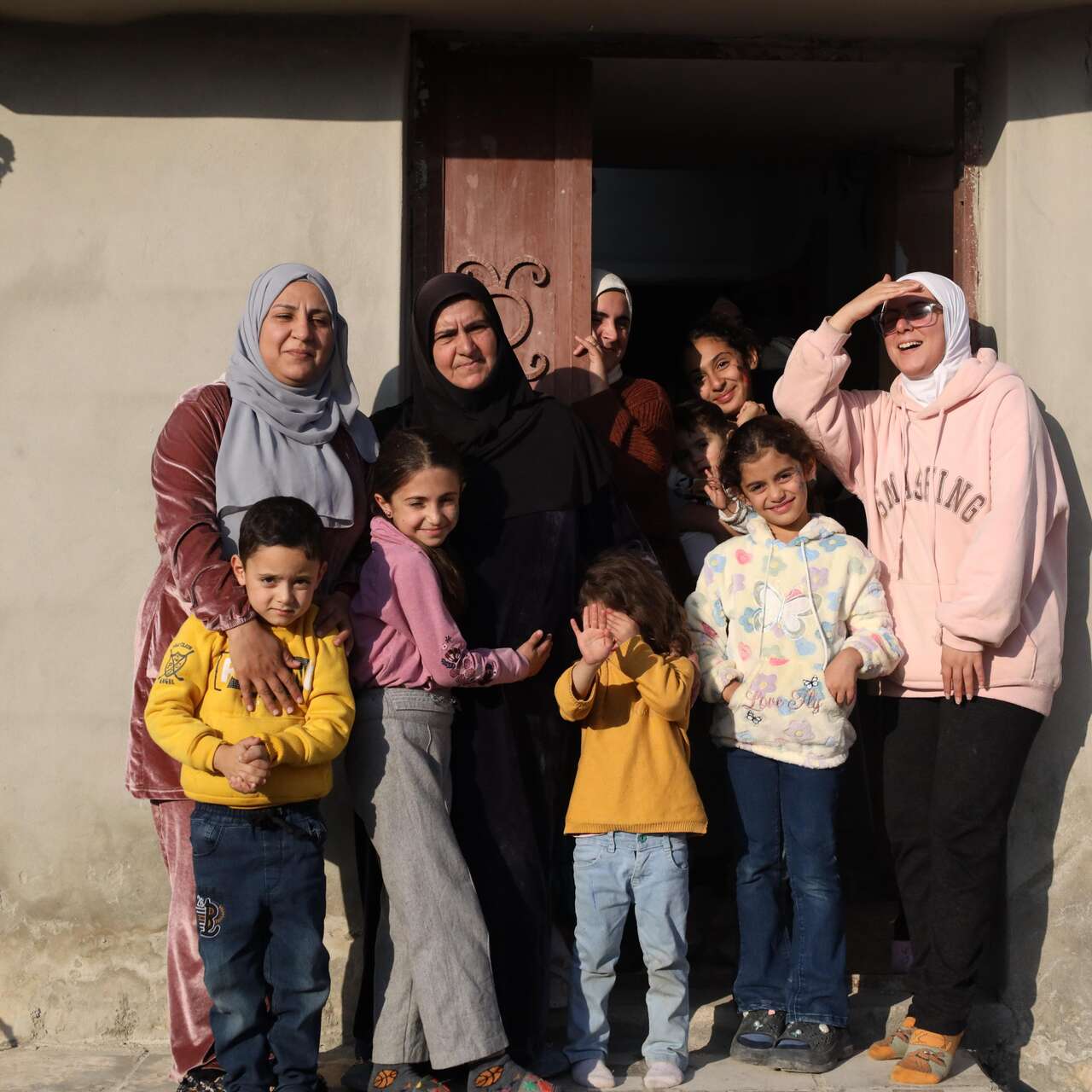
In the Syrian city of Homs and nearby areas like Al-Qusayr, some returning families are now struggling to meet their daily basic needs. Homes remain destroyed or only partially repaired, and while streets once filled with rubble are slowly clearing, electricity, water, and health services remain unreliable. Now, as winter sets in, children are falling sick without reliable access to medicine or medical facilities, mothers worry about heating with limited access to fuel, all while the emotional scars from more than a decade of conflict and displacement persist. Yet returnees like Bayan and Mohammad find ways to keep life moving forward, with parents pushing to keep their kids in school, rebuild their homes, and find new livelihoods.
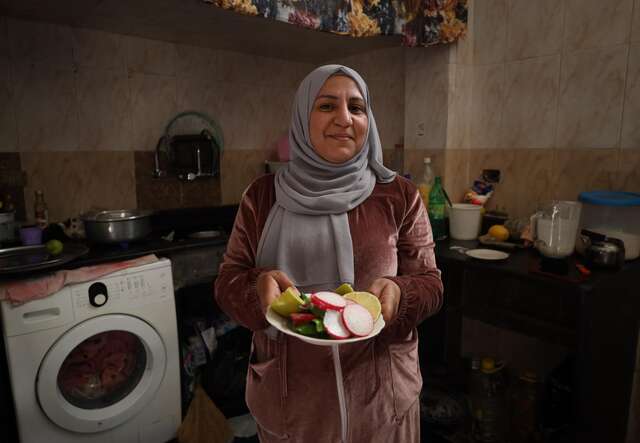
Bayan, 32, fled Al-Qusayr with her family in 2013 after shells hit their shelter, carrying her injured aunt for miles, in search of safety. In an informal camp in Lebanon, she birthed four children in tents, hauled water daily, and at times needed to burn notebooks for heat. "The cold was bitterly harsh. We had never experienced such cold in our lives," she recalled.
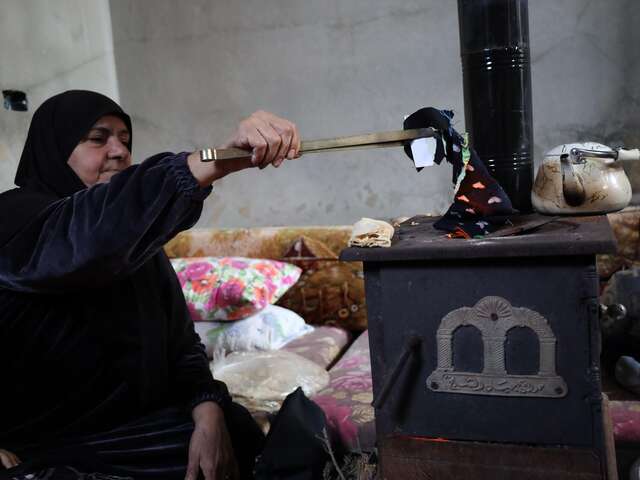
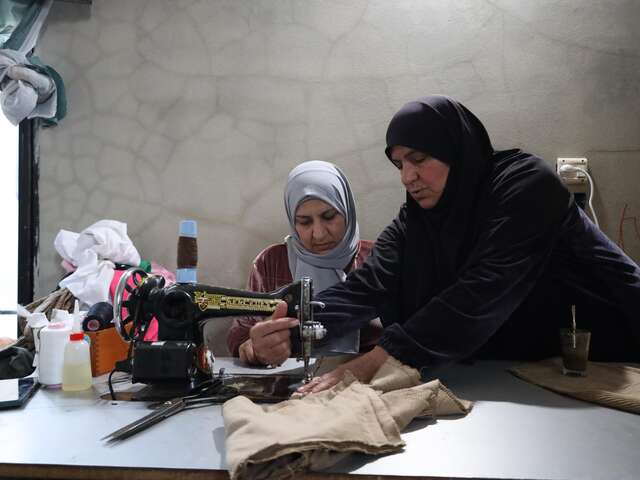
Back in her mother's looted home in Homs, Bayan sews as the sole breadwinner, but winter looms with broken doors and no fuel for heat. While displaced in Lebanon, Bayan’s mother attended psychosocial sessions and sewing classes at an IRC centre funded by the European Union (EU). Her daughter joined child activities to help build her confidence, and Bayan took communication skills, computer, and sewing courses. She also volunteered and worked on child-centred education projects. "I learned a lot from the IRC on how to deal with children, how to communicate with parents," she explained. Today, she vows, "I will never leave my country again, never ever."
Mohammad, 38, left Al-Qusayr due to the conflict, and once safely in Lebanon, worked 12-hour shifts for meagre pay to provide for his family. "Every month we were barely getting by," he explained. This was before Mohammad and his family returned to their hometown of Homs, which has now been reduced to rubble. Shocked by deserted streets in a town where he lost many loved ones, he fixed his late brother's house, reopened a shop, and helped build a football field for kids in an effort to revive his former community.
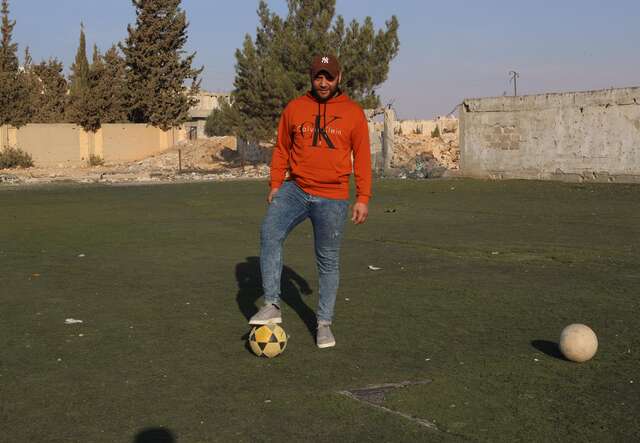
“We found this spot as the most suitable place to build a new football field. We were able to create a field for the next generation to play. We also come every week to play matches. We set up goalposts lengthwise and widthwise, and there are additional goalposts so matches can be played. This is the Al-Qusayr Sports Club.” - Mohammad
Mohammad’s mother stresses, "We’re freezing. We still don’t have any fuel or a heater." In Lebanon, his wife joined IRC parenting workshops that taught families how to handle children and manage stress after displacement. Mohammad recalls their positive impact because they helped displaced families regain stability. "The IRC offered programs like teaching parents how to handle their children. Many people benefited.". He urges, "Syria now needs the whole world to stand with it."
The fall of Assad’s government in December 2024 sparked cautious optimism among Syrians that lasting peace may finally be within reach. Yet, the country’s security landscape remains volatile, and humanitarian needs are immense. Paired with a collapsing economy, 90% of Syrians are in poverty, and 16.5 million are reliant on humanitarian assistance to survive. At the same time, humanitarian and development funding to Syria is stagnating - in 2025, only 36% of the humanitarian response plan was funded.
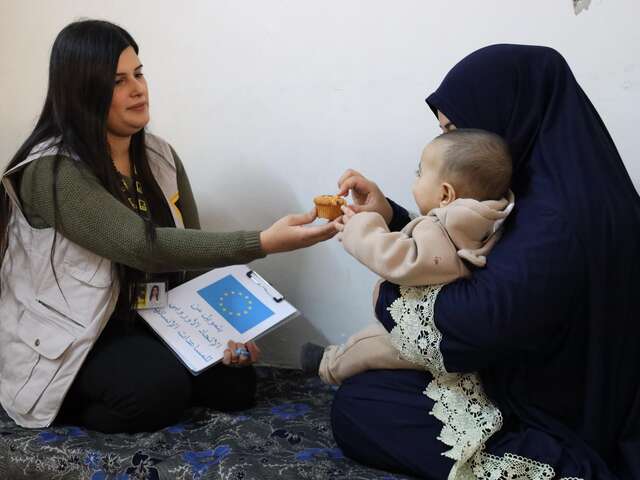
Despite these difficulties, thousands of families like Bayan’s and Mohammad’s are now returning to Homs after spending years displaced either inside or outside of Syria. With more and more people returning to their old homes, there has been a huge jump in demand for basic health care, mental health support, and protection services. Local hospitals are poorly equipped with few doctors and a shortage of medical supplies. Children lack safe places to play and heal from trauma. Women face growing risks of gender-based violence (GBV) without clear paths for help. The IRC, working with Syrian partners, is trying to meet these gaps. They offer doctor consultations, safe childbirths, mental health and psychosocial support, and supplies of essential drugs that communities in Syria are lacking.
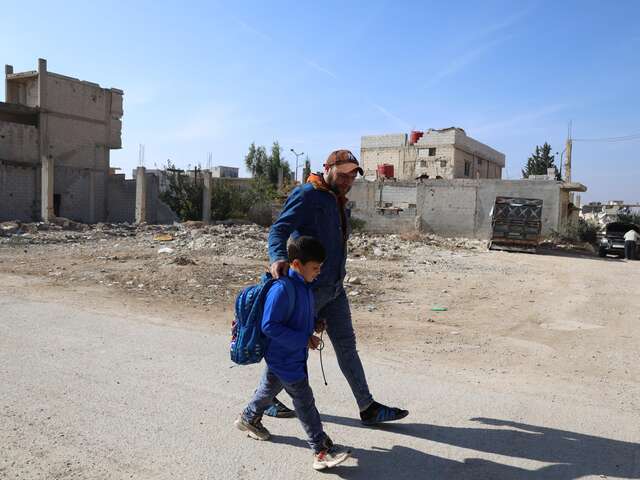
While Bayan and Mohammad's families chose to return, EU and international law make it very clear that nobody should be forced back to a country where their rights cannot be guaranteed or their life put at risk.
With support from the EU Humanitarian Aid, the IRC supports 12 health facilities across Syria, including in Homs. We work through partners such as the Syrian American Medical Society (SAMS) and Hope International Humanitarian and Development Foundation (HIHFAD). These facilities include three hospitals, eight primary health care centers, and one mobile medical unit. Services cover basic and hospital-level care, care for mothers and newborns, and mental health and psychosocial support. In Homs and northwestern Syria, we provide case management for gender-based violence, psychosocial support sessions, life-skills training for women, child protection casework, parenting programs, and better links between sexual and reproductive health and GBV programs.
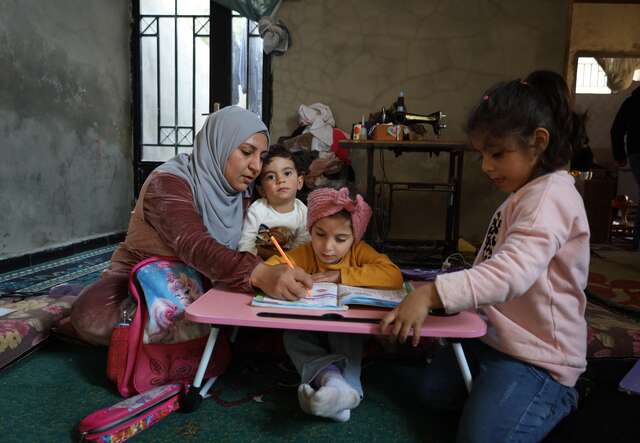
“My daughter is in sixth grade now. She arrived here in the second semester of fifth grade, and now she’s in sixth. Thank God, our daughters are among the top students and everything has gone well for us in terms of their education.” - Bayan
Today, IRC continues engaging returnee families like Bayan’s and Mohammad’s by sharing awareness messages and the locations of where they can access critical support. In Homs, where IRC offers both protection and health services, these efforts help families access what they need to reintegrate.
More EU and international funding could support the expansion of these vital efforts to reach all returnees with timely health consultations, protection casework, winterization aid, and access to livelihoods. With sustained support, Bayan and Mohammad's hopeful dream of a flourishing Syria where families can safely rebuild can become reality.

The International Rescue Committee partners with the European Union to provide life-saving support to people caught in conflict and disasters around the world. Our work funded by the EU enables people to survive, recover and rebuild their lives.