Healthcare in Yemen
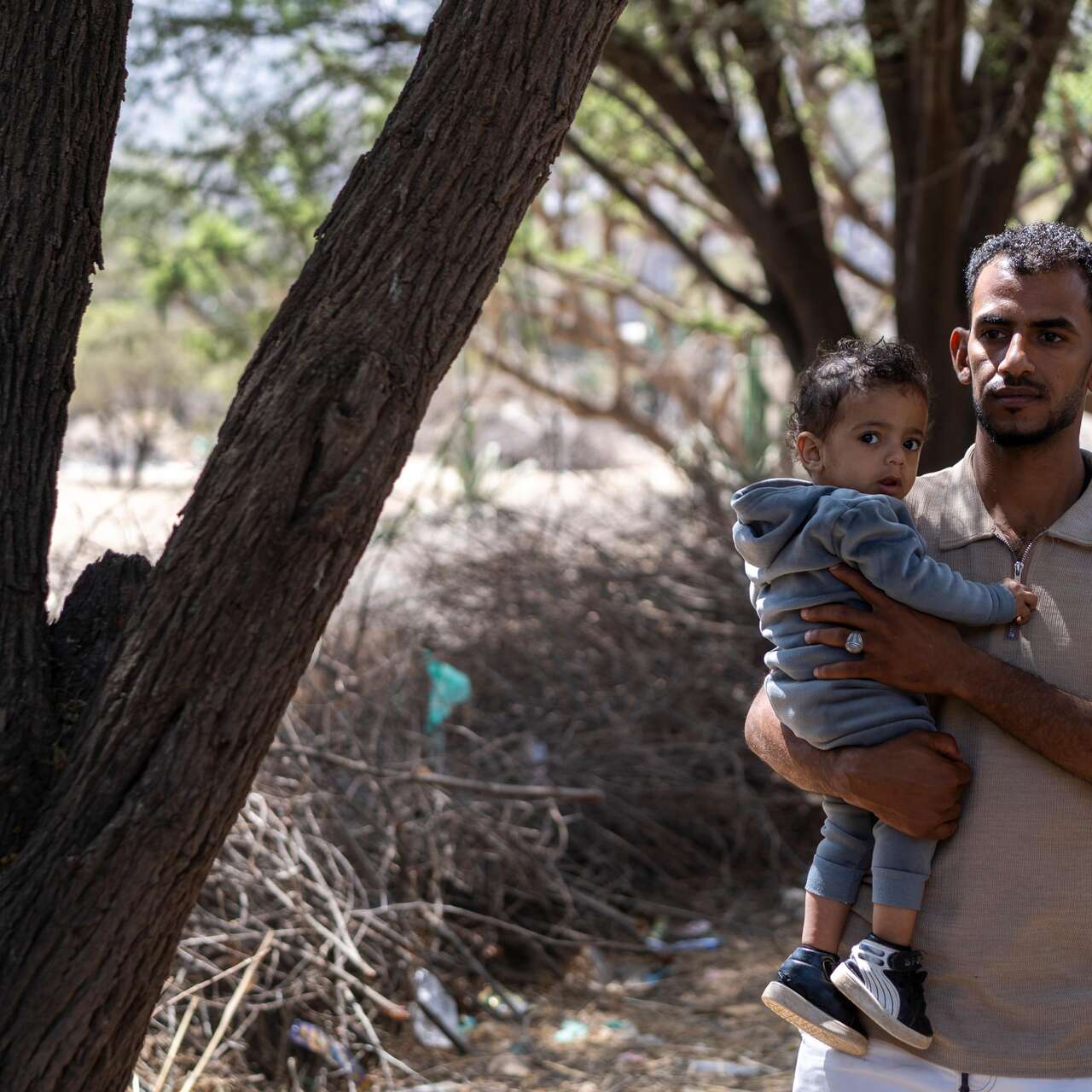
In Yemen’s Al Dhale'e governorate, families like Nader’s struggle with low incomes, high prices, and limited access to health care, which makes it hard to keep their children safe from illness.
With support from the European Union, the International Rescue Committee (IRC) works with community health workers like Wahda to bring free treatment closer to families so their children, like one-year-old Aws can survive serious illnesses.
27-year-old Nader, who lives in the village of Ghol Sumid in the southern Al-Dhale’e governorate, works as a daily wage worker. Following his father’s death, Nader supports his extended family by using a motorbike to earn a daily wage. “We have a big family with many children,” he explains. “We try to provide them with as much food and other essential things as we can.”
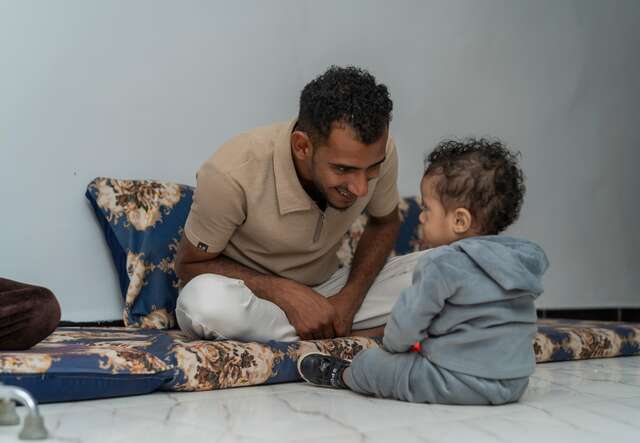
Living on meagre wages, Nader’s family struggles to afford basic necessities. “We struggle to get food, we struggle to survive,” he says. “Working using the motorbike doesn’t provide enough money to buy food. We use it to buy bread and rice. Sometimes, if we need medicine, we can’t afford it.”
Before Nader’s one-year old son Aws got sick, he was an active baby. “My son’s life before the illness was normal. He was in good health. He had a very good appetite. He ate, drank, and played,” Nader recalls.
Then, everything changed. “After the illness, his temperature rose. He lost his energy. He lost his appetite. He constantly cried.”
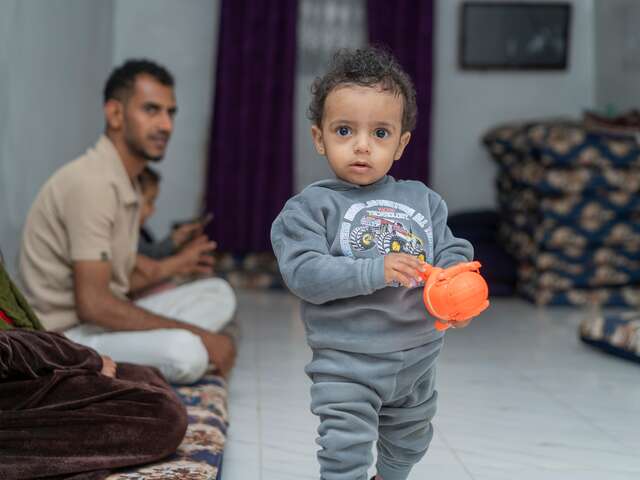
Nader remembers the fear that followed. “Aws’ temperature rose. He had a cold, a cough, and other illnesses. He was sick for a few weeks. We gave him medicine, but he kept getting sick.” When Aws was finally examined, the diagnosis was serious. “The examination showed [that he had] pneumonia and malnutrition. At that moment, I felt scared and confused. I didn’t know what to do. I knew he was in danger.”
For Nader’s family, getting to a clinic had always been difficult due to the distance and cost. “Four years ago, services were far away, and medical care was also far away, and the cost of treatment was high. We were suffering from the lack of services, health care and the cost of treatment and transportation,” he says.
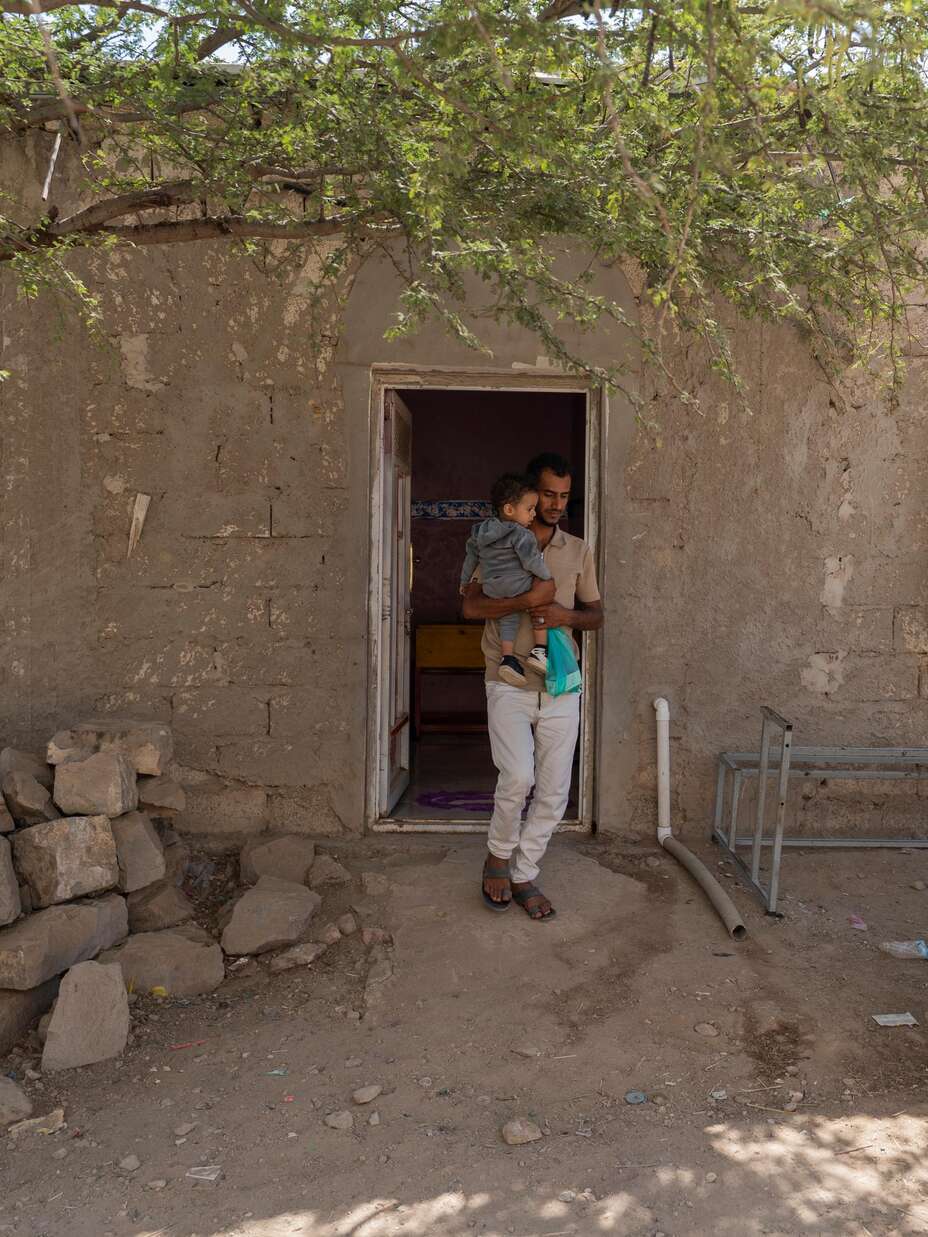
Rising prices in Yemen, coupled with low wages, have put the family under immense pressure. “Now, after the prices went up, the situation has become tragic and sad. We can’t provide [my family] with everything they need,” Nader explains.
Access to safe drinking water is also limited. “We suffer from a lack of drinking water. [The water here] is not suitable for drinking or cooking. We have to bring a water truck, and it costs 60,000 YER (~$38 ).” he says.
Everything changed for Nader when he heard that a nearby health centre in the village could potentially treat sick children for free. He immediately took his son to see Dr Wahda, the IRC community health worker.“ She handled the situation very well. She examined him, and she provided the treatment for free. This was huge for us,” he explains.
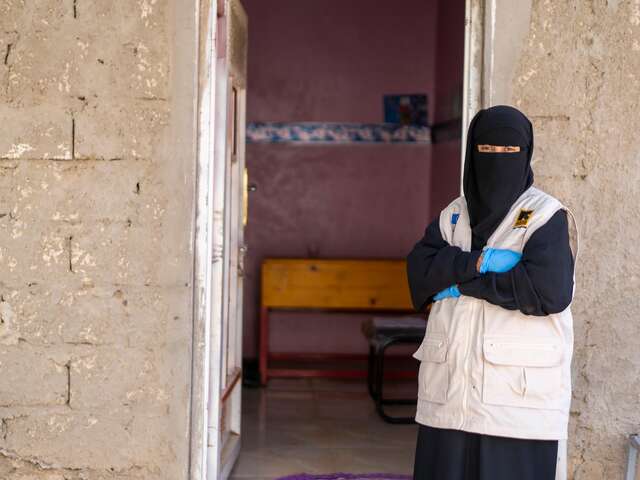
The community health worker Nader met that day was Wahda, who has been working with the IRC in Ghol Sumid for five years.
Together with other community health workers, she assists in identifying and treating common illnesses among children, including pneumonia, diarrhoea and malaria. Alongside this, she also screens children for malnutrition, referring malnourished children to healthcare centres that can treat them.
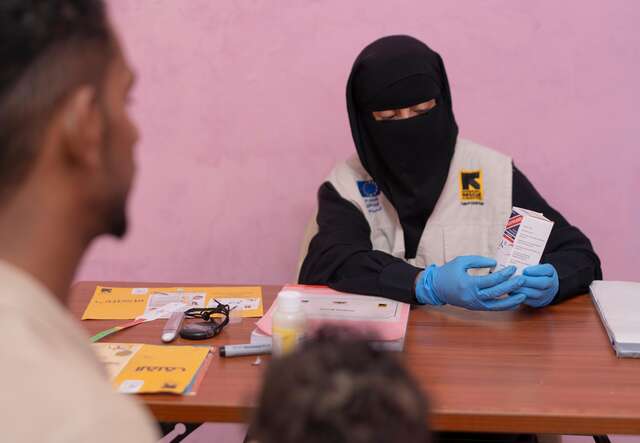
As a community health worker, Wahda sees how critical her services are for families like Nader’s, who live on meagre incomes. “[His son] Aws had been suffering from malnutrition for more than six months,” she explains. She helped diagnose Aws, referring him to a nearby health centre where he promptly received treatment and was given nutritional supplements to begin his journey towards recovery.
"When we diagnosed him, we took him to a health centre, where he was treated and provided with food supplements,” she says, emphasising how hard it is for families to travel.
At the community health centre, Aws received medicines for pneumonia and follow-ups for malnutrition. Nader remembers the relief he felt at that moment.“I took my son to Dr Wahda. When I got worried, she reassured me that he would be cured with medication,” he said. “With time and proper medication, he will recover. There is nothing to worry about.”
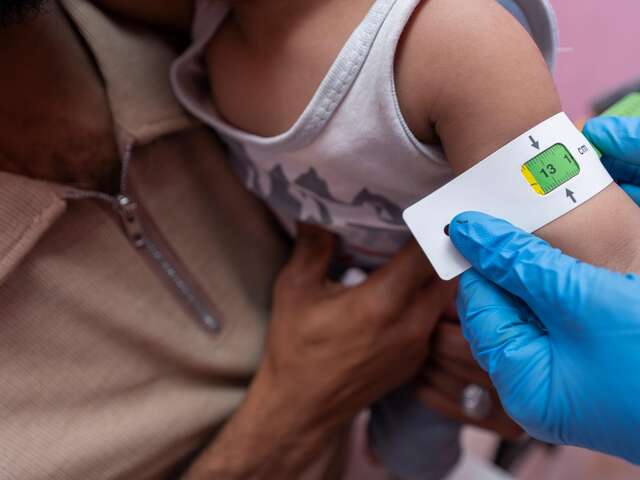
Over time, Aws’s condition improved, and Nader links this directly to having the community health centre nearby that people can visit whenever they get sick.
From Wahda’s perspective, families now seek help earlier. "[Children here] get sick quickly because their immune systems are weak. The first thing [their parents] do when they feel sick is call me. I give them what they need,” she proudly explains.
Despite the hardships of conflict, rising prices, and limited services, Nader finds strength in his family.
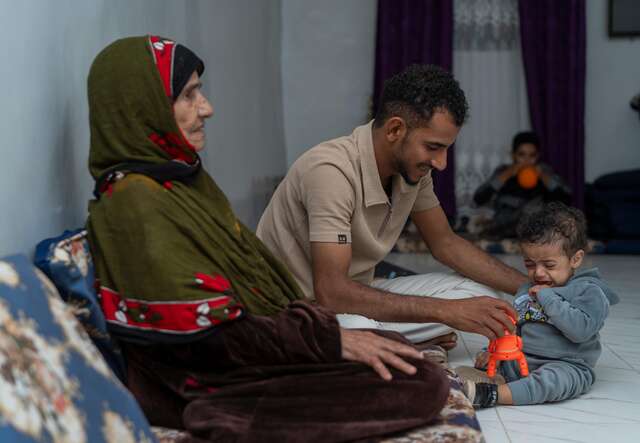
He dreams of a safer future, not just for his children, but for all the children of Yemen, so that they can stay healthy and happy, without the hardship and uncertainty his generation had to face.
“I hope that wars stop in this country and the problems stop, so our children can be safe, and have freedom and happiness, he says. “I hope that they will continue their studies, and that they will not face what we have gone through–these economic, political, and social circumstances.”
Across Yemen, the IRC has been working since 2012 to respond to the long crisis caused by conflict, economic collapse, and widespread food insecurity. In 2025, IRC health programmes reached more than one million people across the country.
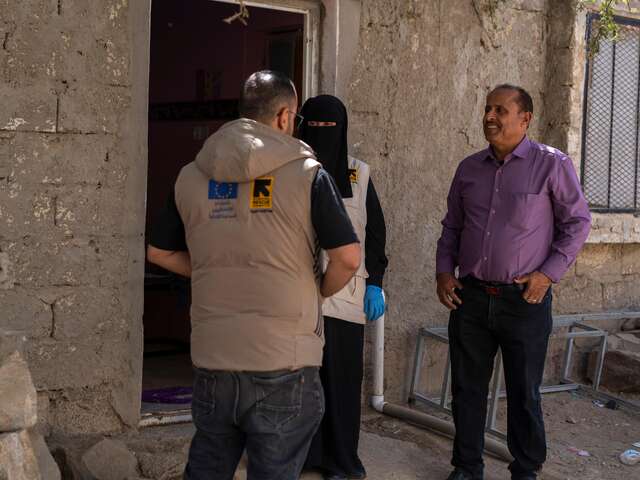
The EU-supported IRC health programme combines health facilities, mobile outreach, and health workers like Wahda to bring essential health care closer to communities. A large part of this model is community case management of childhood illnesses, which means trained workers provide treatment for conditions such as diarrhoea and pneumonia for children aged two months to under five years, refer serious cases, and run awareness sessions on topics such as vaccination and pregnancy care, alongside psychosocial support.
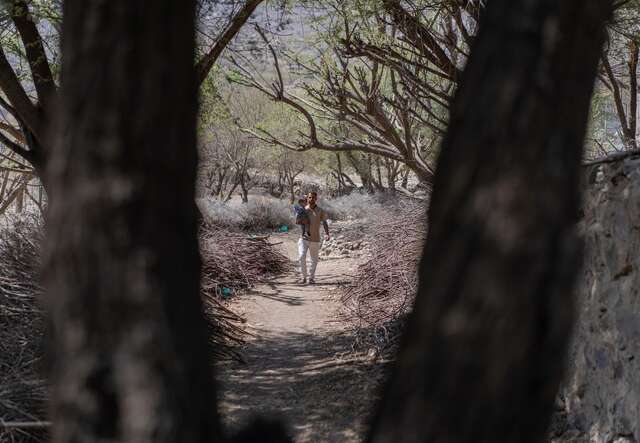
For Nader and Aws, this approach meant free examination, medicines, and follow-ups just a short walk from home, so cost and distance aren’t barriers to life-saving care.
The International Rescue Committee partners with the European Union to provide life-saving support to people caught in conflict and disasters around the world. Our work funded by the EU enables people to survive, recover and rebuild their lives.