Crisis in Mali
Mali is facing one of the most underreported humanitarian crises in the world. Over 400,000 people have been internally displaced by the conflict, with more than half among them being women and girls.
As armed groups disrupt farming and block trade routes, food distributions and access to fuel becomes increasingly difficult—leaving nearly 3000 people at risk of starvation and hunger. Resulting fuel shortages limit the vital functioning of hospitals and water systems, which further restricts access to essential healthcare for crisis-affected populations.
Amid a critical deficit of incoming humanitarian aid, additional funding from the European Union (EU) has expanded the IRC’s ongoing emergency response in support of displaced communities facing a health crisis in the Mopti region of Mali.
The IRC deployed four mobile health clinics to areas with little to no access to healthcare facilities. The team at the mobile clinic established in Tenenkou, located in the central part of the country, offers essential medical care to hard-to-reach communities affected by security, climate and health crises in the region.

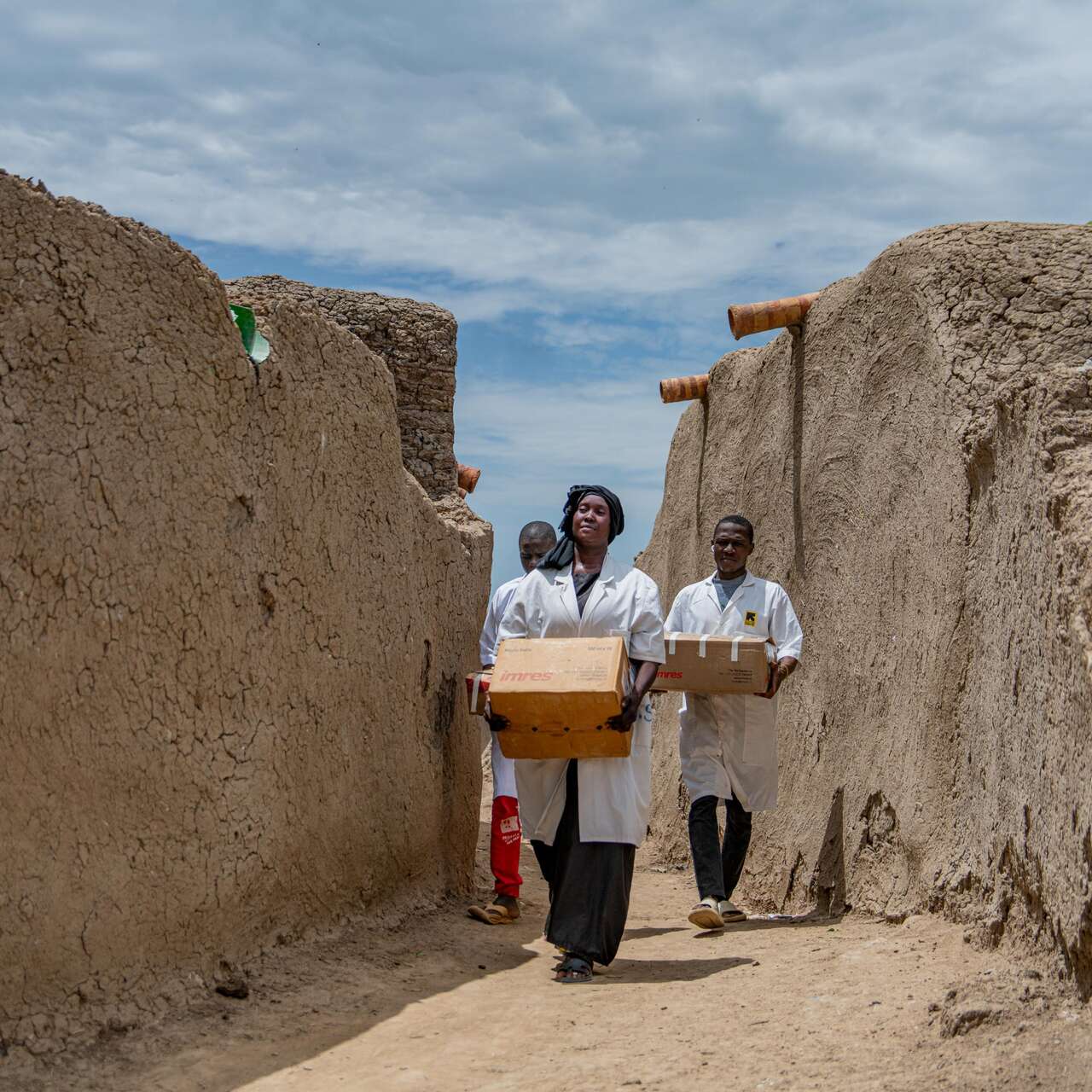
The mobile health team begins their day loading medicines into the car before going into the field in Koubi—a village in the commune of Tenenkou that has no regular access to health services—with the rest of the members, in order to provide free healthcare.
The team provides primary healthcare by treating common illnesses, conducting malnutrition screening, and referring serious cases to urgent care.
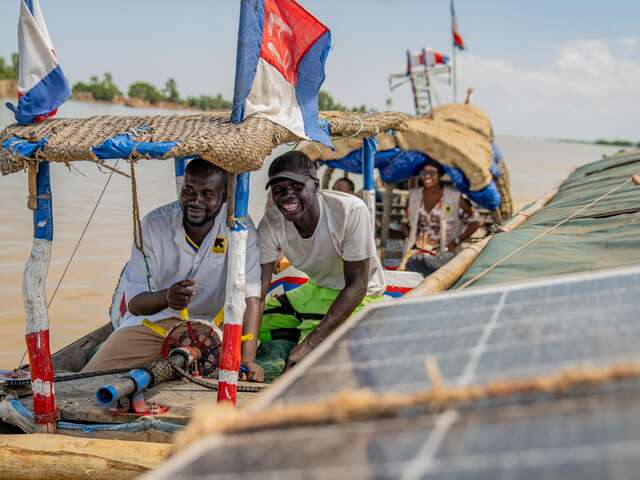
Due to the impact of climate change, the IRC’s mobile health team must often travel by boat to the villages in Tenenkou. During the rainy season, many villages become inaccessible by road and can only be reached through the river.
Yearly, from August to December, the IRC adapts for these situations: by renting boats, or using their own, the EU-funded mobile clinic is still able to respond to the urgent health needs of remote communities—who would otherwise have no access to critical medical services.
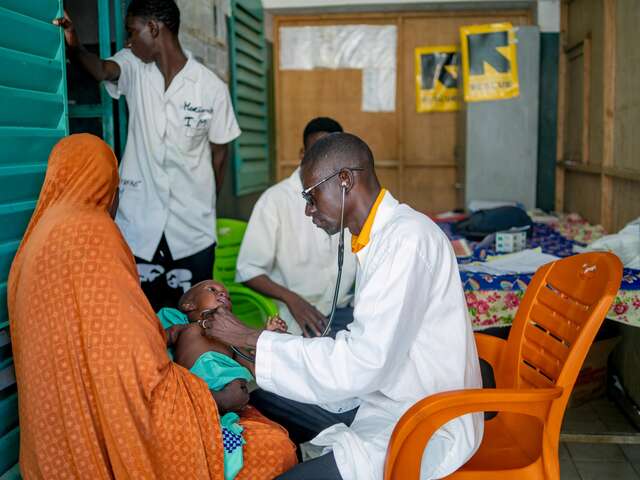
Mohamed, the health team’s supervisor, screens children for malnutrition, acting quickly in cases of early detection. He often treats malnourished patients as young as 12 months old.
He begins his day at the government-run Intensive Nutritional Rehabilitation and Education Unit (URENI), which relies largely on the IRC for funding and support to carry out health services.
By working closely with local partners, the IRC combines health, nutrition and protection services. In addition to mobile health teams, it deploys specialized protection teams that provide vital psychosocial counselling, as well as legal assistance and civil documentation support to help families replace lost identity papers.
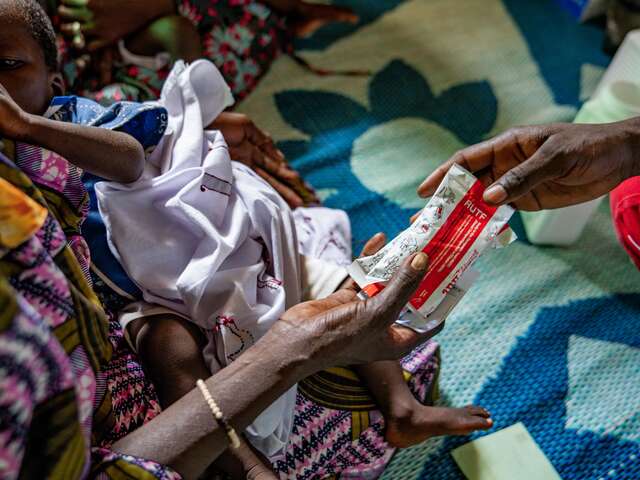
As part of the efforts to treat malnutrition among small children, the team provides the mothers of severely malnourished children with ready-to-eat therapeutic food (RUTF) packets.
The IRC also trains local community health workers to identify early signs of malnutrition, so they can easily detect and work towards countering increasing malnutrition rates in their own villages.
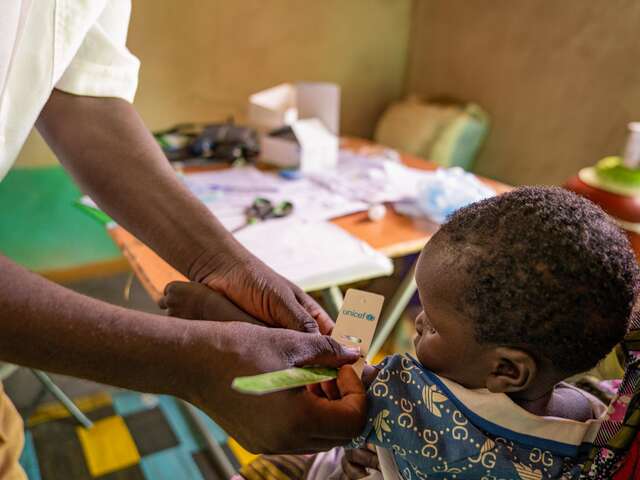
Mody Bolly, head of the IRC health team and nurse at the Tenenkou mobile clinic, checks the circumferences of a child’s arm to screen for malnutrition. This screening is done periodically, to monitor the risk of children relapsing.
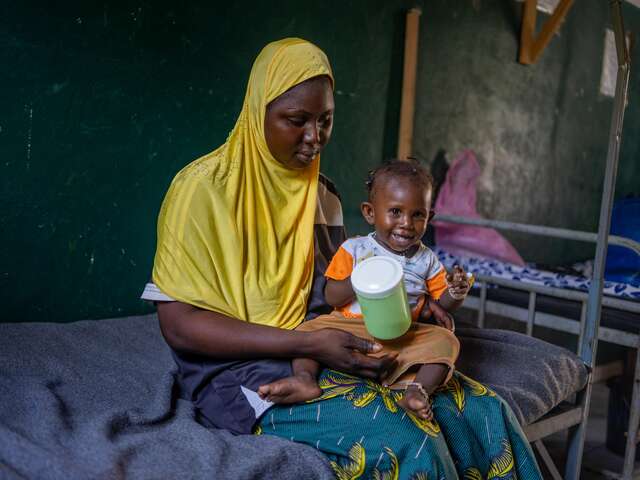
The IRC’s mobile health team mobile clinic provided Fatoumata Kalapo, a young mother, with milk for her daughter Fatou.
Free treatment for malnourished children also includes monthly medical supplies, covers meals for caregivers accompanying hospitalised children, and hygiene kits.
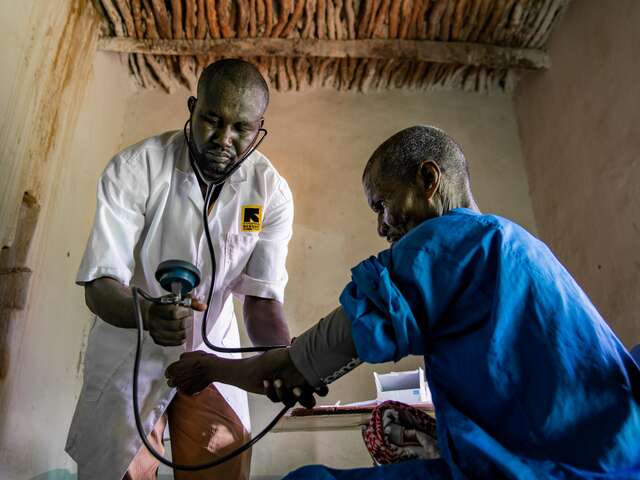
Malaria has become a common disease in the village of Koubi. Mody Bolly examines Aly, a 64-year-old patient, by checking his overall health and searching for serious symptoms to determine appropriate treatment.
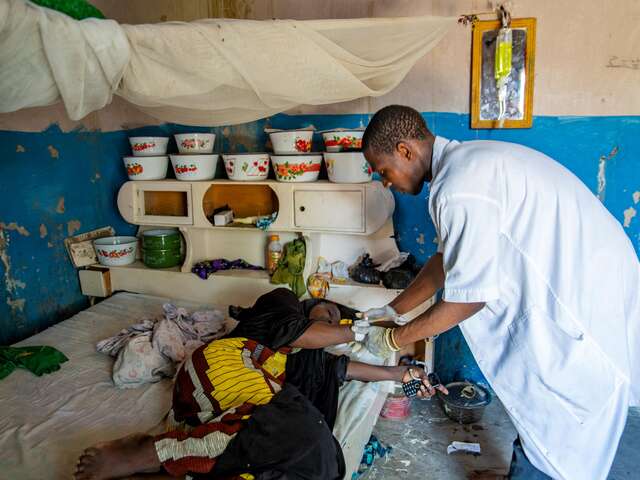
Aissata is a 34-year-old suffering from a case of advanced malaria. During the IRC health team’s visit she receives an infusion as part of her treatment by the team’s vaccinator, Alou Dao.
Alou carries out a rapid malaria test so that patients can receive care as soon as possible to avoid conditions becoming life-threatening.
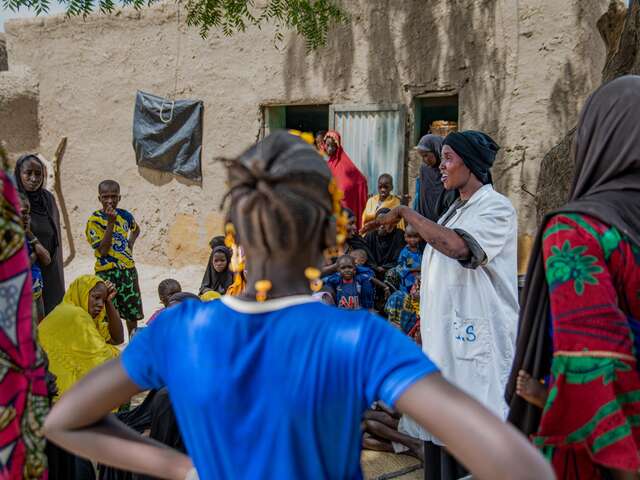
Fatoumata, the IRC mobile health team’s midwife, carries out awareness-raising sessions for women in the community about prenatal consultations and care.
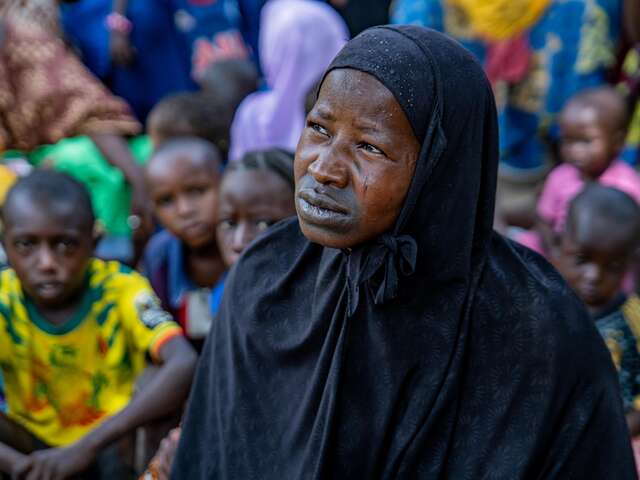
Many women and children in Koubi attend Fatoumata’s sessions, which are one of the mobile clinic’s commitment to strengthening community resilience.
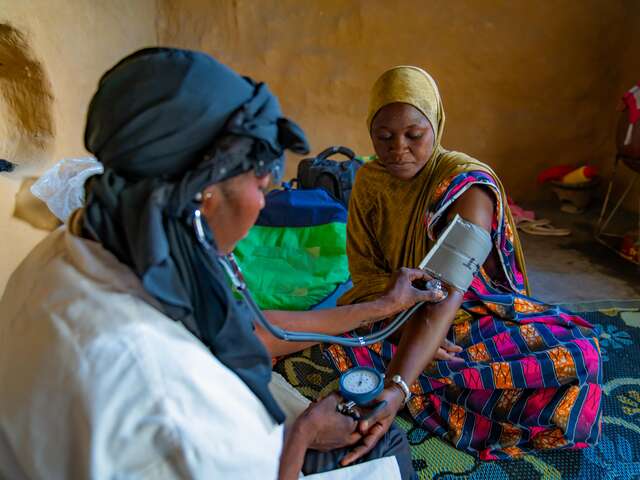
Fatoumata consults with a pregnant patient on the clinic’s visit to the village of Koubi, checking on her vitals to ensure that she and her baby are healthy and safe.
The EU-funded adaptive Rapid Response Mechanism ensures the continuity of IRC’s specialised care by supporting long-term sustainability: a strategy of flexible and cross-sector assistance within 72 hours of alerts allows the health team to dispense water, sanitation, food and shelter requirements, as well as cash transfers, when and as emergency needs arise.
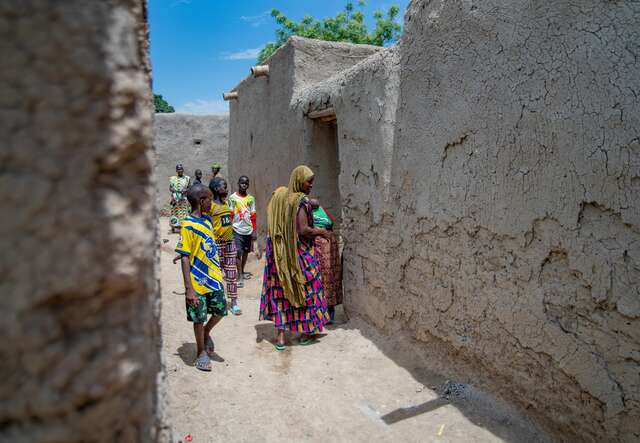
The residents of the village of Koubi are only one of the many displaced communities deeply impacted by the accelerating humanitarian crisis in Mali. As prolonged conflict continues to drive up food insecurity, one million children across the country are left at risk of developing acute malnutrition.
In the face of growing barriers and decreased funding, the IRC’s mobile health teams remain unwavering in their resolve to provide free, life-saving medical services to unprotected Malians devastated by the ongoing crisis.
The International Rescue Committee partners with the European Union to provide life-saving support to people caught in conflict and disasters around the world. Our work funded by the EU enables people to survive, recover and rebuild their lives.