Emergency Watchlist - DRC
The International Rescue Committee (IRC) has been operating in the Democratic Republic of the Congo (DRC) since 1996 , now reaching three decades of dedicated efforts in providing emergency assistance to conflict-affected Congolese people. In eastern DRC, as the humanitarian emergency in North Kivu worsened last year, the neighbouring province of South Kivu also began to see unprecedented levels of ongoing violence resulting in a steep increase in mass displacement.
With funding from the European Union (EU), and through collaboration with local partners such as the Transcultural Psychosocial Organisation (TPO), the IRC initiated a project to strengthen the safety, security and resilience of local communities in South Kivu to protect the most vulnerable among its affected populations.
The health zones of Minova, Shanje, and Numbi in South Kivu are particularly susceptible to suffering the adverse effects of disease outbreaks, rising food insecurity, and climate shocks due to their proximity to protracted conflict and violence in the region. With help from our regional partner TPO, the IRC’s program across these zones focuses at the individual level to support survivors of Gender-Based Violence (GBV) and trauma—many of whom are children. Medical, psychosocial, and legal care, alongside socio-economic reintegration services, are provided to survivors and other vulnerable individuals whose protections and lives are at risk as displacement skyrockets.
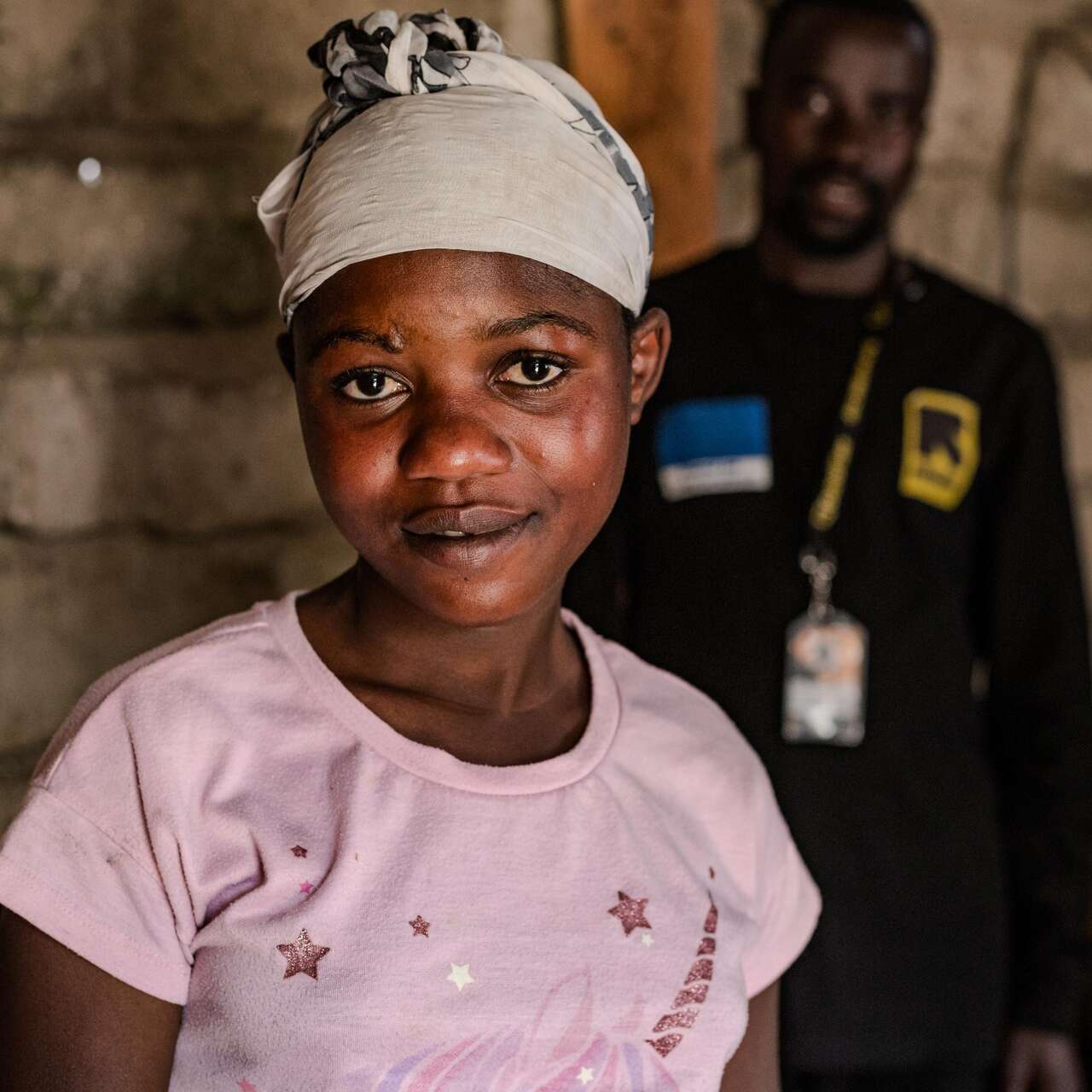
Gentille* is a fourteen-year-old girl who was separated from her family as war broke out in her village in the South Kivu province, in eastern DRC. Suddenly displaced and all alone, she was luckily found by a woman who took her into her home until agents from TPO arrived to begin the process of rehoming her.
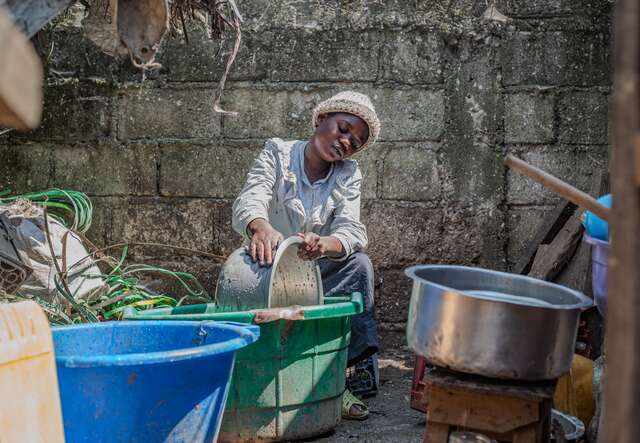
“The day the TPO agents spoke to me,” Gentille explains, “I felt sad because they asked me questions about my parents, even though I didn’t know anything about how they live.” The agents assigned to Gentille’s case were able to find her a foster guardian in Numbi named Fatuma—whom Gentille and the other foster children lovingly call “grandmother”. Fatuma is a 68-year-old mother whose determination to protect and house displaced or orphaned children in her community began many years ago, when her husband left her to take care of thirteen children. She has not looked back since: “I took care of them. Even when I see a child in the street, I tell myself that God would take care of them. I welcome them,” she tells us. “When I see a homeless child, I take them in because I know that street life is difficult. I worry for that child and wish to help them.”
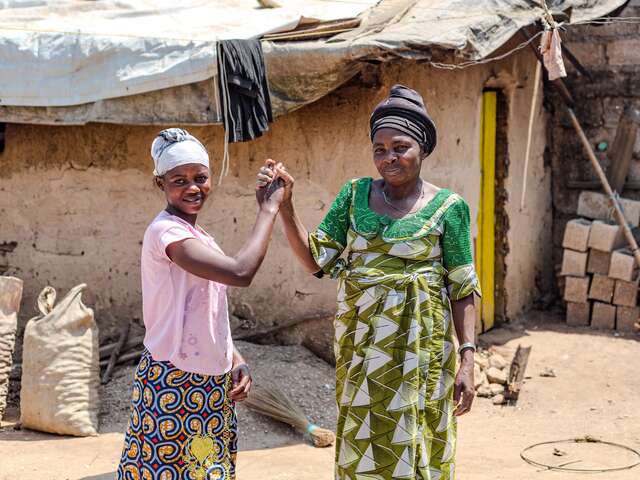
Fatuma completed a training on guidelines for the care of children in temporary foster families organised by the IRC with the support of the European Union. She is currently fostering eight children. She is economically supported through the IRC’s project. Expressing how essential the support has been, for both her own ability to care for the children and also in meeting their educational and psycho-social needs, she says, “With the Community Child Protection Network’s (RECOPE) help, I feel joy. By helping me, they are in fact helping the children.”
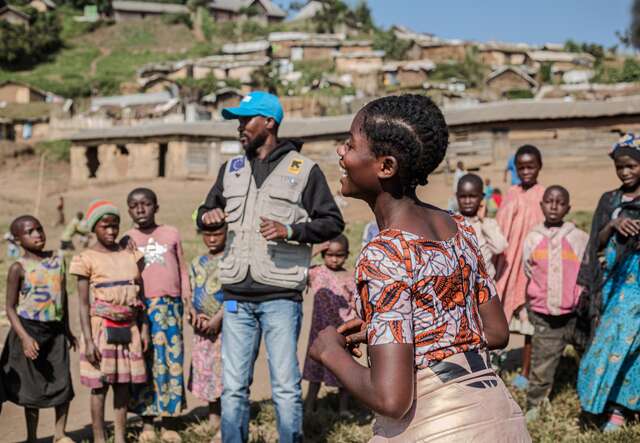
The IRC’s Child-Friendly Spaces centre in Numbi coordinates regular games, creative activities, and also offers educational training sessions for displaced children. The centre provides a space for them to play, learn and heal from their trauma through community-building.
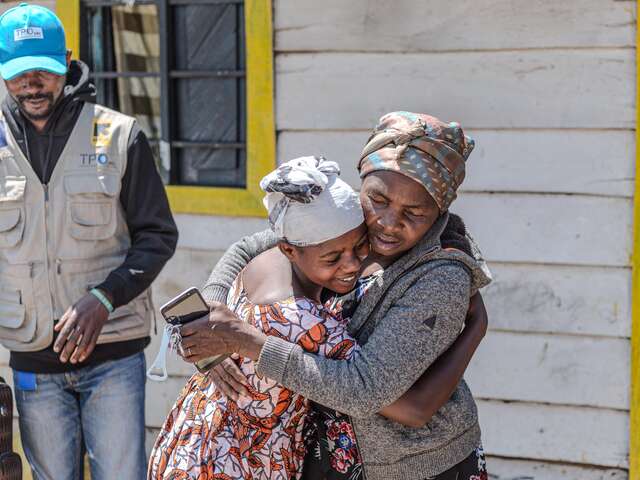
“Most of the time, RECOPE supports me with advice, with food. They also support me with cash and with kits for the children,” she says, “I feel great joy every time I see the children receive their kits. Alone, I could not help all these children.” The children receive emergency kits with necessary supplies—such as clothes, shoes, sandals, cutlery and toothbrushes—to help them get settled into their new homes.
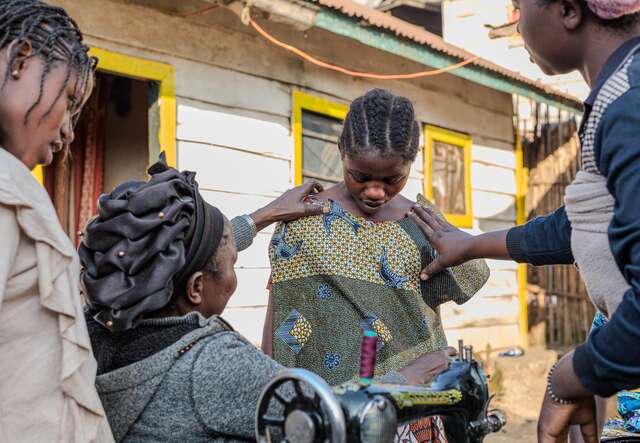
The IRC’s local collaborators work diligently to help displaced children find homes or reconnect with their families. “We are happy when they are here,” Gentille says. “Because they look for parents for us, they took us out of a bad life and brought us into a good life.”
Gentille’s story is one among many stories of survival after displacement. Now, as she is surrounded by her foster siblings, she feels safe. Having recovered a sense of belonging through her new family, Gentille wakes up each morning excited to spend time with them at the Child-Friendly Space. Under Fatuma’s care, she leads a happy life.
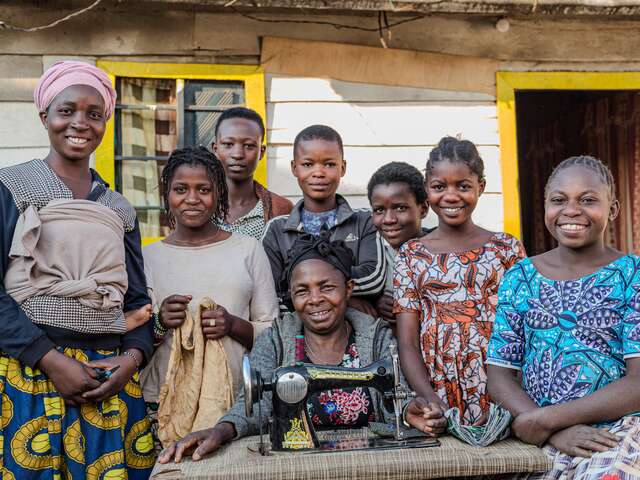
“When we arrive at the space, if we bring speakers, we dance. We play jump rope, we are told what makes us happy, and we feel joyful,” Gentille tells us. The foster family’s daily routine begins with waking up and doing their household chores. Together they fetch water, do laundry, and help each other wash dishes until 2 pm when they begin making their way to the centre for recreation. “There is training in the TPO organisation in which we participate,” she explains. “It can help us in life.” Most recently, the centre has organised handicraft sessions to teach them how to sew.
“What I would like to do most of all is go to school. I would like to become a doctor in the future so I can start treating people and they say that Gentille also studied.” Since the school year had already begun when Gentille joined Fatuma’s family, she is eager to start in the coming year so she can eventually fulfill her dream of becoming a doctor.
As Fatuma recalls the children she has raised she beams with pride. “They were very young when I took them off the street. Today, one of them is in their final year of school,” she explains. “When I see many children playing around me, I feel happy. Thanks to them, there is always joy at home.” Empowered by her training and years of experience, she welcomes children with kindness, treating them as her own, offering them love and protection while they wait to reconnect with their families. Out of the four children she has fostered so far through the TPO, three have been successfully reunited with their families.
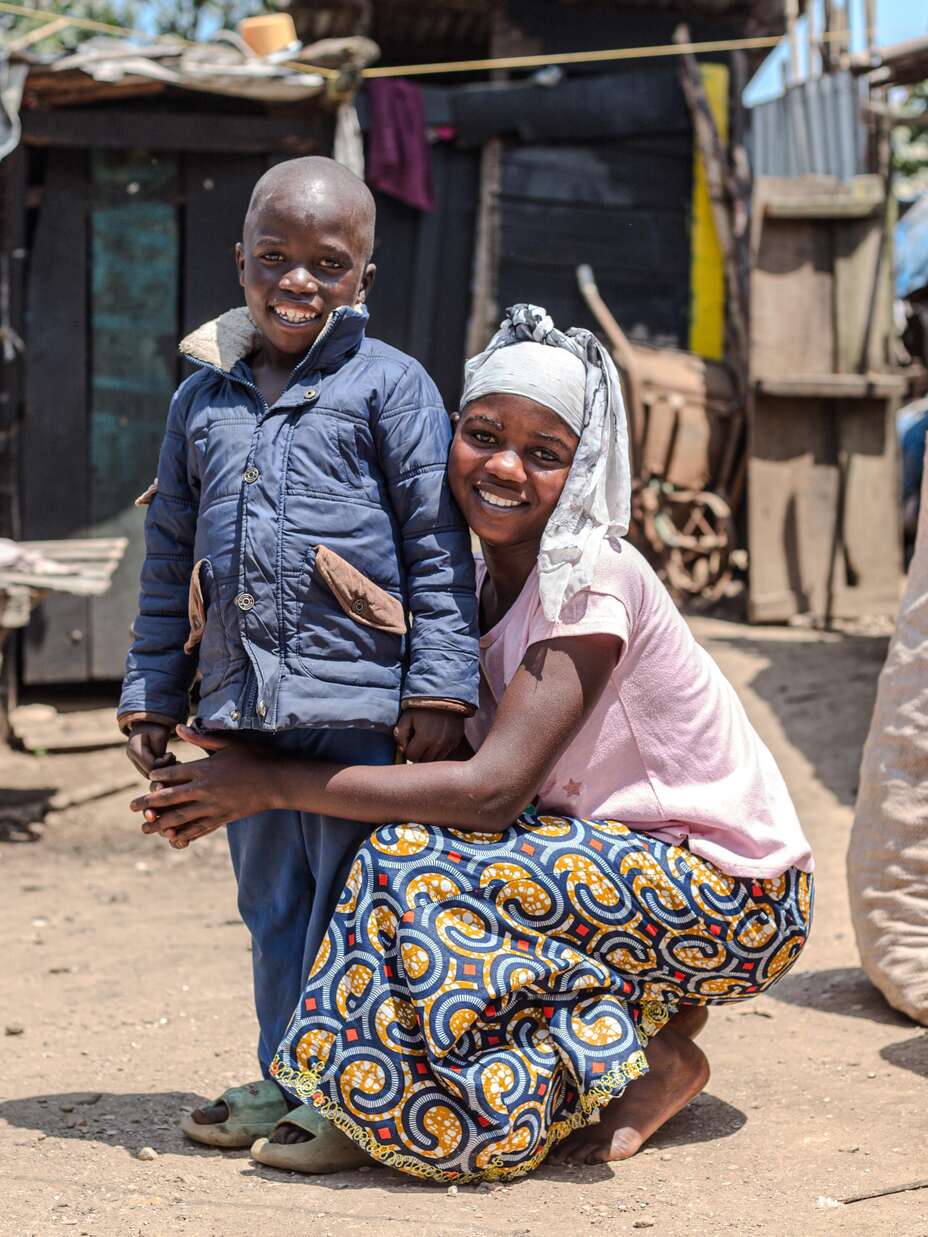
However, Fatuma emphasises how many other unprotected children still need a family and a roof over their head. “There are still many homeless children who have never received any help and who still spend the night outside in poor conditions,” she explains. “We are very grateful for what the IRC’s project has given us. May they continue to support us, and may this project never come to an end.”
With the support of the European Union, Fatuma’s commitment illustrates the strength of the collaboration between foster families and the IRC to provide a safe and warm refuge for children like Gentille. Humanitarian assistance in DRC is now more crucial than ever as millions of people are increasingly unable to meet their basic needs. The IRC will continue to put the needs of those affected by the crisis at the forefront of our mission in order to deliver measurable improvements to the lives of the most precarious communities.

The International Rescue Committee partners with the European Union to provide life-saving support to people caught in conflict and disasters around the world. Our work funded by the EU enables people to survive, recover and rebuild their lives.