Crisis Watch
Violence and economic unrest continue to devastate the civilian population of the Democratic Republic of Congo (DRC). Prolonged political instability threatens to sustain militarised conflict, which is destroying healthcare systems and deepening food insecurity among affected communities that are unable to meet their basic human needs. Already, an estimated 5.4 million deaths have occurred as a result of disease and malnutrition.
In collaboration with the European Union Humanitarian Aid, the International Rescue Committee (IRC) initiated an emergency response to improve the security, safety and resilience of host communities and conflict-affected people in South-Kivu - an area particularly susceptible to the constant violence and mass displacement. A major aim of this project was to focus on rehabilitating individuals and increasing community capacity by providing medical, psychosocial, and socio-economic care for survivors of violence.
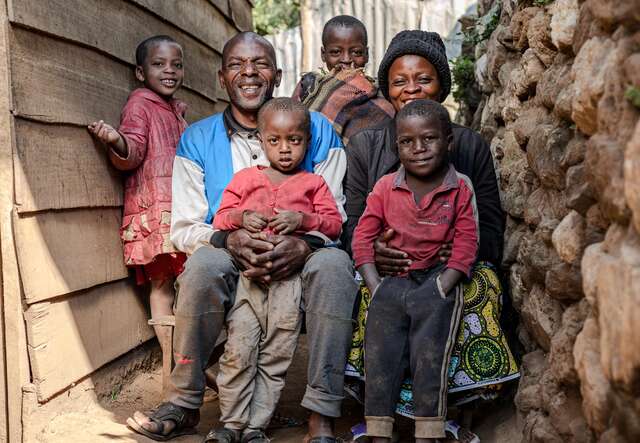
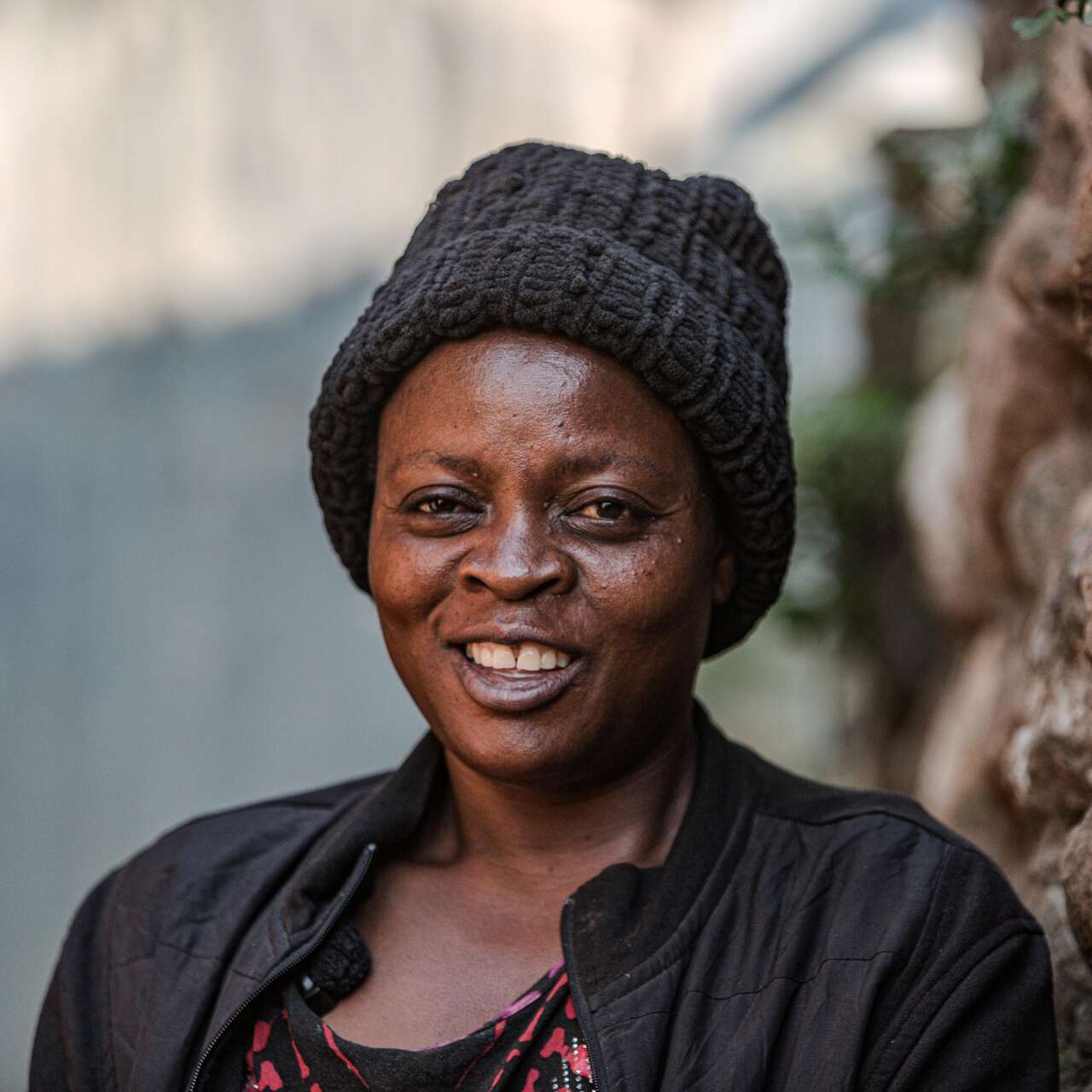
Imani, a 42-year-old mother of nine living in Numbi, South-Kivu, is one such survivor. She was having difficulty adjusting to civilian life after she and her husband left the army. She found it impossible to overcome the atmosphere of fear and brutality that had characterised her life in the army for so many years. Forgetting the violence she was so accustomed to proved to be a struggle to achieve all by herself.
But Imani persevered and eventually reached a breakthrough with the dedicated help of the local CBO (Community-Based Organisation), supported by the International Rescue Committee (IRC) with funds from the European Union (EU). Here, she received the psychosocial support she had needed all along. Through the tight-knit community and its complementary activities, she discovered a healthier way to live her life.
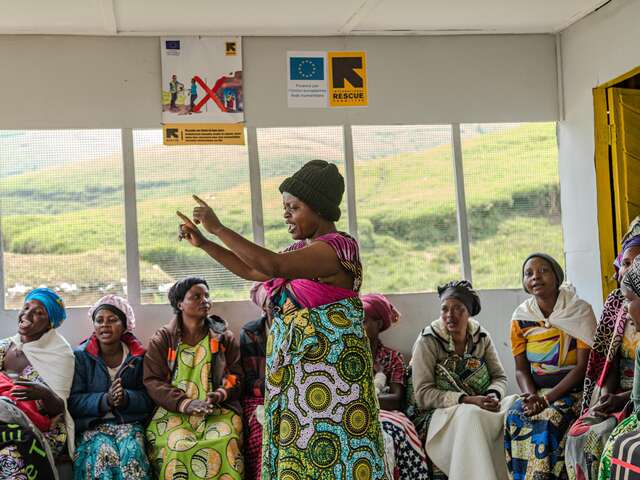
“Through the training I received, I realised that I was going the wrong way,” Imani explains. “The training helped rebuild me; we are all truly grateful for this rebirth and hope it continues to help us all overcome the traumatic events we have experienced.”
Before finding safety in the community, Imani’s day-to-day life was marked by her trauma; she would turn to alcohol to cope, spend her limited income recklessly, and constantly bicker with her husband. Imani’s life finally pivoted in the right direction by chance: she became aware of the services offered by the IRC at the CBO center when, one day, the women of the community arrived at her house to raise awareness about their activities. Most of these women now form her largest pillar of strength.
“What we are taught at CBO is to always move forward as women,” Imani says, “we advise and support each other. We gained a lot of knowledge. And through this knowledge, we learned how to live, which obliged every woman to become self-reliant.”
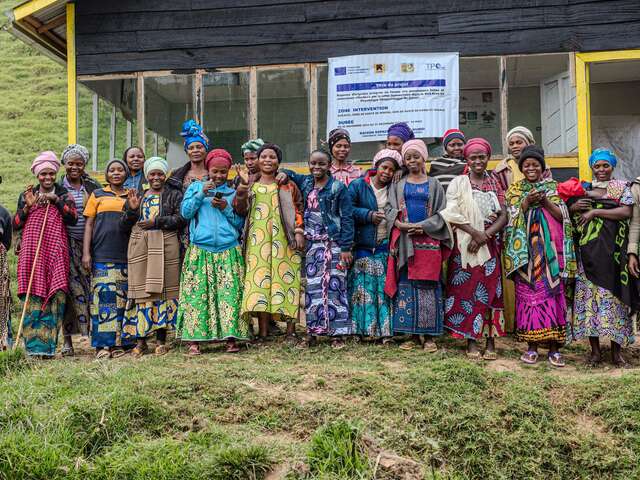
In addition to the critical psychosocial support sessions, participants at the IRC-led community center also receive entrepreneurial training to help them strengthen their financial circumstances so they can become self-sufficient. “IRC helped us a lot because we didn’t know how to start income-generating activities.” Imani explains how these services contributed to changing the lives of her entire family: “Our children were trained too, and it led to a positive change in them. Children who were once undisciplined have become disciplined.”
For Imani, and countless others in similar circumstances, the community centre has been life-changing. Through this community of women—which continues growing with new members—she has found a support system in which each of them benefits from one another.
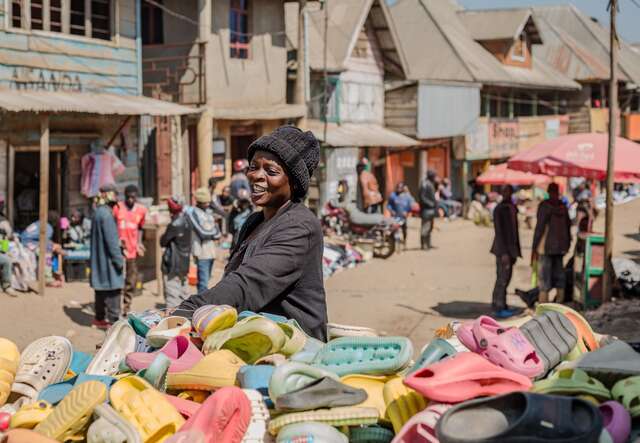
After completing her entrepreneurship training, Imani was provided with cash assistance to help expand her successful business selling slippers. With the profits, she now earns enough to provide for her large family and also invest in the future of her nine children.
“Other women see us as role models and ask to be brought here too; they say, ‘I saw that you changed, and I would like to change as well.’ This is how we became many and continue to move forward together.”
Today, Imani is grateful to finally live the life she has always wanted. Many women just like her are now on the path to a better future, breaking the cycles of trauma that shaped their past. “We did not know what self-reliance really meant,” she recalls. “It is through these sessions that we learned things we never knew before. Without them, we would have remained in ignorance, just living day by day like people without vision. IRC has supported us greatly in our businesses, and we would be very happy to benefit from another project.”
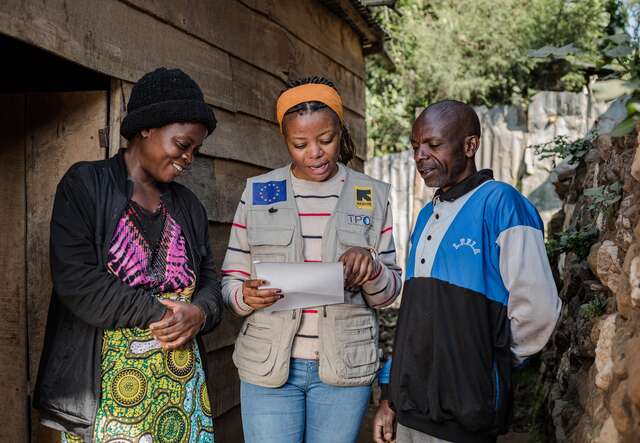
Learn more about the humanitarian crisis and how you can help us provide aid to the Congolese citizens affected by protracted conflict and rapidly rising food insecurity.

The International Rescue Committee partners with the European Union to provide life-saving support to people caught in conflict and disasters around the world. Our work funded by the EU enables people to survive, recover and rebuild their lives.