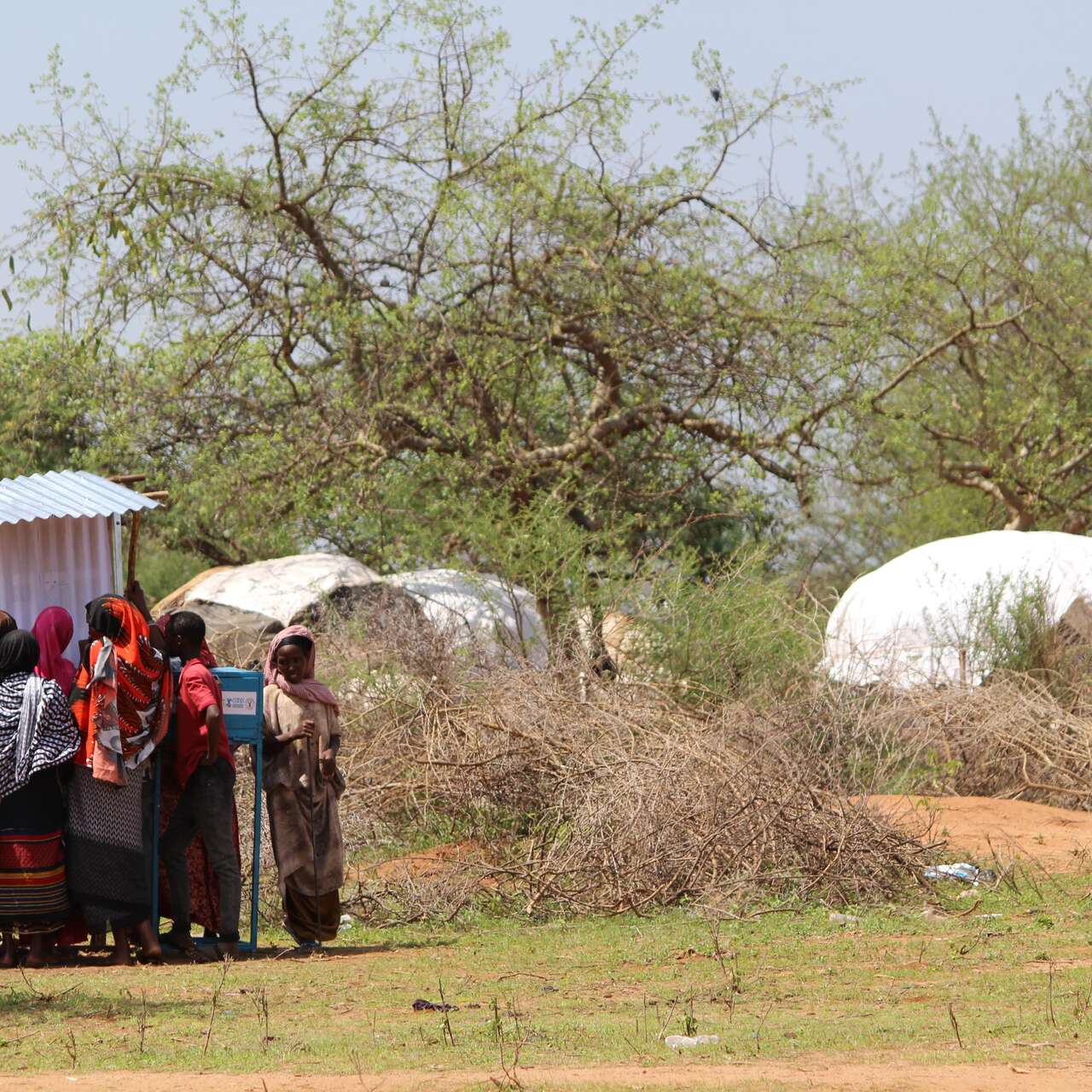
Life during crisis
In Ethiopia, many individuals are faced with forced internal displacement, primarily due to ongoing conflicts and natural disasters, such as earthquakes, drought, or floods.
Fleeing home is never an easy decision—it is often guided by someone’s need to keep themselves and their family safe.
When gunfire erupted close to her home in Melka Adi, Yubo Mulu, a mother of five, could only think of taking her children to safety. “There was no time to take anything,” she said. “We just ran with the clothes we were wearing”.
The journey was difficult and exhausting. With her five children in tow, Yubo walked eight kilometres under the sun until they reached the IDP camp—tired, frightened, and unsure of what awaited them. “I was praying the whole way that we would reach a place where the shooting couldn’t follow us,” said Yubo.
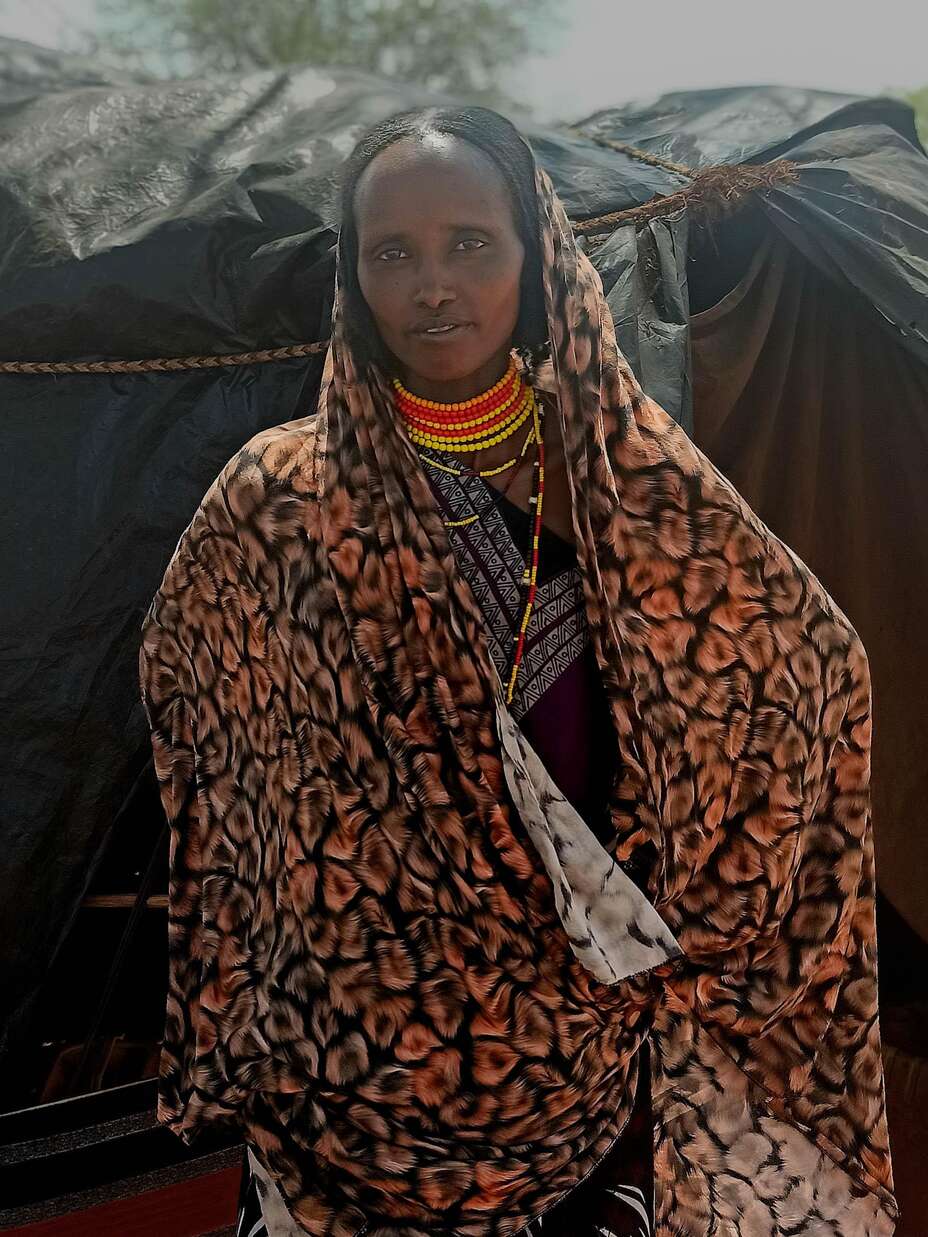
With the support of the European Union (EU), Irish Aid and UK Aid, mobile health units run by the IRC regularly check on her children, offering treatment and guidance when they need it most. With the materials she received to create a makeshift shelter, she now has a roof to protect her family. Cash assistance has allowed her to cover essential day-to-day needs.
Even with these hardships, her hope circles back to home. She longs to return, but the risk remains too high. “We want to go back,” she said, her voice steady. “But it is still dangerous. We are asking for peace—for a way to return safely.”
For now, Yubo focuses on keeping her family safe, drawing strength from what they’ve survived. Her journey reflects the quiet resilience of many mothers navigating conflict and displacement, and underscores why humanitarian aid remains essential.
Protecting his family was also Dulecha Jateni’s main concern when he had to flee his home in July 2025, after the conflict crept towards Melka Adi.
“There was no time to think,” he later recounted. “Only to move.” The forty-year-old father of ten had lived his entire life on the same land—raising cattle, farming small plots, and sending his children to school, with the hope that they would grow into something more than he had ever been allowed to become.
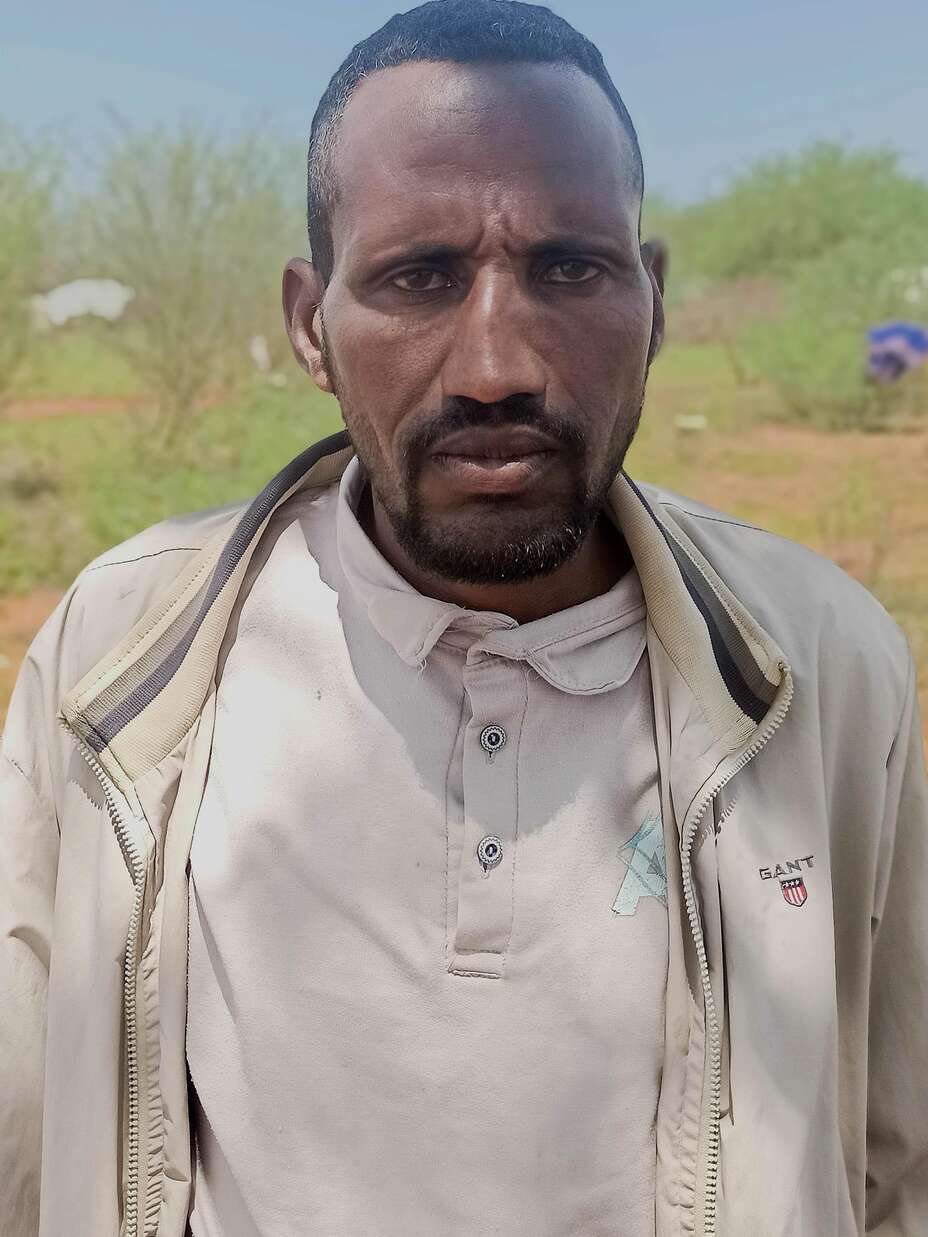
But the conflict changed everything in a single day. He and his family were among thousands walking dusty roads, bringing nothing but the clothes on their backs. “My children kept asking if we would sleep outside,” he recalled. “I didn’t know how to answer.” Now, weeks later, the family lives on the Melka Adi IDP site, miles from the place they once called home.
The shelter he has built from the materials provided through the IRC’s rapid response program stands in a long line of other temporary homes—made of plastic sheets stretched over wooden poles, flapping in the wind. Alongside this material support, Dulecha and his family have also received healthcare and multi-purpose cash assistance, made possible through funding from the EU, Irish Aid and UK Aid.
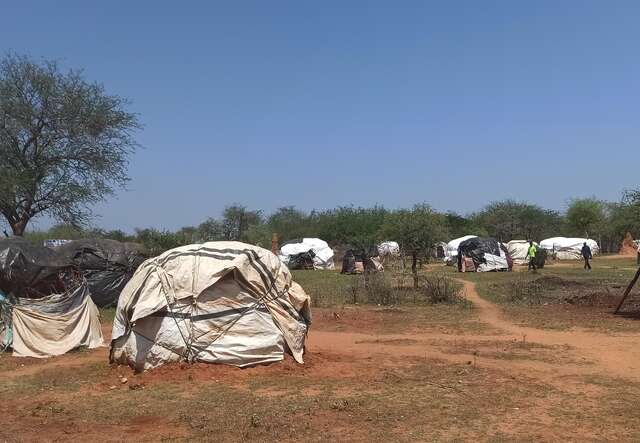
What he longs for the most is home—not just the land, but the life that came with it. He fondly remembers the fields, the school, the sense of belonging.
Above all, the safety allowed his children to dream again. “If peace comes, we will go back the same day,” he said, with a quiet certainty. “That is all we want.”
For now, he watches over his children, trying to hold onto hope while living in a place that reminds him daily of what has been lost. His resilience is quiet but unmistakable—the resilience of a father determined to rebuild, even when the path home remains uncertain.
In another IDP site in Hudet, 33-year old Alima, a mother of eight children, is faced with the same uncertainty. She arrived here from Garbii Didisa after the fighting grew too close. “When the situation escalated, we knew it was no longer safe,” she explained. “We left with whatever we could carry.” She walked for hours, carrying nothing but her children and the fear of what might happen if she stayed.
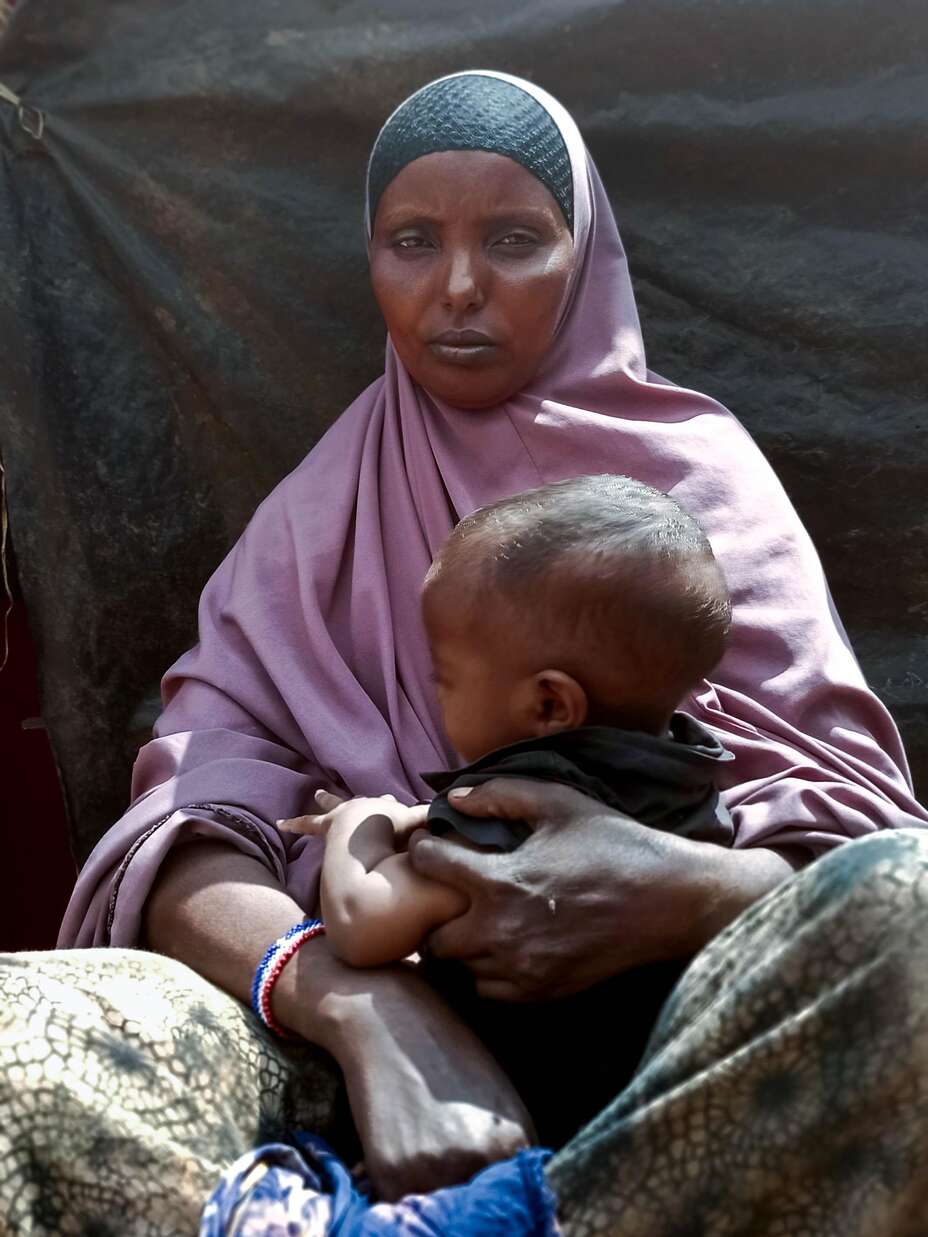
Before the conflict, Alima’s life looked very different. She raised cattle and goats, her family’s main source of income. By the time she reached the IDP site in Hudet, she had only four goats left. She ended up selling even those. “I didn’t want to,” she said, “but my children needed food.”
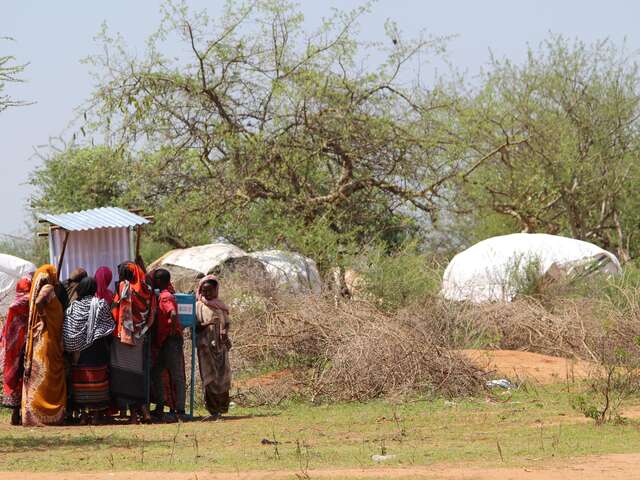
But she is honest about the hardship. There is little food or opportunities to make ends meet. Each day is a choice between stretching what little they have—or going without.
Still, in the middle of all this uncertainty, Alima finds a sliver of gratitude. “At least we are safe here,” she said. “We sleep without fear. Peace, even [a little bit], means a lot.”
Like the others, she dreams of going back home, of rebuilding, of raising cattle again—of giving her children a life that is more than survival. But until peace returns, she holds on to the small wins: clean water close by, a roof she built with her own hands, and the hope that safety is the first step toward starting over.
Life in displacement is far from easy, but support from the Ethiopia Rapid Response Mechanism (ET-RRM), a joint program between the IRC and other INGOs, which is designed to provide immediate and life-saving assistance to populations affected by sudden disasters, such as climate disasters, conflicts, or epidemics, is often critical.
Funded by the European Union (EU), Irish Aid and UK Aid, the program is helping many individuals cope with their situation by providing them with materials to build temporary shelters and homes, medical care, non-food items, cash and access to clean water. These are important steps to allow the displaced populations to regain some control over their lives.

The International Rescue Committee partners with the European Union to provide life-saving support to people caught in conflict and disasters around the world. Our work funded by the EU enables people to survive, recover and rebuild their lives.