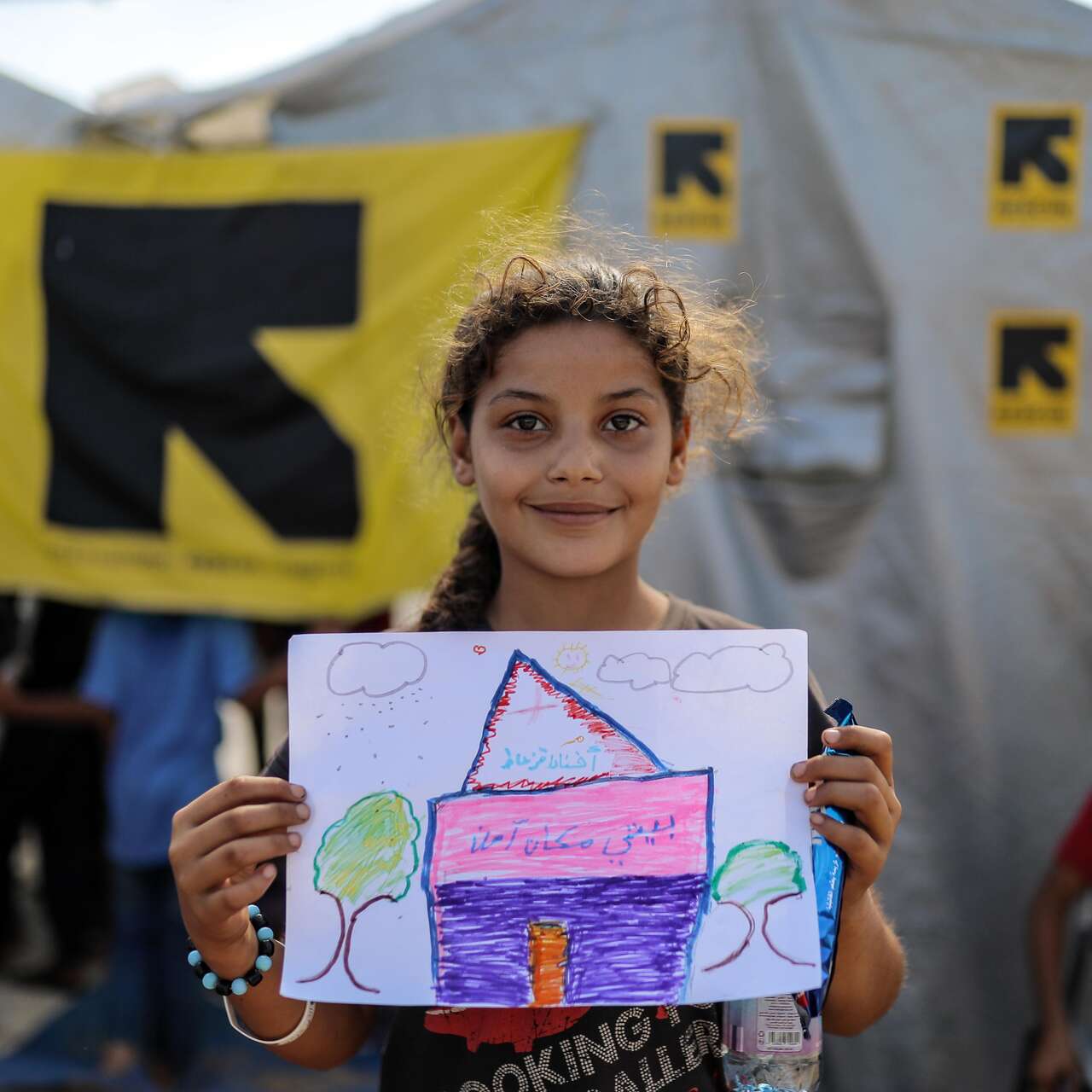
Gaza crisis
The destruction and ongoing humanitarian crisis in Gaza has left 1.9 million people—around 90% of the population—internally displaced, many of them forced to flee multiple times. Among those displaced, an estimated 17,000 children are unaccompanied or separated from their parents.
These repeated waves of displacement have had a profound impact on people across Gaza, leaving many in need of mental health support. Children, in particular, face deep trauma that threatens their emotional development. The effects of the ongoing crisis are clearly visible in their behaviour and emotional well-being, underscoring the urgent need for psychological support and protection services.
Although a ceasefire went into effect on Friday, October 10, 2025, as part of the first phase of a peace plan for Gaza, the humanitarian needs remain immense.
The IRC’s Child Protection program, funded by the European Union, provides vital care, including psychosocial support, to children and families experiencing psychological distress. Leading this effort is Faten, the program’s manager, whose work brings comfort, stability, and a sense of routine and structure to displaced children in Gaza.
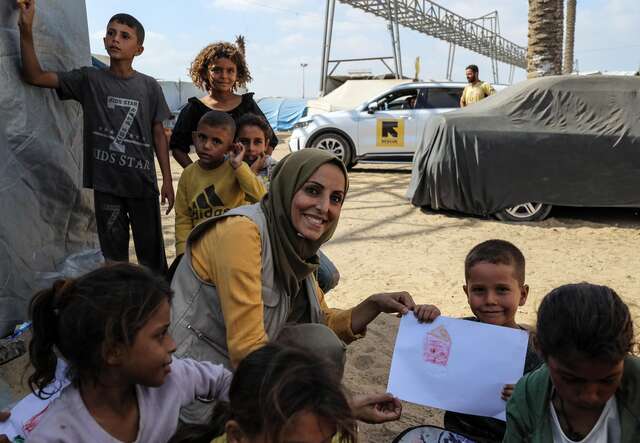
Like many aid workers and volunteers at the IRC, Faten spends her days supporting people experiencing the emotional toll of displacement. Among them, children are the most vulnerable, facing fear, grief, and loss in ways no child should have to.
When the IRC, in collaboration with the European Union, first launched the programme, Faten quickly noticed that the children were in urgent need of psychosocial support activities. The psychological toll of the ongoing crisis was evident in their behaviour and well-being. While the ceasefire offers a critical opportunity to scale up lifesaving humanitarian assistance, restrictions on aid and access to essential services continue to hinder families’ ability to meet basic needs and protect children’s well-being.
Faten and her team run a program that includes six sessions designed for Gaza’s current reality, with multiple sessions held each day for children in the camp.
The series of structured sessions tackles a range of important topics. These include helping kids process tough emotions, teaching them how to identify safe spaces during times of conflict, and equipping them with essential psychological and physical coping skills.
Seeing the program’s impact on children and their parents fills Faten and her team with pride and fuels their determination to keep going.
“Some parents would approach me and request that, after the completion of the six sessions, they would like their children to attend another set of six sessions.”
Parents have shared that they have seen their children feeling better and noticed positive changes in their behaviour. One clear example of the program’s impact is Amani and her children.
A 36-year-old mother of five, Amani has been displaced eight times since the war in Gaza began and was once separated from her family members at a checkpoint. Her children were anxious and withdrawn as a result of trauma, until they attended the program’s sessions.
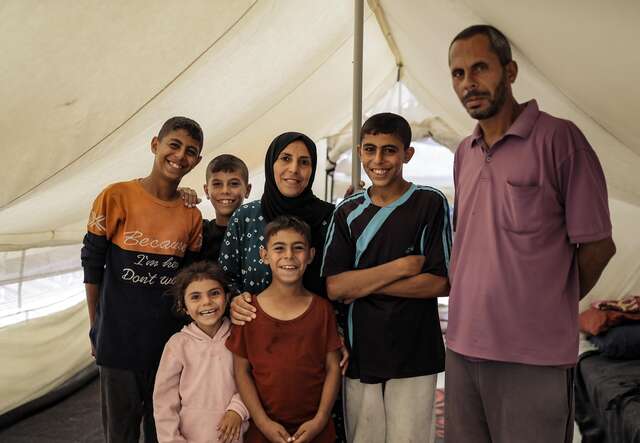
Psychosocial support, along with reestablishing routines and rituals, is essential for children’s mental well-being. Faten sees this firsthand in the positive changes the programs create and in the enthusiasm of both children and their parents.
Through these activities, children learn how to navigate and process the emotions they experience during crises and challenging situations. They also learn the importance of personal and safe spaces, how to identify them and what to do in emergencies to stay safe.
In addition to the structured sessions, the IRC also provides children with entertainment and play activities, offering them a much-needed escape from the stresses they are dealing with.
“Relief and entertainment activities are also critical,” says Faten “These services play an important role in positively impacting children’s mental well-being.”
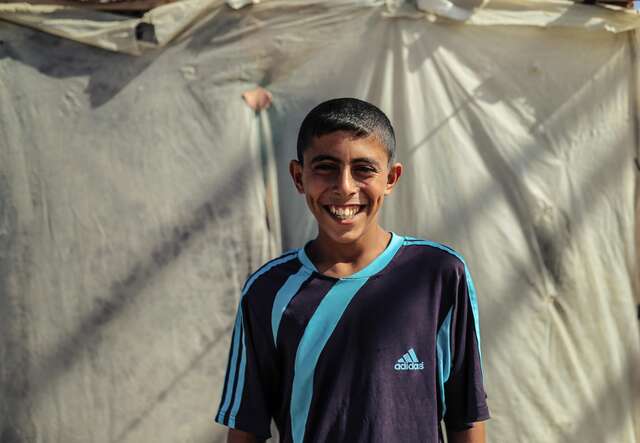
Faten notes that the demand for such services, like those offered by the IRC and supported by the European Union’s humanitarian aid program, is growing due to the fallout of the ongoing crisis, particularly on children.
A ceasefire alone cannot address the scale of need in Gaza, where nearly all civilians continue to require urgent humanitarian assistance and long-term support to recover.
The IRC, in partnership with the European Union, is helping thousands of children and adults in Gaza and the West Bank. We provide essential support so people can get through the crisis, cope with their struggles, and start rebuilding their lives.
In Gaza, the IRC continues to deliver clean drinking water, sanitation, and hygiene services. We treat malnutrition and offer protection services for women and children. We also support children and their caregivers as they cope with emotional distress through mental health and psychosocial support. In addition, we provide specialised child protection services for those who have experienced violence, abuse, or neglect. Our work also includes nutrition support for children and caregivers—such as counselling and treatment—as well as early childhood development activities that help children grow and regain a sense of safety.
The International Rescue Committee partners with the European Union to provide life-saving support to people caught in conflict and disasters around the world. Our work funded by the EU enables people to survive, recover and rebuild their lives.