Communities in action
Palabek refugee settlement sits in Lamwo district, in Uganda's far north, a region that shares a border with South Sudan. Since conflict in South Sudan intensified in 2016, hundreds of thousands of people have crossed into Uganda—one of the world's largest refugee crises, in an under-resourced country. Palabek alone is home to over 97,000 refugees, mostly South Sudanese, spread across zones made up of interconnected villages.
The pressure on local health infrastructure has been immense. Families arrived with conditions that health workers had never been fully prepared to manage on such a large scale. A single untreated case of measles or mpox can become a neighbourhood-wide emergency within days.
Kenneth Watmon, a health assistant working for the Lamwo district local government in the Palabek settlement, remembers what everything looked like before the EU-funded IRC programs began delivering services.
"Before the project came in, we were in the darkness," he says. "When we were receiving new refugees, things were not easy. The refugees were arriving with a wide range of conditions. Some had rashes on the body, and we suspected all kinds of epidemic-prone infections—measles, mpox, polio."
The scale of it was staggering. Some days, over 20 patients arrived at the facility with similar rashes, all at once. Everyone was in dire need of consultation and treatment—with no system in place to separate potentially infectious cases from other patients waiting in the queue.
Watmon describes how health workers were reacting to crises rather than preventing them. There was no community alert register or trained volunteers at the health facility's entry point. They lacked information linking what people were seeing in their homes to what health workers needed to know at the clinic. "Things were not okay," he recalled.
Uganda's refugee-hosting districts face a complex set of challenges: climate-driven environmental concerns, frequent disease outbreaks, and a continuous influx of new arrivals. In response, the IRC launched its EU-funded program, focused on ensuring communities remained both prepared for potential epidemics as well as responding to them. The program was designed to build long-term community resilience, rather than just react to crises as they broke out.
One of the program's central pillars was the development of community-based surveillance structures. This meant identifying people already embedded in their communities—respected, trusted, and willing—and equipping them with the knowledge, tools, and backing to act. They learned to recognise the symptoms of diseases like measles, mpox, cholera, Ebola, and polio. Equipped with the right materials to carry out their work, they established a reporting chain that ran from a household in a remote block all the way to the health facility.
"It has pulled us from nowhere to somewhere—at least nowadays, we don't receive so many cases as we used to," says Watmon. Beyond establishing these systems, there has been another layer of community engagement, which has proven to be just as important: the village task forces.
Before the EU-supported program, community meetings drew few participants. People were busy surviving—farming, fetching water, and caring for children. Public gatherings about disease prevention were not a priority.
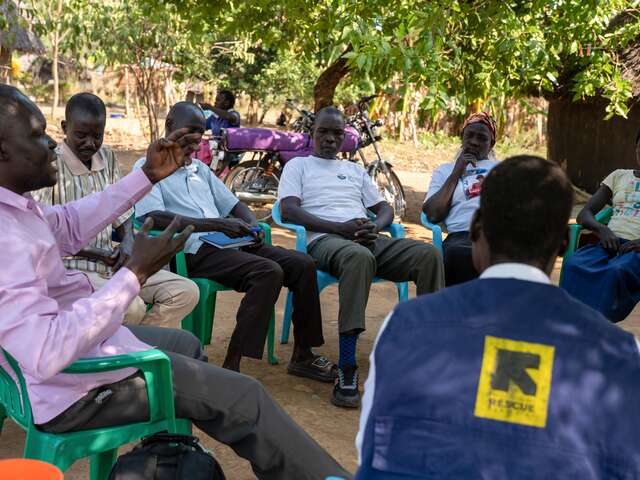
That changed when village task forces were formally trained across the settlement, and 148 village health teams were established. The members included local and religious leaders, women's representatives, and youth leaders — people the community already knew and trusted.
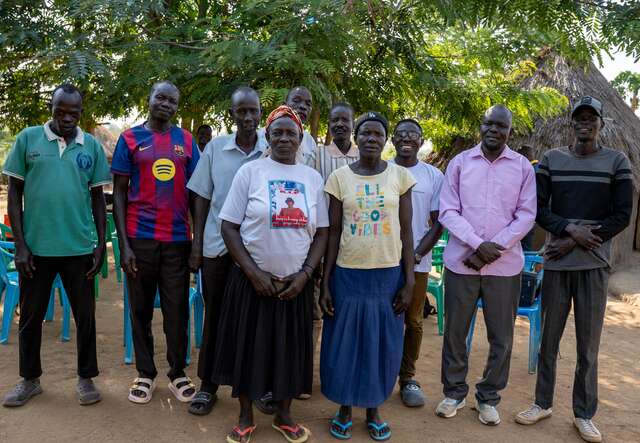
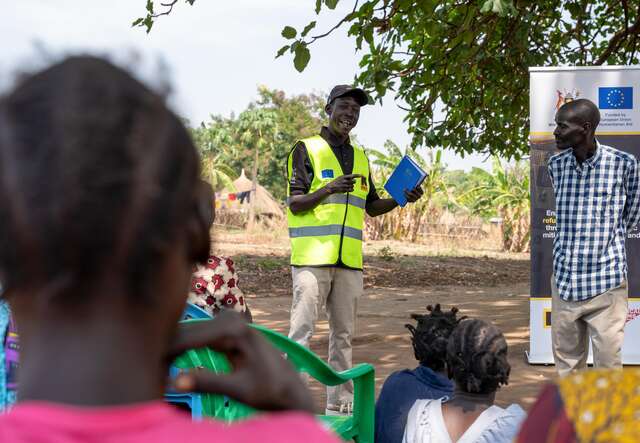
When an mpox outbreak hit the settlement, these task forces were at the frontlines of the public health response. John Pasquali, who chairs the task force in one of the zones, describes the role they play: "We sensitise our community, and we deliver prevention messages—how best they should protect themselves from these killer viruses."
Through small group dialogues, household visits, and community gatherings, the task force reached more than 5,000 people with clear, practical prevention guidance.
They showed people that coming to the health facility was the right thing to do—not something to fear or delay. The result was successful: suspected cases were isolated early, and no deaths were recorded during the outbreak.
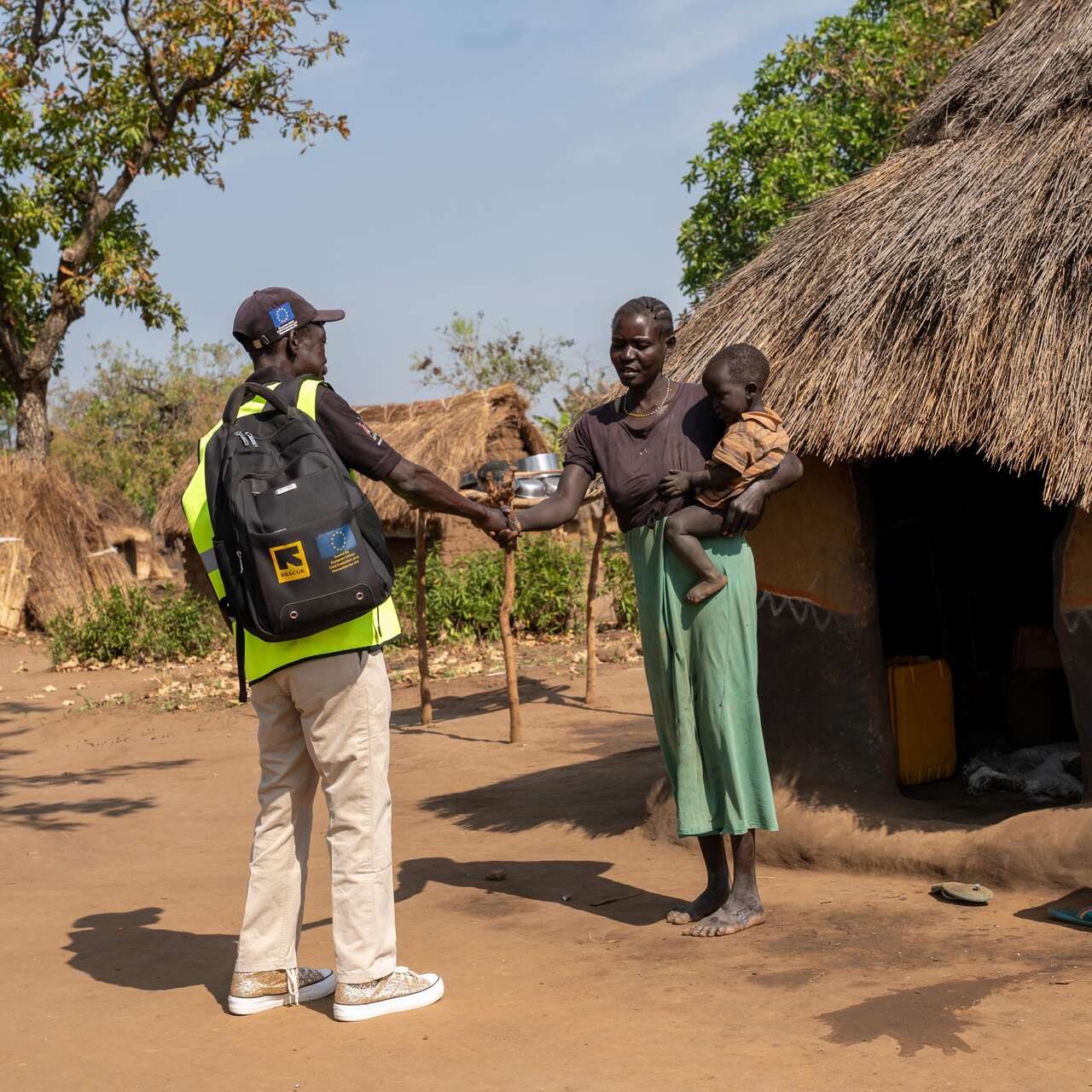
Martin, 45, came to Uganda from South Sudan. He is a supervisor for a village health team, one of the people the EU-funded program identified early on as someone who could genuinely help from within. " I have the knowledge of how diseases can look,” he said. “If I see the symptoms, I can call the nearest health facility. Through the health assistants, I refer those cases [onwards]."
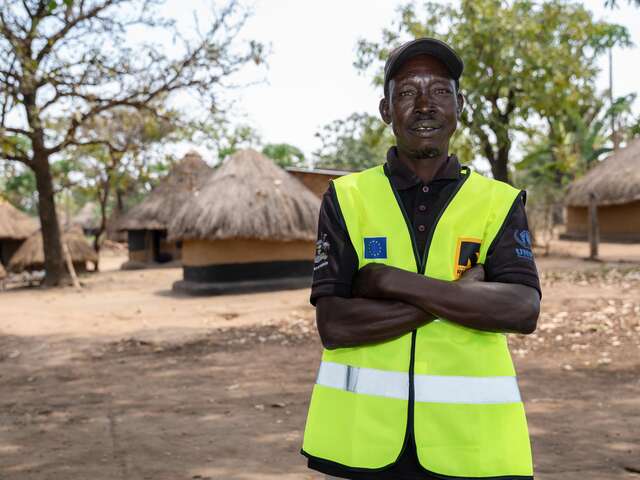
During one such visit, Martin spotted signs he recognised in five children — rashes spreading across the body, the tell-tale symptoms of measles. He reported them immediately through the phone channels established as a part of reporting outbreaks.
The response was swift: a health team was activated, and active case searching began in the surrounding area. Ten more children with similar signs were found in the same village. Martin and his team of volunteers then went door-to-door, reaching over 1,000 community members with information about preventing measles.
One of the families caught in that outbreak was Elizabeth's. Her baby had begun developing rashes across the body. "My baby was sick," she recalls. "When Martin came, he told me to immediately take the baby to the facility. I promptly went. When I reached the facility, they started treatment right away. Within a few days, the rashes disappeared."
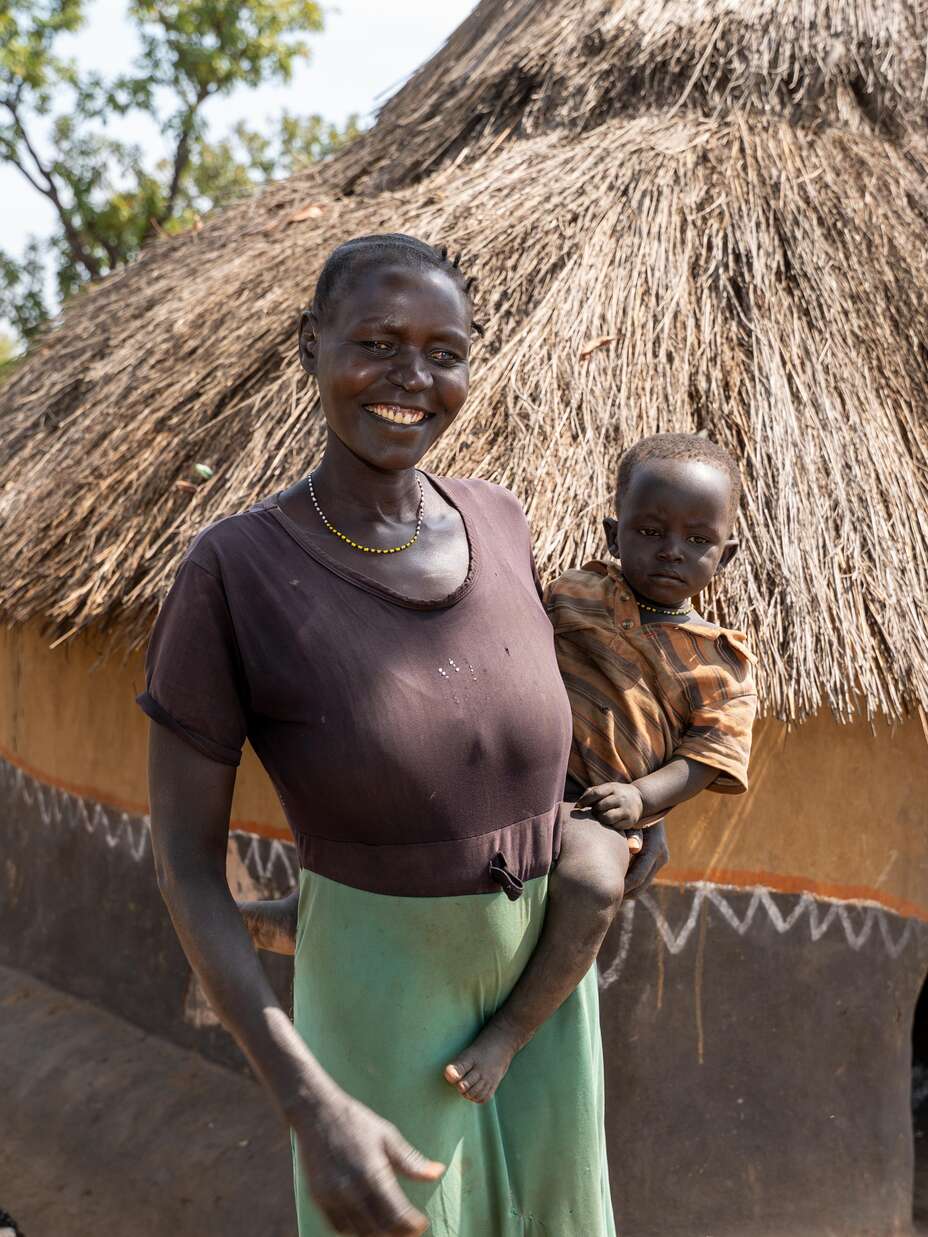
Martin's work doesn’t stop there—the relationships he has built through years of personally visiting homes mean that community members come to him with concerns they might otherwise have ignored until it's too late.
Hellen, 23, a refugee from South Sudan who has lived in Palabek since 2017 and has three children, speaks about Martin like family. "I appreciate him so much for his work," she says. "For instance, my daughter was malnourished. Martin found out during a home visit. He referred my daughter to the facility, and she was treated. Then he kept on following up on how [she] was progressing, and now my daughter is fine."
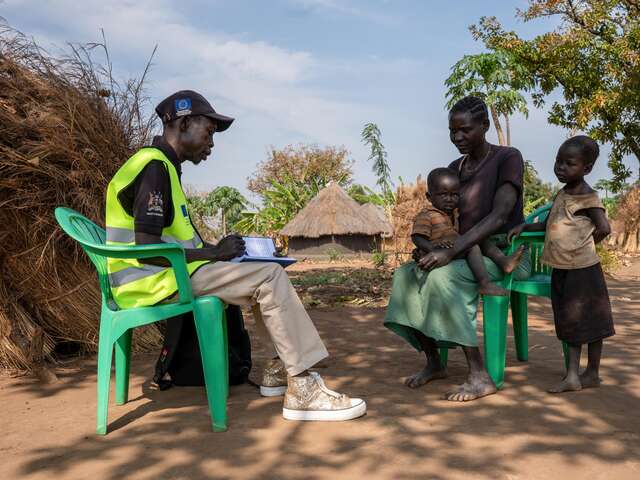
Neighbours remark that what makes him effective at what he does isn’t only his knowledge, but rather his approach. He puts time, effort and consistency in personally building relationships and following up with them.
In communities where stigma around illness can keep people from seeking help, he has earned a reputation for discretion. Vicky, another community member Martin has supported, puts it simply: "He knows how to do his work. And he keeps the secret very well, so people can't know if you have any illness."
That trust is pivotal to this operation. When people trust the person knocking on their door, they tell the truth about their symptoms, take the advice, and actually seek treatment. So when the task force stands up at a community gathering to explain what mpox looks like and how to prevent it, people listen—because these are not strangers—they are community members who have been through the same things.
With EU support, the IRC runs a disease prevention programme across Uganda’s refugee-hosting districts. In Palabek, 148 community health volunteers have been trained to detect outbreaks early, local leaders have been equipped to communicate health risks, and health facilities have been strengthened to respond quickly.
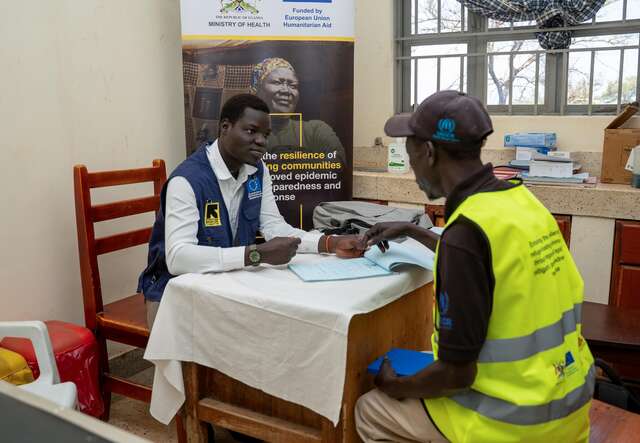
The program works in direct collaboration with local government and national health authorities, reinforcing—rather than replacing—existing public health systems. With EU support, the IRC's approach is grounded in the belief that the communities most at risk are also the communities best placed to protect themselves—when given the right training, tools, and backing to do so.
The International Rescue Committee partners with the European Union to provide life-saving support to people caught in conflict and disasters around the world. Our work funded by the EU enables people to survive, recover and rebuild their lives.