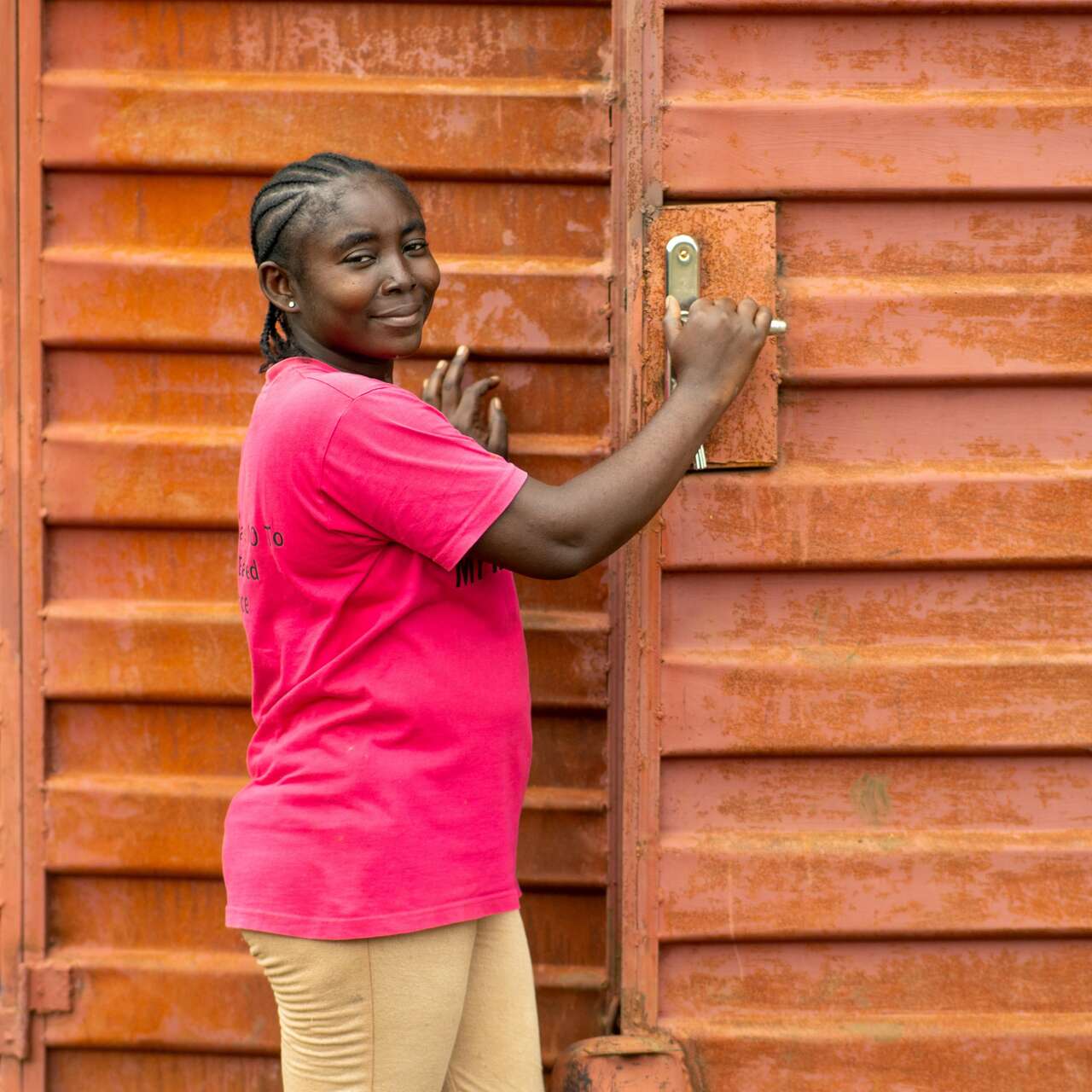
Cameroonian Women
Years of overlapping conflicts and tensions across Cameroon have left millions of people living in displacement and insecurity. From the war in the English-speaking North-West and South-West, to violence by non-state armed groups in the Far North and climate-fuelled tensions, many were forced to flee their homes overnight with nothing but their children in their arms.
Between internally displaced populations and the country’s hosting of refugees from other countries, over 2 million displaced people are living in Cameroon today and 3.3 million people are estimated to need humanitarian assistance across the country.
Amongst them, women and girls carry some of the heaviest burdens: displacement uprooted their livelihoods and dramatically reduced their access to education and reproductive healthcare. Meanwhile, conflict heightens the risk of gender-based violence (GBV) and of sexual violence in particular. Yet, often being their families’ caregivers and homemakers, women are given no choice but to remain resilient again and again in the face of unimaginable hardship.
In this fragile landscape, thousands of Cameroonian women are quietly rebuilding their lives to be as normal as it can be. Their incredible stories rarely reach the eyes of the world, but here are the stories of two of them, Lucy and Julie, who represent the stories of so many others.
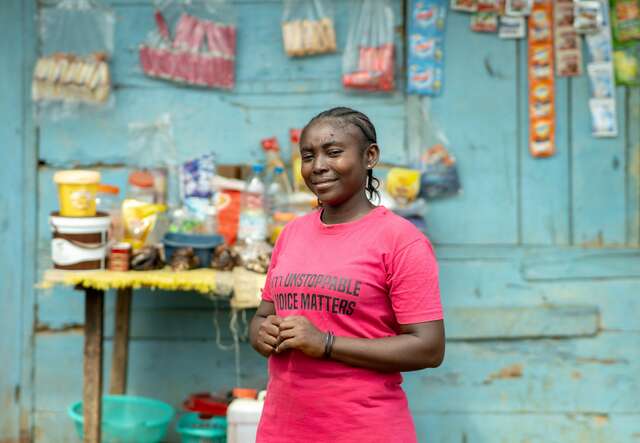
When the conflict reached her village in the South-West of Cameroon, 35-year-old widow and mother of five, Lucy, felt the ground collapse beneath her feet.
“One day the conflict intensified… they burned everything,” she remembers.
Her home. Her business. Her children’s clothes. Flames swallowed her entire life in minutes. There was no time to think. She fled with her children into the bush.
“I spent one year in the bush with the children… life was very difficult for us.”
For an entire year, Lucy and her children survived under extremely difficult conditions: without proper clothing or shelter, with insufficient food and no source of income, while constantly fleeing from danger.
When she finally managed to lead her family to a safer town in the region, Lucy was left exhausted and isolated. She had no support to lean on and was unable to cover essential expenses such as school fees, medical care or even what to feed her children.
As she was explaining her situation, a neighbour told Lucy about the IRC. Through European Union (EU) funding, the IRC offers protection services, psychosocial support, case management, and community-based activities in the most affected areas of Cameroon, including where Lucy now lives.
Soon after, Lucy saw an IRC vehicle passing by. Without hesitation, she ran toward the team. She explained her situation, her burden, her exhaustion. “They told me not to worry.”
The IRC swiftly provided her with cash assistance, clothes, food, and psychological support.
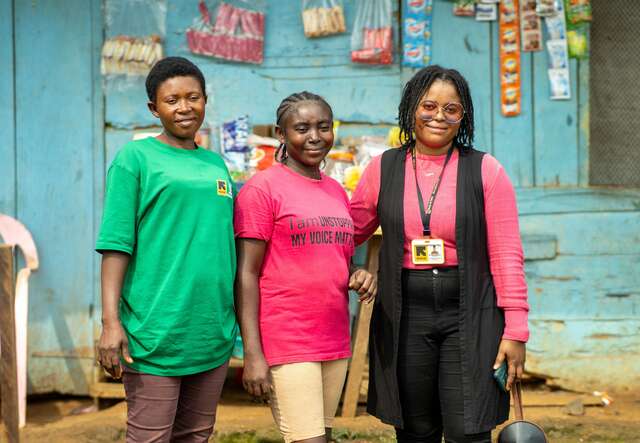
However, the support went deeper than emergency aid. Lucy was also offered enrollment in an IRC training programme, learning basic business skills, and developing a business plan to open a small market stall: “I chose to sell food at the market.”
Lucy bought a storage container, opened her business, and regained control over her income.
“Today, we eat well, we live well, we sleep on a mattress,” she says with quiet pride. “I am very strong now.”
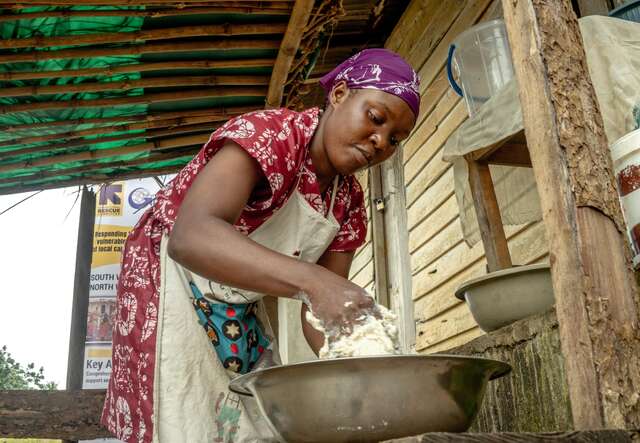
Living in the same town as Lucy, 32-year-old Ngando Julie Wase watched her own house burn before her eyes in Bolebacondo.
“Our house got burnt… my sewing machine got burnt, everything was destroyed,” she recalls painfully.
That sewing machine was her only source of income. Losing it meant losing her business and the financial security she was building.
After being displaced in a new village with her family, Julie tried to survive by selling small amounts of bread, beans and rice. But without enough resources to produce more quantities, the meagre income was not enough.
“I couldn’t take care of my children, not even buy notebooks or send them to school… it was very difficult for me.”
Julie faced a cruel paradox that many displaced people face: she needed money to start her business, but without a business, she could not earn any money.
Like for Lucy, help came in the form of another community member telling her about the IRC. Julie then gathered her courage and went to meet IRC staff.
There, she explained her situation twice, as if making sure the weight she carried was fully understood. A female humanitarian worker listened patiently and asked one question that changed everything: “She asked me what I would like to do if they gave me money now?”
For Julie, that question was a turning point, a spark of hope. Her case was processed promptly, and through the EU-funded IRC cash assistance programme, she received several rounds of financial support.
“With the financial support, I’m now able to pay electricity bills, house rent, do my savings buy my children books, and send them to school,” she says. “Before, I couldn’t even dress myself… now I can do so many things for my family and for myself.”
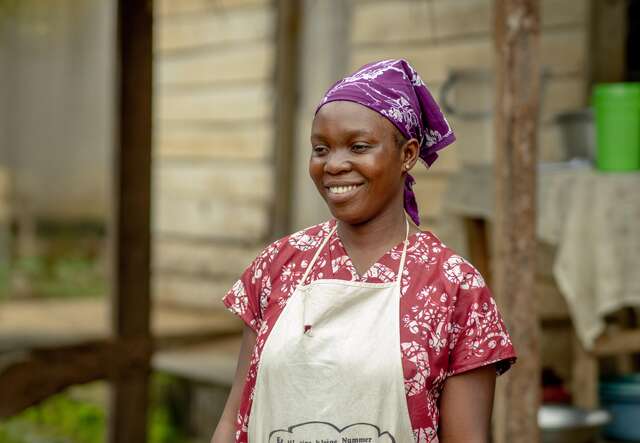
These stories of survival and displacement in Cameroon are not only about loss and resilience. They are also about women coming through for other women experiencing obstacles they have had to overcome themselves.
It is about humanitarian workers like Nangeri Joyce, who once also had to uproot her entire life, and is now using that lived experience to support displaced families, refer gender-based violence survivors to adequate services, and uplift women facing the same hardships she once endured.
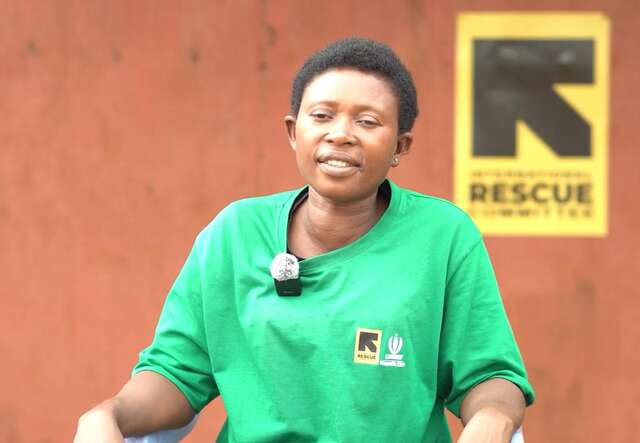
This is a lesson Lucy, Julie, Joyce, Sonia and so many other Cameroonian women are teaching us: with support, women do not only rebuild their own lives but become beacons of solidarity for their entire communities.

The International Rescue Committee partners with the European Union to provide life-saving support to people caught in conflict and disasters around the world. Our work funded by the EU enables people to survive, recover and rebuild their lives.