Crisis Response
Now entering its sixth year of drought, Afghanistan is facing one of the worst hunger crises on earth with 4.7 million people at emergency levels of food insecurity - one step away from famine.
Nearly one million children are expected to require treatment for severe acute malnutrition, a life-threatening condition, in 2026.
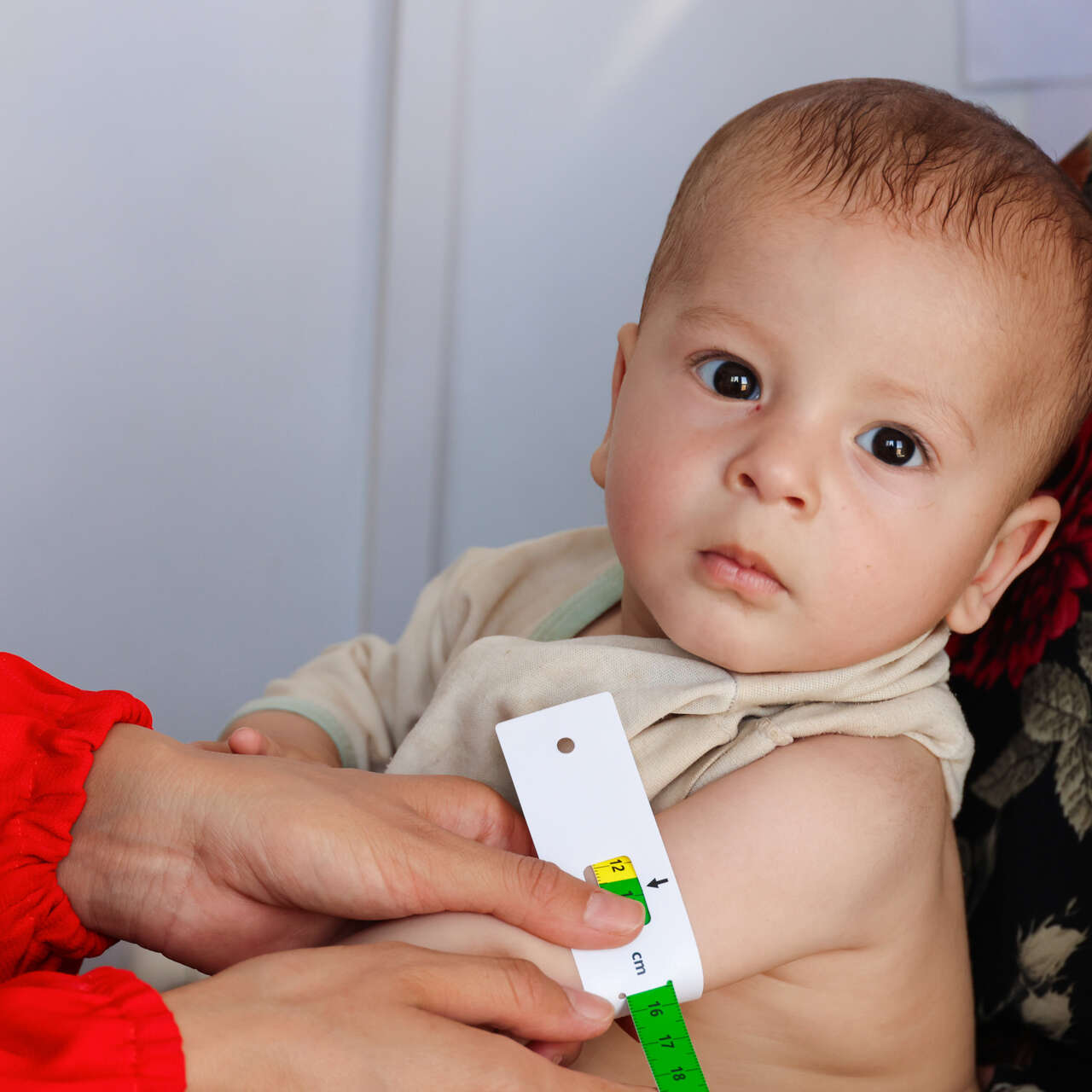
Afsana, 20, lives in a remote village with no water supply and no irrigated land in the Herat province of Afghanistan.
When her 7-month-old son Sahil (pictured) began losing weight and turning pale, she recognized the signs of malnutrition. But without the IRC's local clinic, Afsana says she would not have known what to do about Sahil’s deteriorating health — she had no money for a private doctor or transport to reach one.
At the clinic Sahil received medicines, nutritional supplements and a regimen of therapeutic food. Now that he is recovering, Afsana says he is starting to say his first words, and she is starting to feel hopeful about his future.
“As my child grows up, I will send him to school so that he may become a doctor... That is my wish for him.”
You can help children like Sahil. Donate to the IRC to help provide lifesaving malnutrition treatment for children in Afghanistan, Sudan, Gaza, and more than 40 countries.
The IRC has worked in Afghanistan since 1988 and operates across 10 provinces, delivering health, nutrition, education, clean water and economic support. Its integrated health and nutrition programme in Herat and Badghis screens and treats malnourished children and supports pregnant and breastfeeding women through static facilities and mobile teams.
Nearly all of our staff members are Afghans ingrained in the communities they serve. Our local staff and their connection with the communities we serve is one of the reasons why the IRC has been able to stay through crisis after crisis, often when other organizations have had to pull out or stop providing services.
“At the exact moment Afghanistan’s hunger crisis hit its worst point in recorded history, the world pulled back the funding needed to respond.” - Bostan Fahim, IRC Afghanistan Programme Director
The number of health facilities the IRC runs has fallen from a peak of 46 in 2023 to just 16 today — a collapse of nearly two-thirds, with the sharpest drop following funding cuts in 2025. Your support helps us reach families even as funding falls.
When conflict and disaster strike, we help people survive, recover, and rebuild.
We go where others don't. We specialize in getting aid to people in need, working in remote regions, fragile states and dangerous conflict zones.
We help in crisis and beyond. Our work doesn't stop when the crisis does—we stay until people are back on their feet.
Every £1 is accounted for. And we share what we learn so the entire sector can do the same.