Quiz
Acute malnutrition is devastating, but our approach is effective and scalable.
Every year, up to two million children die from acute malnutrition. But by using a simple, scalable approach to treat it, our teams bring care directly to families in hard-to-reach communities. The results speak for themselves: over 90% of children treated by the IRC recover, at 20% lower cost per child than the traditional approach.
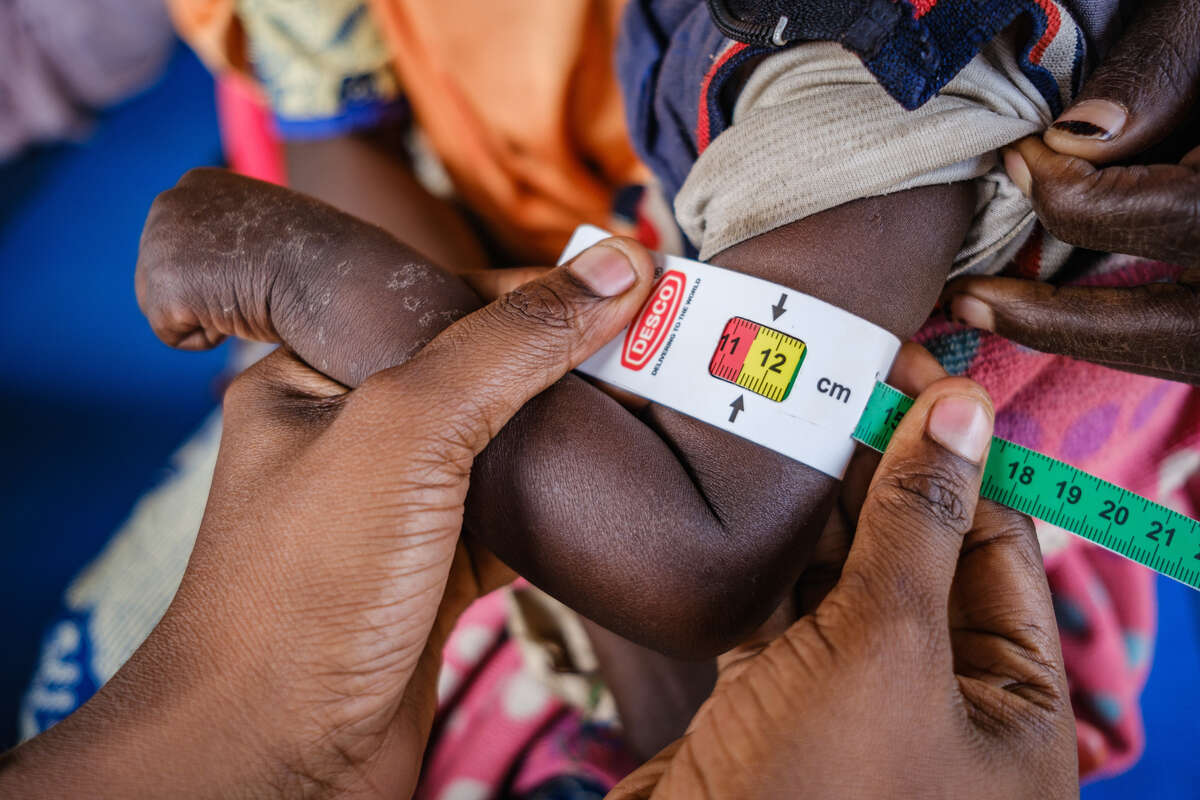
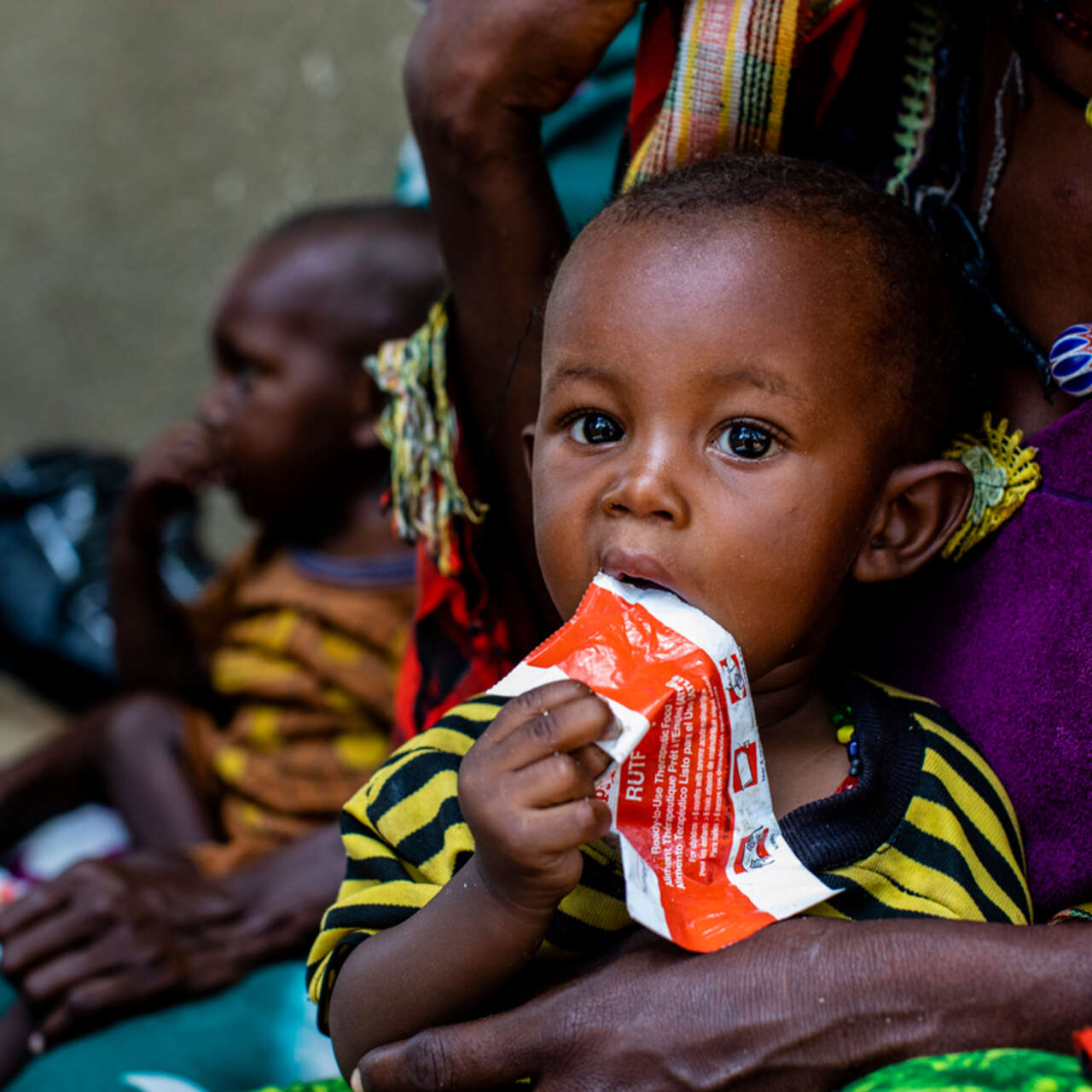
The IRC uses a color-coded measuring tape to identify malnutrition by measuring arm circumference. This simple tool quickly shows whether a child is at risk, and if so, how severe their condition is. For parents, this tape also offers a convenient way to monitor their child’s health from home, so they can take action before the situation worsens. We also provide a nutrient-rich peanut paste, packaged conveniently in a squeeze pouch. Unlike traditional treatments requiring clinics or IV drips, this food allows parents to care for their children at home. By making treatment more accessible, we can reach more children and save more lives.
Over 80% of children with acute malnutrition never receive treatment. Barriers include conflict, underfunded health systems, unsafe travel conditions, and a fragmented treatment approach. The IRC is working to change this by simplifying treatment and bringing care directly to communities.
A child dies from acute malnutrition every 15 seconds even though a simple, effective treatment exists. In crisis zones like Sudan, where conflict and drought have devastated food systems, children are among the most vulnerable.
Each year, the IRC's malnutrition programmes treat over 600,000 children, delivering support where it's needed most. Our simplified approach costs 20% less per child and uses 25% less product than the traditional approach, making it possible to reach more children with the same resources.
Acute malnutrition is caused by a combination of factors. Illnesses like malaria and cholera increase a child's nutritional needs while reducing their ability to absorb nutrients. Poor health infrastructure means families often can't access treatment, especially in crisis zones where conflict has destroyed clinics and unsafe travel conditions prevent families from reaching care. And inconsistent access to a diverse diet means children don't receive the nutrition they need to grow and thrive. In South Sudan, all of these factors have converged, pushing malnutrition rates to more than double the emergency threshold.
IRC teams work tirelessly to deliver life-saving support in crisis-affected communities around the world, including children suffering from acute malnutrition in places like South Sudan. Your support enables our teams to help people in crisis to survive, recover and rebuild their lives.