Economic Wellbeing
“Ayuuto” collectives are a traditional way to save and pool money together rooted in Somali culture. Read on to find out how newly formed savings groups, supported by the IRC, have helped communities to build resilience in the face of a deepening humanitarian crisis in the region.
Somalia is facing a growing humanitarian emergency. Funding cuts, rising fuel and food prices, and worsening climate shocks are driving conditions that mirror the lead-up to the devastating 2020 to 2023 hunger and malnutrition crisis.
“Families are facing rising food prices, rising fuel costs, and soaring fertilizer prices at the exact moment they need support the most” - IRC Somalia Country Director, Richard Crothers.
Within this context, women’s savings groups have helped communities build long-term resilience and encourage financial independence and security for women. With support from the IRC, newly formed ayuuto groups have helped women in Somalia’s Mudug region to pool resources, access loans, start businesses and prepare for drought seasons.
This project, now completed, was part of a wider initiative to build resilience communities in Somalia (BRCiS) funded by the UK Foreign, Commonwealth & Development Office (FCDO).
Nasra, 36, is a mother of three who is part of the Talo Wadaag Collective, a group consisting of 22 women.
They each put aside a dollar a week to contribute to their collective savings account.
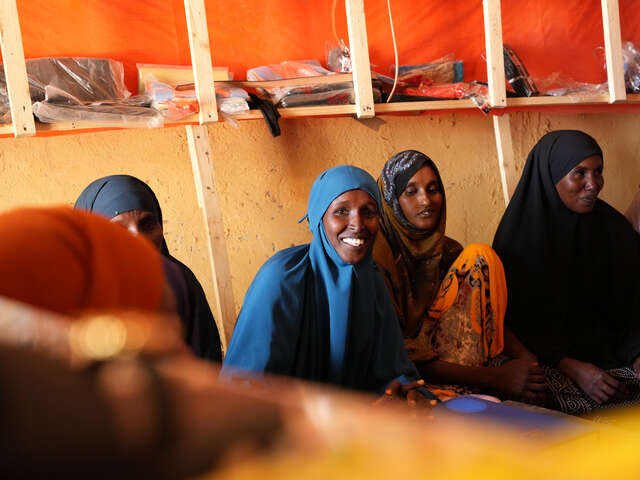
“The IRC’s first training to us was to show us how to come together as a group. The second training was on how to work together and reach our collective goals and the path to those goals.”
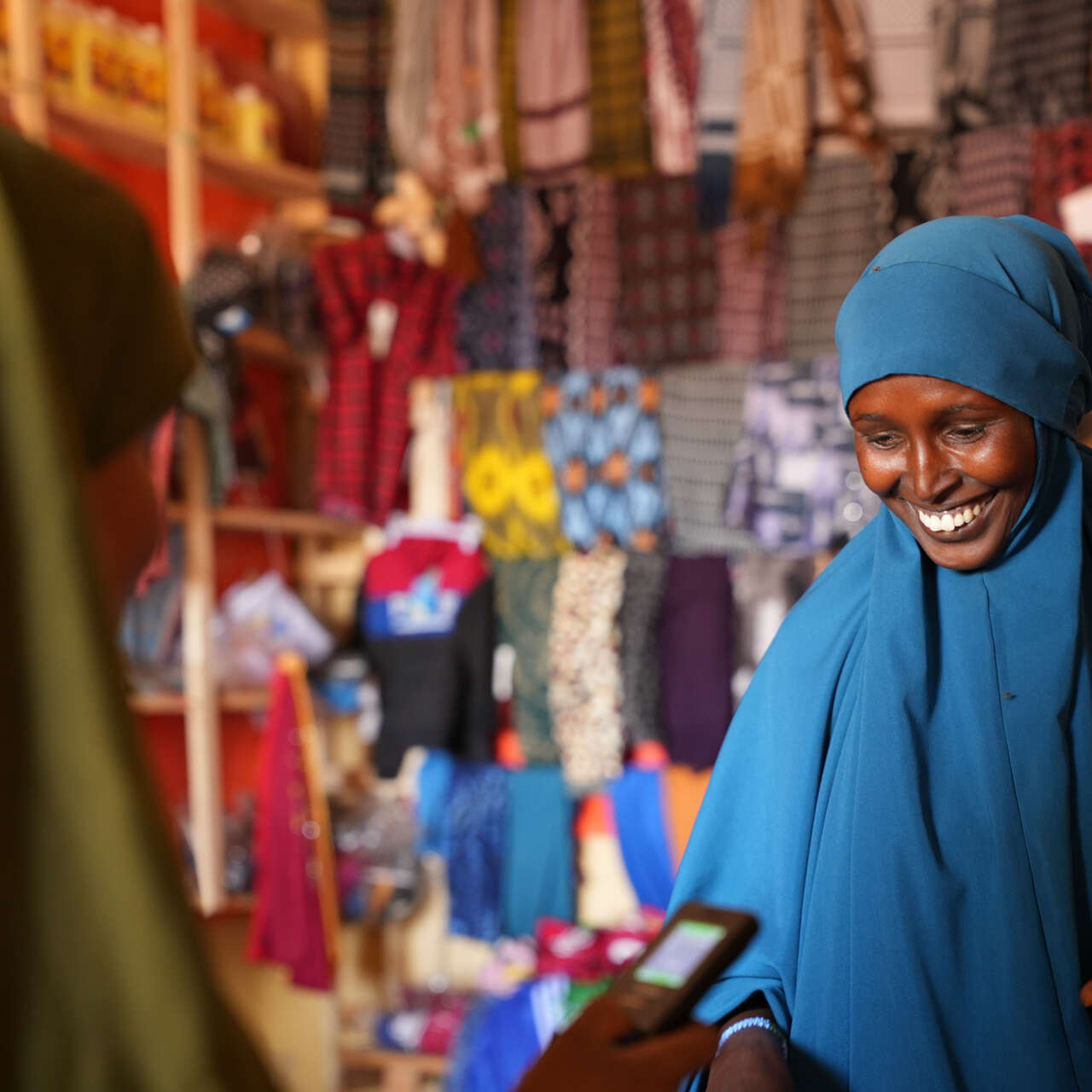
In addition to the training, the IRC provided cash assistance to help them have funds saved for emergencies, like droughts, as well as a cash grant to help them start a business together. With the support of the IRC, Nasra and her collective opened a shop that sells clothes and shoes for women, men and children, as well as other items that the community needs. The cash grant, funded by the FCDO, helped them to pay off the loans they had taken to open the shop.
Their shop is now the biggest one in their town of Docol. “The benefit of it is that we joined our efforts and collected money together and then did something tangible with that money, like opening this shop. And we have so much hope,” Nasra says.
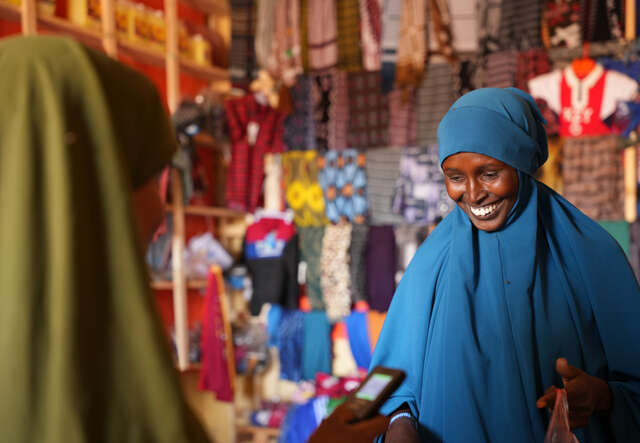
With the profits they’ve made through the shop, the women in the self-help group have been able to take loans from their collective funds to support their family’s needs. They have also become a robust support system for each other. When a mother gives birth, they join together to visit her and bring her gifts. When a member of their collective is in need of urgent support, they are there for her.
Nasra recalls, “The most important event was when a member of our group travelled all the way to Mogadishu to get surgery. And we combined all our efforts as a collective to help her.”
For Nasra, the financial independence she has gained has instilled her with confidence and joy. Her children are proud that their mother is a co-owner of a shop, and she envisions a future where every woman has the opportunity to become self-reliant.
“To start with the group, my hope is that all the time and effort we spent shouldn’t go to waste and that every mother or woman in the group can become self-sufficient and independent, provide for her children and contribute to society,” she says.
She adds, “I have become a mother who has worked for herself and stood on her own feet.”
Hani, 40, is a mother of seven who is a member of the Wadajir Collective, a women’s self-help group in the town of Banderadley. The group came together after the IRC held a seminar for women about the idea of saving and lending together.
“We meet twice a month to save money,” she shares. “In each meeting we contribute a dollar each because most people can’t afford much. Each month we save a total of $50.”
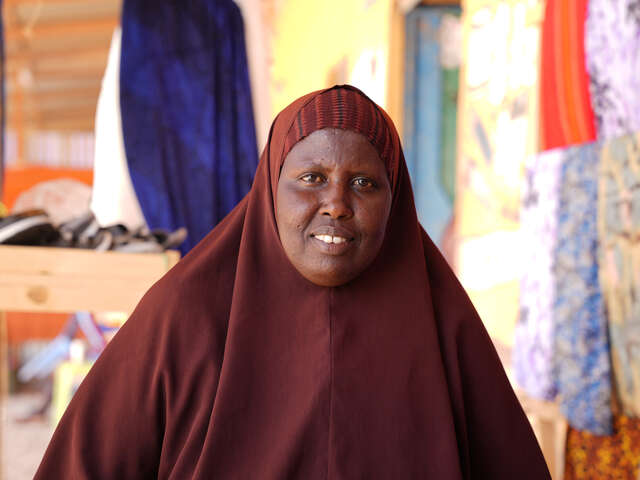
Hani calls the money they save together “ayuuto money.” With a cash grant from the IRC, supplemented by the funds saved as a group, the Wadajir Collective was able to open a shop that sells vegetables, dried milk powder, clothes and other small supplies needed by their community. As their store has become more profitable, they’ve been able to expand the range of food and clothing items they offer.
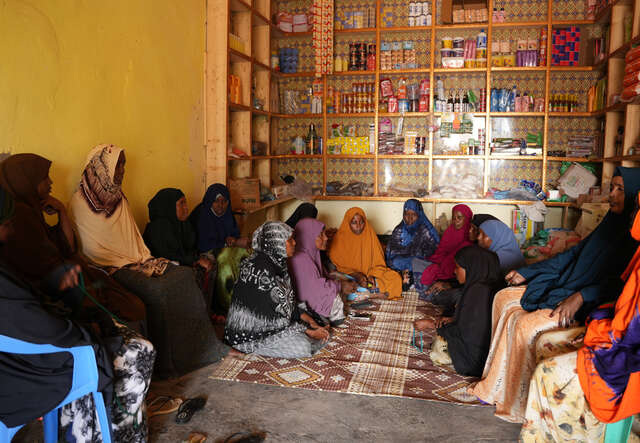
Training from the IRC has helped the group oversee their finances in an effective way, so they are able to manage any credits or debts that accrue and create a savings fund that can serve as a strong safety net for when emergencies–both big and small–arise. For example, if a member has an emerging need, whether it is a medical bill or an upcoming wedding or a funeral, they can request money to borrow from the collective.
For Hani, the self-help group has not only helped her support her family, including her children and her mother, it has expanded her perspective on what is possible. “[The Wadajir Collective] has had a huge impact in my life,” she says. “We have benefited in ways we didn’t before.”
BRCiS (Building Resilient Communities in Somalia) was a humanitarian and resilience consortium that closed in 2026. The project took a holistic approach to supporting Somali communities in developing their capacities to understand and manage climate shocks so that they can build a better future for themselves. Between 2013 and 2026, the consortium comprised local and international NGOs, including the IRC, and was led by The Norwegian Refugee Council.
The International Rescue Committee (IRC) helps people affected by humanitarian crises – including the climate crisis - to survive, recover and rebuild their lives. We deliver lasting impact by providing health care, helping children learn, and empowering individuals and communities to become self-reliant, always with a focus on the unique needs of women and girls. Founded in 1933 at the call of Albert Einstein, we now work in over 40 crisis-affected countries as well as supporting refugees rebuilding their lives in the United Kingdom.