Climate Resilience
Climate change is not a future event for those living in central Somalia’s Mudug region, but a present-day crisis. Learn how local people have been responding and adapting with support from the IRC.
An estimated 5 million people are affected by the current drought in Somalia, where prolonged dry seasons with low rainfall are contributing to widespread food insecurity, adding to a deepening humanitarian crisis in the country.
Facing food shortages, lost livelihoods and poor health, local collectives of farmers and smallholders are urgently seeking out ways to adapt.
With the support of the International Rescue Committee, these farming cooperatives have been diversifying their farming activities, including crop cultivation and small-scale gardening, focusing on a climate resilience-based approach.
This IRC project, now finished, was part of a wider initiative to build resilience communities in Somalia (BRCiS) funded by the UK Foreign, Commonwealth & Development Office (FCDO).
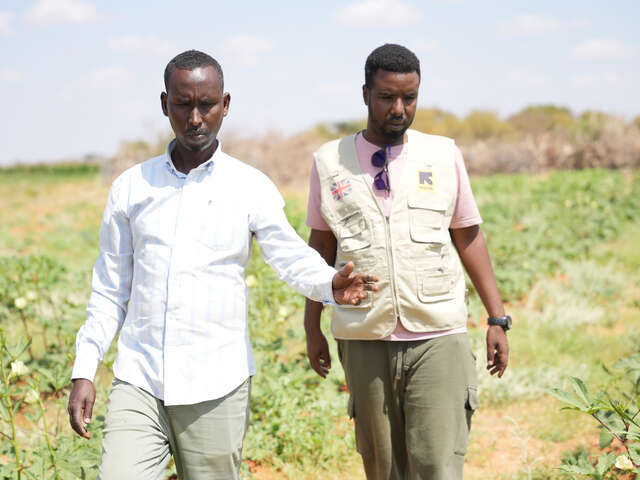
Jamac decided to join the IRC-supported farmer’s cooperative to help restore the local land destroyed by drought. His cooperative consists of 15 people.
“The training was one of the most important things. You cannot do anything without knowledge," he says.
Based on climate resilience techniques, training included how to space and manage the crops, install irrigation pipes, use appropriate fertilizers and avoid harmful chemicals.
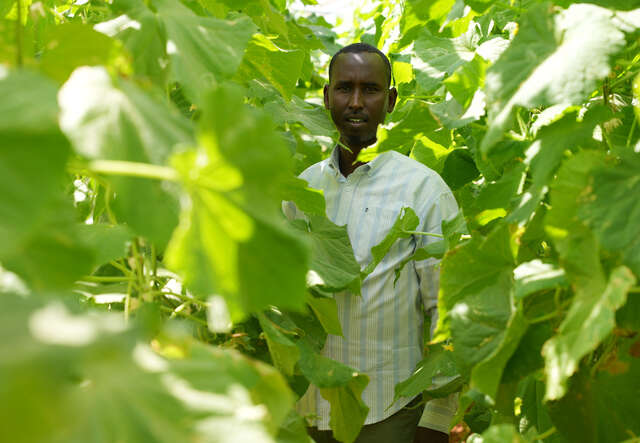
Before, the farmers used canal irrigation, which immersed the land with water, causing the spread of plant diseases and uncontrollable weeds and affecting the produce. Through the project they were able to set up two greenhouses, obtain a tractor and a machine to grind fodder, and incorporate the new farming and irrigation approaches.
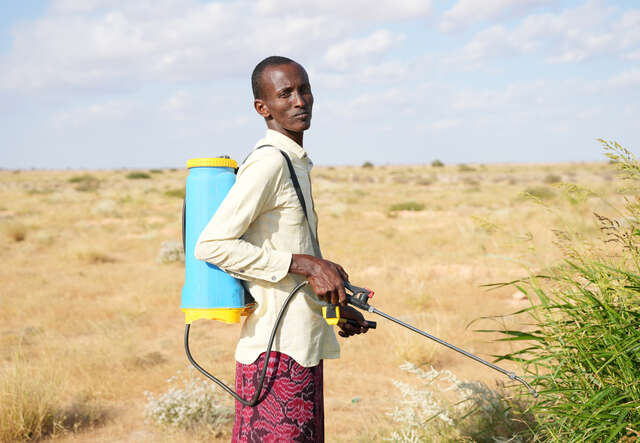
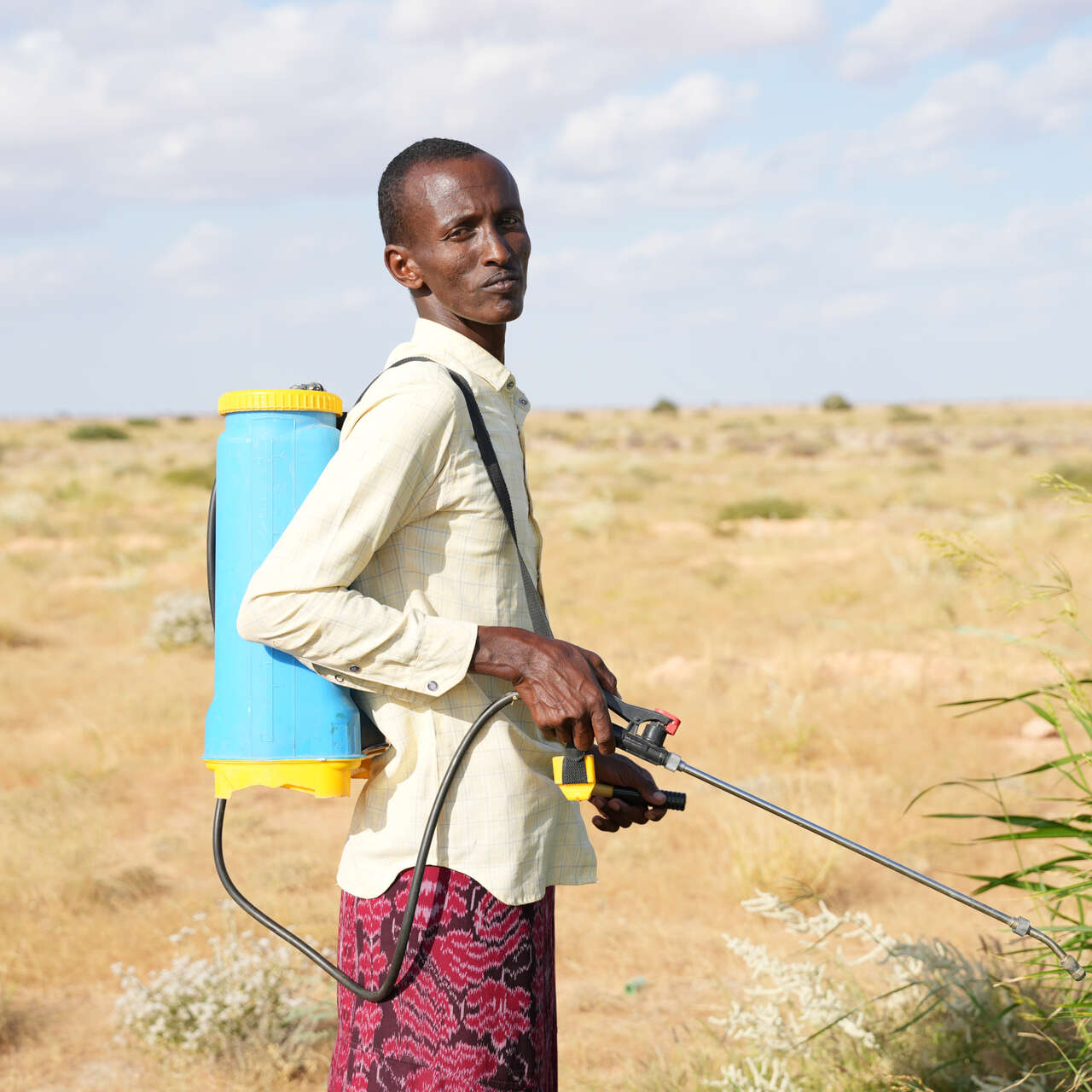
Mohamed Abdul Ali is also a farmer in Mudug, working the land in South-Galkacyo.
“This place used to be open and barren” he explains. “Now the land is restored”.
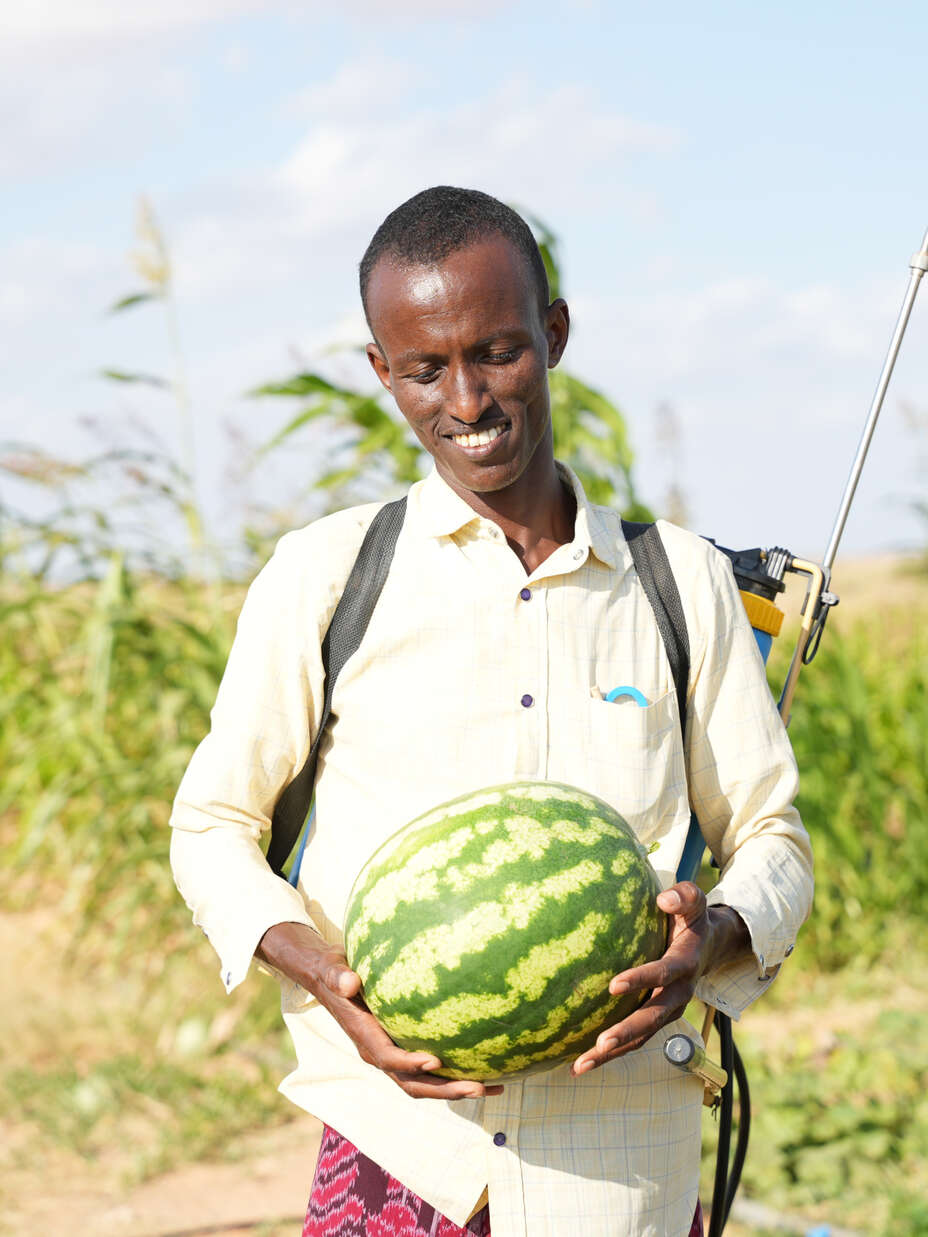
He and the members of his farmer’s cooperative took the opportunity to expand their knowledge about farming, including how to water the crops using solar-powered irrigation and how to protect them with techniques like fencing and spraying. They are now growing a range of crops, from watermelon, tomatoes, carrots, chili peppers, pumpkins and cucumbers - many of which are better suited to the changed climate.
The plan is to start selling their new produce on the local market, whilst also ensuring the collective have enough food for their families and livestock during droughts.
BRCiS (Building Resilient Communities in Somalia) was a humanitarian and resilience consortium that closed in 2026. The project took a holistic approach to supporting Somali communities in developing their capacities to understand and manage climate shocks so that they can build a better future for themselves. Between 2013 and 2026, the consortium comprised local and international NGOs, including the IRC, and was led by The Norwegian Refugee Council.
The International Rescue Committee (IRC) helps people affected by humanitarian crises – including the climate crisis - to survive, recover and rebuild their lives. We deliver lasting impact by providing health care, helping children learn, and empowering individuals and communities to become self-reliant, always with a focus on the unique needs of women and girls. Founded in 1933 at the call of Albert Einstein, we now work in over 40 crisis-affected countries as well as supporting refugees rebuilding their lives in the United Kingdom.