Emergency Response
Warda's family are among more than 1 million people forced to flee their homes in Lebanon in the wake of the escalation of hostilities between Hezbollah and Israel in March.
“The shelling had already started around 2:00 AM while the children were asleep,” recounts Warda, a mother of three. “There were artillery and air raids. It was terrifying."
They fled their home in southern Lebanon in the early hours of the morning, as airstrikes and shelling intensified, leaving with almost nothing, carrying only their children’s clothes.
“My children were sleeping—they were in one world and woke up in a completely different one.”
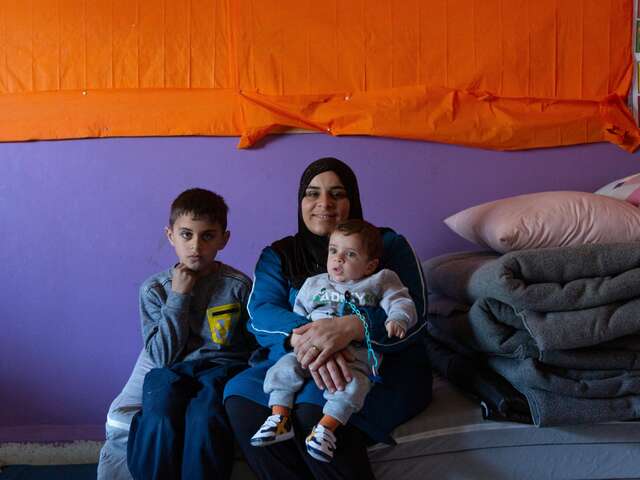
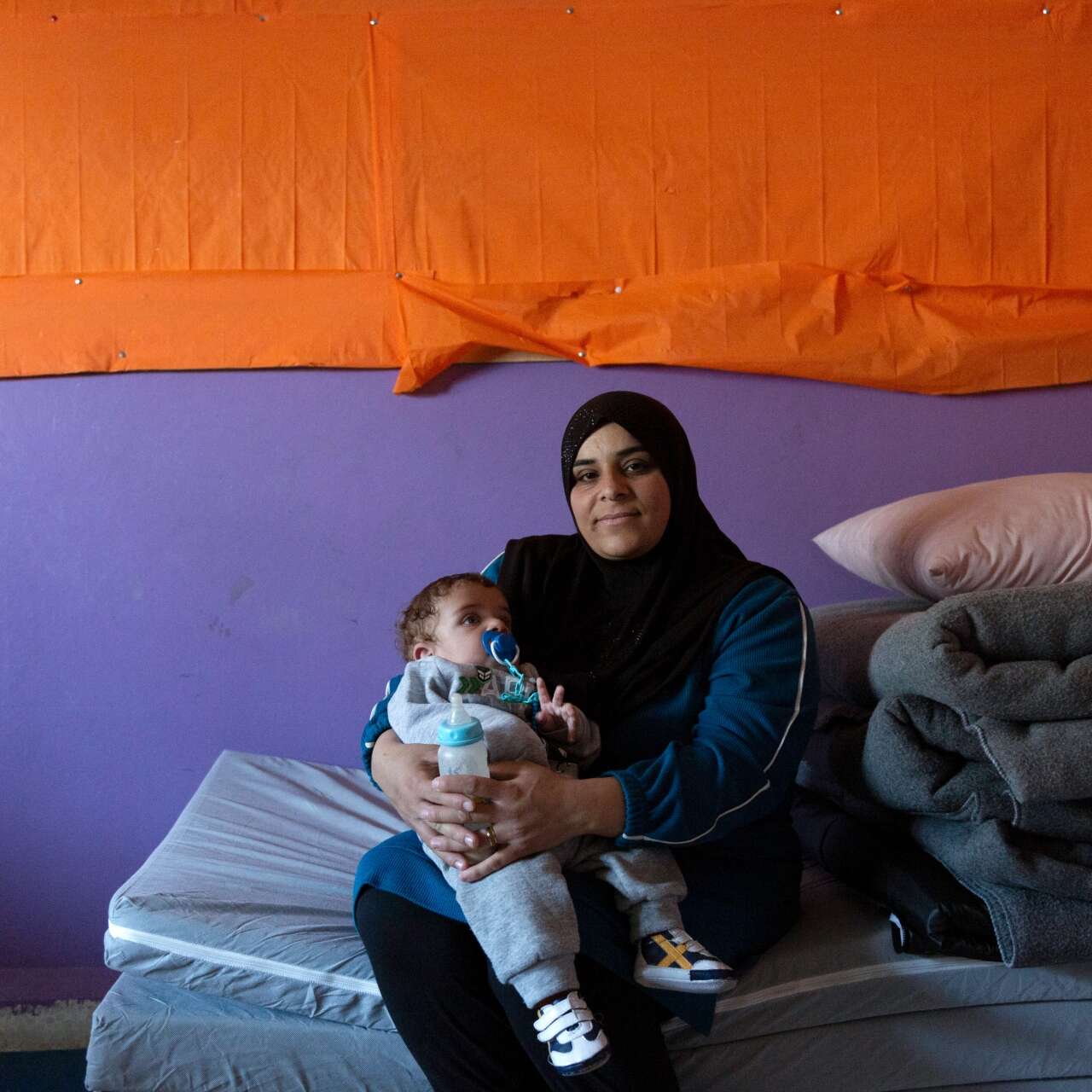
Warda and her family eventually found temporary refuge in a collective shelter in Lebanon’s Bekaa Valley. She does not know whether she will ever see her home again.
This was the second time her family had been displaced in three years. In 2024, Warda’s home was bombed and destroyed in a previous escalation between Israel and Hezbollah.
Displacement has reshaped every part of Warda’s daily life. Her youngest son, Mohammad, is seven months old and was born with health complications, including an enlarged liver and damaged lungs. He spent the first two weeks of his life in an incubator.
Mohammad’s condition requires ongoing care that the family can no longer afford. Even basic tasks, like bathing him safely, have become difficult in the shelter environment. Warda’s husband, Ali, provided for his family as a farmer. Now displaced, he is out of work and economic opportunities are scarce, as Lebanon faces one of the worst financial collapses in modern history.
Warda’s older sons are also showing signs of trauma. They are afraid of loud noises, struggle to sleep alone, and have difficulty concentrating. Without stability, school, or routine, Warda says it is harder to guide and support them the way she once could.
Warda herself is carrying the weight of displacement and the pressure of providing for her children as best she can.
“Just the exhaustion, the psychological exhaustion, the young children, the responsibility, and the war.”
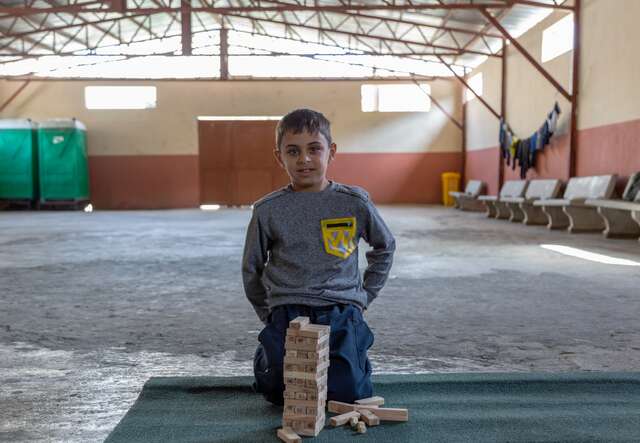
Displaced families need access to healthcare, financial support, safe shelter, and mental health services.
Warda's baby, Mohammad, needs continued medical care. Her older sons, Houssam, Wissam, need psychosocial support to cope with trauma. The family needs basic household items, stability, and the ability to meet everyday needs with dignity.
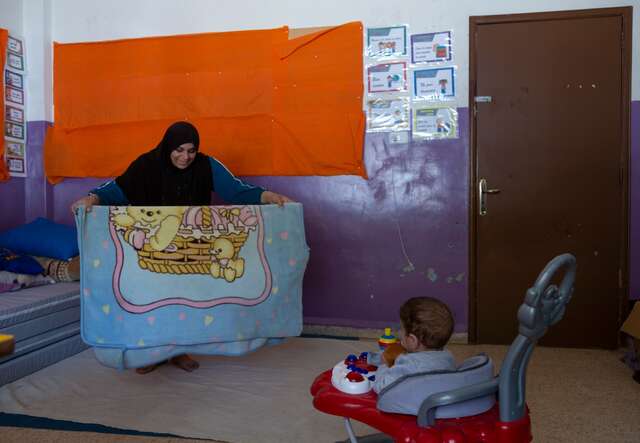
Warda’s story reflects the reality for more than 1 million people who are displaced in Lebanon. Families have been displaced, some multiple times, often fleeing with little more than they can carry.
Only about 15% of Lebanon’s displaced population have been able to find refuge in the country’s 640 collective shelters. The vast majority are surviving the best they can with little to no resources. Throughout the streets of Beirut, families are sleeping in cars or under the night’s sky.
“I wish the war would end so we can live in safety again, go back to our village, and reunite with our family and friends,” says Warda. “And to live in safety, above all.”
Your support can help displaced families in Lebanon to meet their basic needs and regain stability.
The International Rescue Committee (IRC) helps people affected by humanitarian crises to survive, recover and rebuild their lives. We deliver lasting impact by providing health care, helping children learn, and empowering individuals and communities to become self-reliant, always with a focus on the unique needs of women and girls. Our work spans more than 40 crisis-affected countries, and we provide resettlement, asylum, and integration services in communities across the United States and Europe, including supporting refugees rebuilding their lives in the UK.