Contraception
Why is contraception a lifeline in humanitarian crises?
Millions of women and girls in humanitarian crises can't access contraception. The IRC is closing that gap.
Millions of women and girls in humanitarian crises can't access contraception. The IRC is closing that gap.
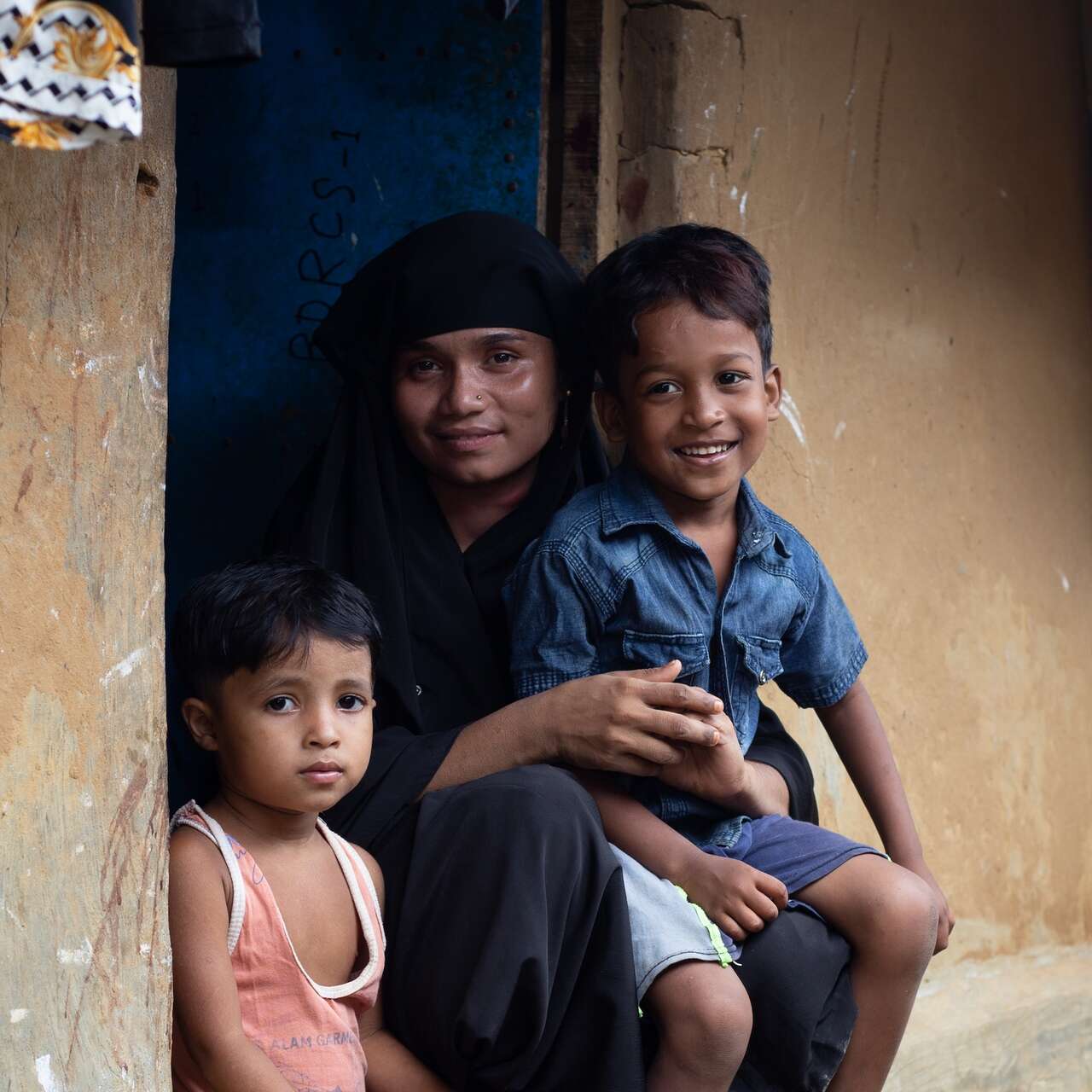
Crisis is concentrated. So is the unmet need for contraception. Without access to contraception, women and girls face unintended pregnancies that can lead to unsafe abortions, complications in pregnancy and childbirth, and preventable deaths. Helping women exercise reproductive autonomy also has a multiplier effect: when women can choose whether and when to have children, it shapes their health, nutrition, education and economic futures, and those of their families.
The tragedy is not that we lack answers. It's that a proven, cost-effective solution isn't reaching the people who need it most. The IRC is working to close that gap.
When a health system is weakened or under immense strain from conflict or disaster, family planning is often one of the first services to disappear. Clinics close. Supply chains are disrupted. Health workers are displaced along with everyone else.
For women and girls, that loss is not incidental: it's a basic lifeline for health, dignity and opportunity that disappears at exactly the moment it matters most. Reproductive choice lets women decide if, and when, to have children. Without it, more women face complications from unintended pregnancies, and fewer stay in school or in income-generating work.
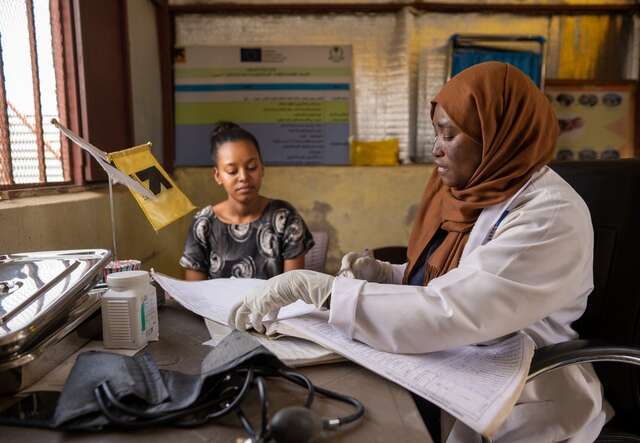
The IRC does more than bring contraception services into the hands of women who need it. We build the systems that keep it accessible and within reach, even during crises or shocks. Within days of an emergency, we partner with local actors to deliver the global standard set of life-saving sexual and reproductive health services, so access doesn't disappear once the acute crisis fades.
The IRC is leading the charge to bring life-saving, modern contraception directly to women in the hardest-to-reach places, partnering with governments, local organizations and communities to deliver options to women who might otherwise be cut off from care entirely.
In South Sudan, the IRC's self-care research, programming and advocacy led to the integration of self-care into the country's National Reproductive Health Policy. We piloted an approved self-injectable contraceptive, DMPA-SC (a simple method women can administer themselves at home), cutting the need for repeated clinic visits in settings where every trip can carry real risk.
We're designing scalable ways for women with low literacy in rural areas to access contraception through quarterly self-injection (Sayana Press). Self-injection has been tested in other contexts but not adapted to the realities of low-resource, humanitarian settings. In our recent study, 57% of women trained to self-inject were still using it a year later, benefiting from less travel time, more privacy and fewer unintended pregnancies. And 64% of participants were using contraception for the first time, showing how self-managed contraception can reach women who have never been served before.
Reaching women means showing up where conversations about their health are already happening, not waiting for them to find a clinic. The IRC's research-driven, multidisciplinary teams are rethinking how contraceptive care reaches women and girls, developing practical, client-centered solutions that shift ownership of care to women, girls and their communities. We're also exploring how to better integrate contraception, nutrition and immunization services where appropriate, to reduce costs and reach more women and their families.
In Nigeria, henna artists routinely talk with women about their health and self-care. By training these trusted messengers to include contraception in those conversations, the IRC reached 2,680 new family planning users: women now equipped with informed choices they didn't have before.
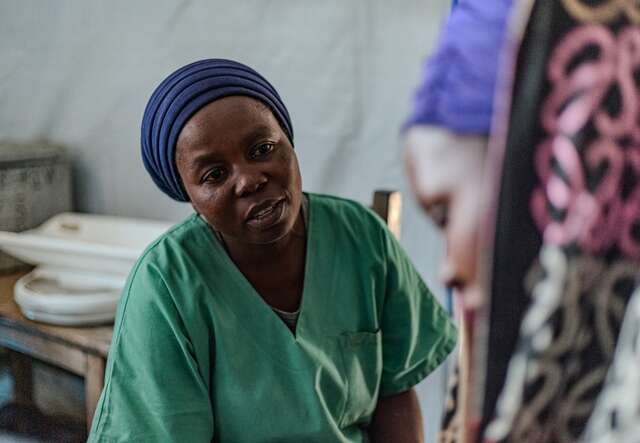
In the middle of an emergency, contraceptive care is too often overlooked. The IRC has deployed experts and resources to implement the Minimum Initial Services Package (MISP) for sexual and reproductive health (a sector resource we helped shape) in 30 acute emergencies across 15-plus countries, ensuring women have access to contraception from the earliest days of a crisis.
As a contributor to global sexual and reproductive health standards, the IRC implements these protocols with partners across 29 crisis-affected countries. Working with governments, communities, research institutions and donors, our evidence and advocacy fuel policy change that prioritizes sexual and reproductive health in humanitarian response.
Our goal is to reach at least 1.5 million women and adolescent girls by 2028 who have never used contraception, and prevent at least 600,000 unintended pregnancies through expanded contraceptive choice in fragile and conflict-affected settings. By 2033, we aim to triple that reach to 4 million women and adolescent girls.
We're focusing where the need and the gap are both greatest: countries in conflict with the fewest resources and the least access to support, including Somalia, South Sudan, Chad, the Democratic Republic of Congo, Nigeria and beyond.
As the gap between humanitarian need and available funding widens, contraception remains one of the clearest, highest-return investments for reaching more women and girls with fewer resources. And costs fall as programs grow: in South Sudan, sustained investment in health systems and policy brought the cost of a year of contraceptive protection from over $300 in 2019 to under $10 in 2025. The evidence is clear. What's needed now are partnerships to bring this solution to scale.
The International Rescue Committee (IRC) helps people whose lives and livelihoods are shattered by conflict and disaster to survive, recover and rebuild their lives. Founded at the request of Albert Einstein over 90 years ago, the IRC operates in more than 40 crisis-affected countries, combining frontline expertise, rigorous evidence on what works, and a relentless focus on maximizing the impact of every dollar.
Together, we can deliver reliable and lasting access to contraception so our clients can protect themselves today, and secure opportunity for tomorrow. Join us.