Anticipatory Action
When forecasts pointed to another failed rainy season, the International Rescue Committee (IRC), with support from The Coca-Cola Foundation, delivered anticipatory cash assistance to 800 households—approximately 5,600 people—in Somalia.
Families received four rounds of $100 monthly cash assistance distributed between December 2025 and April 2026, which provided them with flexible resources to decide how to cover their most urgent needs, from food and water to protecting livestock and other livelihoods.
This response is part of a broader initiative between the IRC and The Coca-Cola Foundation to strengthen and expand anticipatory action across climate-vulnerable countries in Africa.
For over four years communities in the Mudug region of Somalia have endured consecutive seasons of poor rainfall. In early 2025, the situation was worsening in Somalia. Forecasts pointed to another failed rainy season by the end of the year, raising concerns from the Federal Government of Somalia and United Nations agencies about a repeat of the severe hunger experienced in 2022, when Somalia was on the brink of famine.
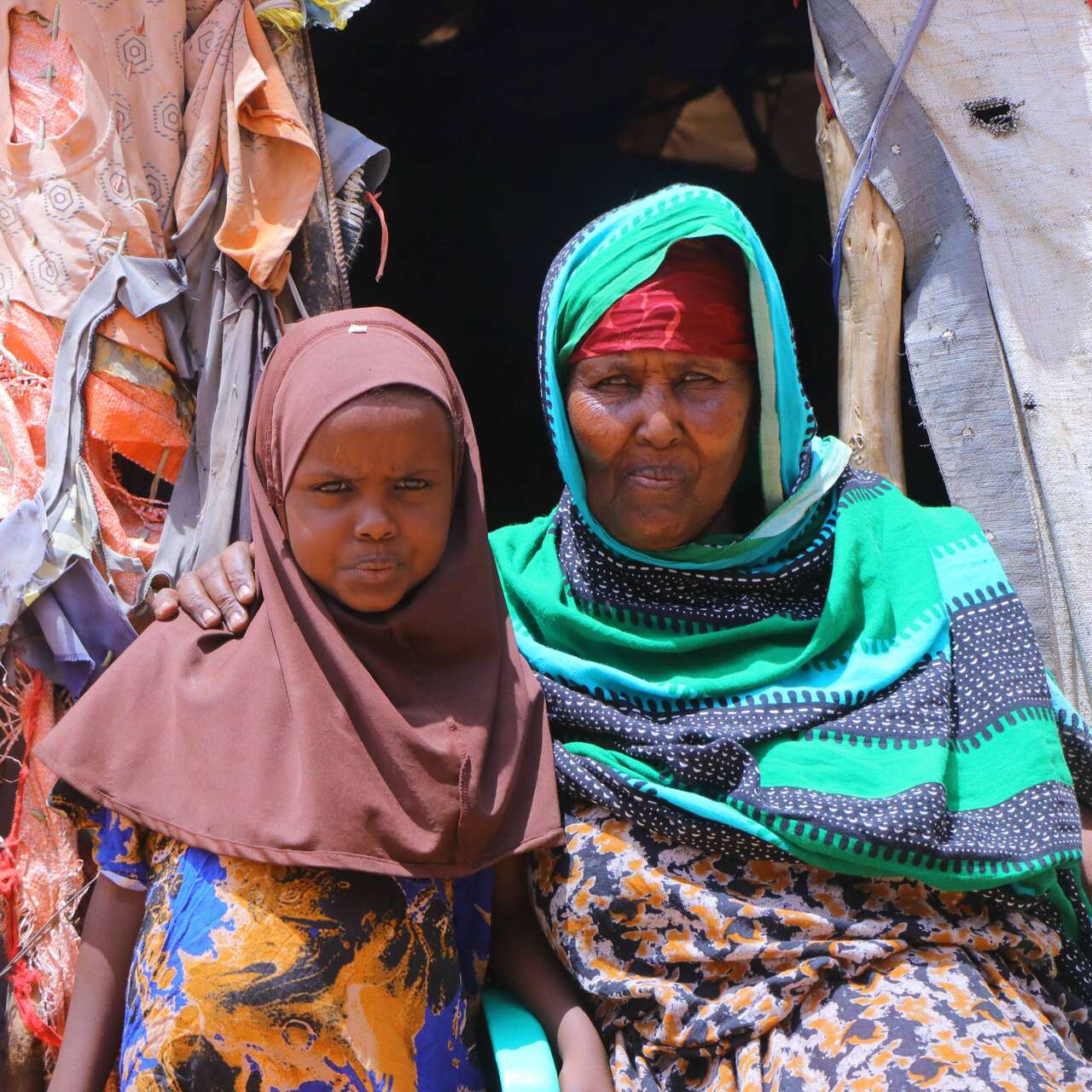
For Idman, a 65-year-old grandmother and head of a household in the Xerojale village, droughts can bring devastating losses. During the 2016–2017 drought, she lost almost all her livestock. “I had 300 livestock of sheep and goats in 2016–2017," she recalled. “The drought left me with three goats.” As thousands of weakened animals flooded local markets that year, prices collapsed—forcing families like hers to sell even more just to get by.
For families living through repeated drought, waiting for a crisis to become visible can mean it is already too late to protect what they have. With previous poor rainfall, households in Somalia were already facing extreme coping mechanisms such as selling productive assets like their livestock or pulling children out of school. Another season of poor rain threatened to deepen those losses, with food insecurity expected to worsen and increase the risk of malnutrition.
Anticipatory Action (AA) is an established part of the IRC’s approach to addressing growing humanitarian needs driven by climate hazards. Building on years of experience, the IRC uses forecasts to identify potential shocks in advance, giving teams time to plan and prepare assistance before conditions deteriorate. At the heart of this work is the IRC’s “Follow the Forecasts” approach, which combines long-range forecasts to identify potential climate hazards months ahead with rapid contingency planning and operational preparedness. This enables the IRC to determine where assistance is most likely to be needed and prepare to act within the available lead time. In Somalia, when forecasts indicated a high probability of another season of poor rains, the IRC activated “Follow the Forecasts” to prepare for the anticipated impacts of drought.
Support from The Coca-Cola Foundation enabled the IRC to expand its approach, reaching families before drought conditions peaked. The first transfer was made within one week of families registering for assistance.
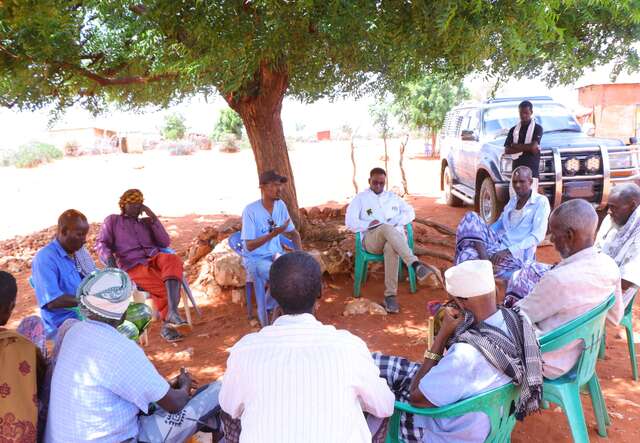
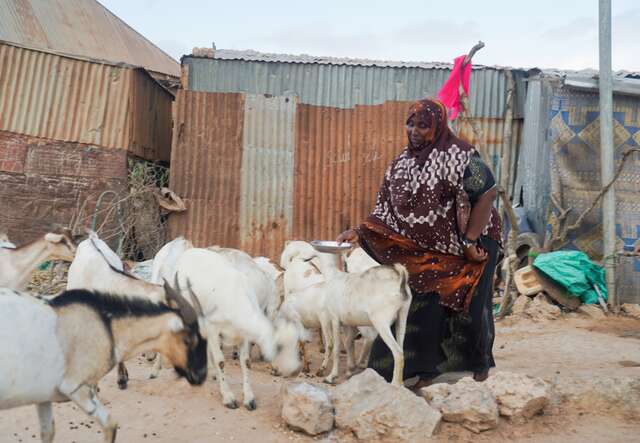
When a drought emergency was declared across Somalia, Idman started planning what to sell: two young male camels and a small herd of goats and sheep. This time, however, Mudug regional authorities and the IRC had identified XeroJaale as one of the communities targeted for support. Idman was among the households registered to receive cash assistance from the IRC, receiving $100 a month for four months. She used the support to prioritize essentials including food for her household and fodder for her livestock.
It was not simply the amount of money she received, but when it arrived.
The animals she had planned to sell remained with the household. Some bred and continued to provide milk, while the family retained productive assets that could support them beyond the immediate crisis. “This drought we had 80 goats and sheep and 10 camels,” Idman said. “The difference was the upfront cash we received.”
The contrast with the 2016–2017 drought was significant. Idman had received humanitarian assistance then, but much of it arrived after losses had already become severe. A livestock sale during drought may provide immediate income but can also remove an important productive asset from which a family could otherwise generate milk, income or future livestock. This time, Anticipatory Action intervened before the crisis deepened.
The experience of Idman was reflected in findings from the wider response during post-distribution monitoring. 69% of households surveyed said the cash arrived in time for them to act before conditions deteriorated, while 92% of households reported that their livestock were in better condition than during previous droughts and 80% reported lower livestock losses. The results also suggest that early cash helped households maintain food security and avoid more severe coping strategies.
For decades, humanitarian systems have largely been designed around response: a crisis develops, needs increase, assessments are conducted, appeals are launched and assistance follows. Anticipatory action shifts this approach by delivering assistance before conditions deteriorate, helping families protect their livelihoods and avoid negative coping strategies, such as selling livestock they depend on for food and income. It changes the question from how to respond after disaster strikes to what can be done in advance to prevent the worst impacts.
The Somalia response is the first completed Anticipatory Action response under the IRC’s grant from The Coca-Cola Foundation, but the ambition extends beyond a single drought.
With support from The Coca-Cola Foundation, the IRC is scaling up anticipatory action across climate-vulnerable countries in Africa, strengthening the systems needed to move from forecast to action—including regular monitoring of seasonal rainfall forecasts, rapid contingency planning, cash preparedness and post-distribution monitoring.
The Somalia experience is also contributing to a growing evidence base for the IRC's “Follow the Forecasts” approach. Over the past 18 months, with support from The Coca-Cola Foundation and other funders, the IRC has implemented anticipatory action responses using this approach in six countries.
The experience is pointing to an important opportunity for the humanitarian sector: expanding anticipatory action beyond individual organizations and reaching more communities that remain vulnerable. The IRC is now working with other humanitarian organizations to explore how multi-agency “Follow the Forecasts” responses could help close those gaps, while building on the lessons from the responses already implemented.
As climate shocks become more frequent and humanitarian resources become more constrained, acting on a forecast—rather than waiting for a crisis—can give families something increasingly precious: the ability to protect what they have before it is gone.
Four-star rated by Charity Navigator · BBB Accredited Charity · Candid Platinum Transparency · CHS certified