“At night, they cannot travel a long distance, so when they bring these drugs, I usually administer the injection for them at home,” says Beatrice, a 70-year-old grandmother living in Uganda’s Adjumani Refugee Settlement.
For Beatrice, being a nurse in South Sudan was never just a job. Now long-retired, but as committed as the day she entered nursing school more than five decades ago, she continues to serve her community when her nursing expertise is needed, whatever the hour.
“I am happy,” she says. “I am happy because I have a purpose.”
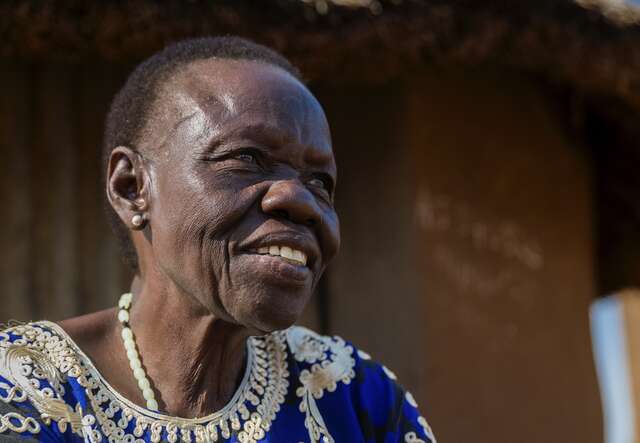
Beatrice Jane is a widowed refugee grandmother caring for a household of six in Uganda.
Photo: Emmanuel Edu for the IRC
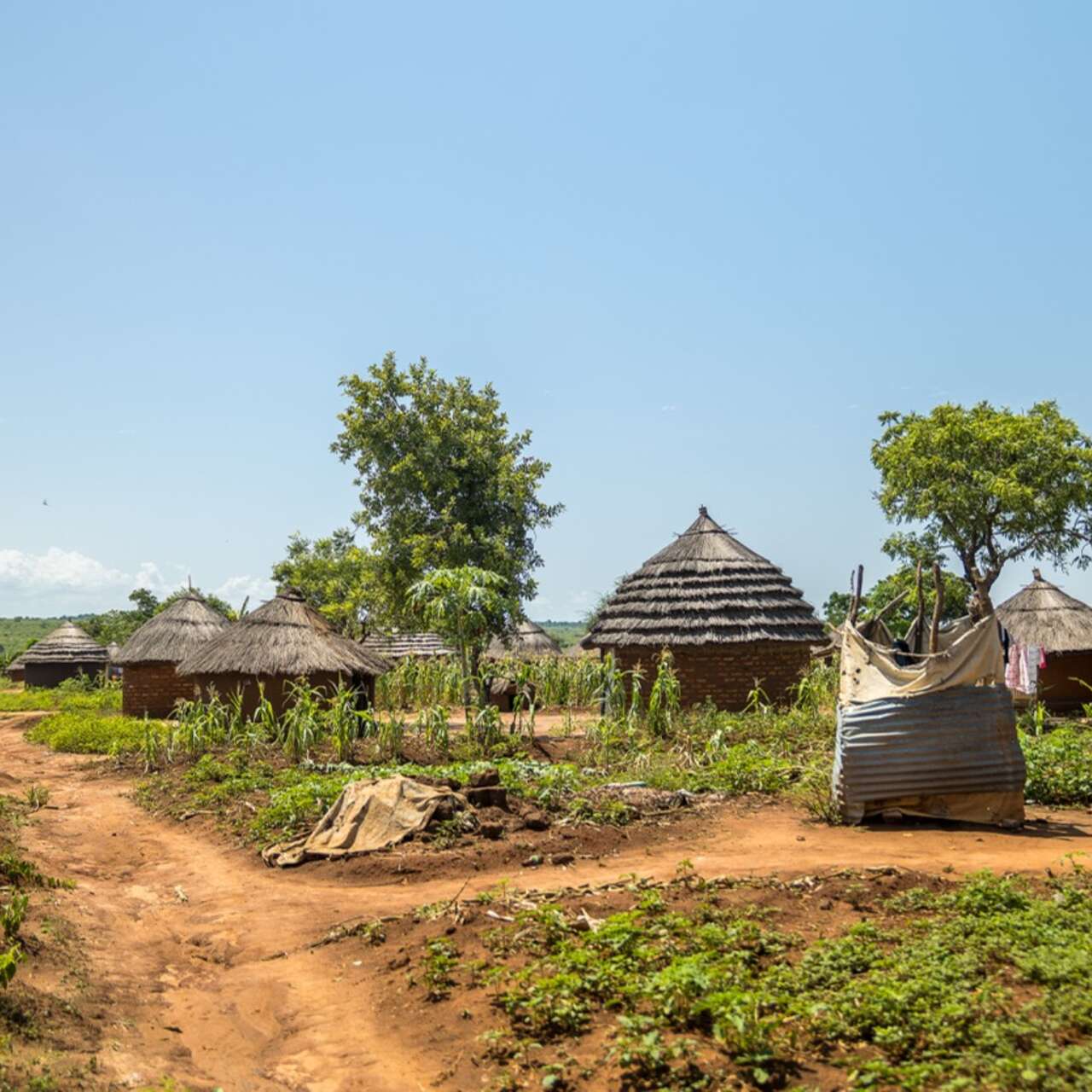
Beatrice is one of the two million people who have sought refuge in Uganda, which hosts one of the largest refugee populations in the world. More than half are fleeing conflict and the impact of climate shocks in South Sudan. Some are children who have traveled long distances without their parents; others arrive in desperate need of urgent medical care.
Uganda has one of the world’s most progressive refugee policies in the world, granting refugees freedom of movement, the right to work, own property and access public services..
Instead of seeing refugees like Beatrice as a burden to be managed, it sees them as people with skills, ambitions and potential. When refugees have opportunities to work, learn and participate in their communities, they can help drive economic growth and strengthen the places where they live.
A lifelong commitment
Beatrice’s commitment to helping others has been tested more than most, and been an infectious inspiration to her family.
In 1972, an eighteen-year-old Beatrice joined a nursing institute in Uganda with a single purpose: “My main dream was to help my community.”
Working as a government nurse during the war in South Sudan, months would pass without any salary. To make ends meet, she moonlighted in local pharmacies after hours and sold home-brewed alcohol on the side.
“That’s how my family survived,” says Beatrice. It was enough to raise six children and build a name for herself as a nurse people trusted. In time, her daughter became a nurse too.
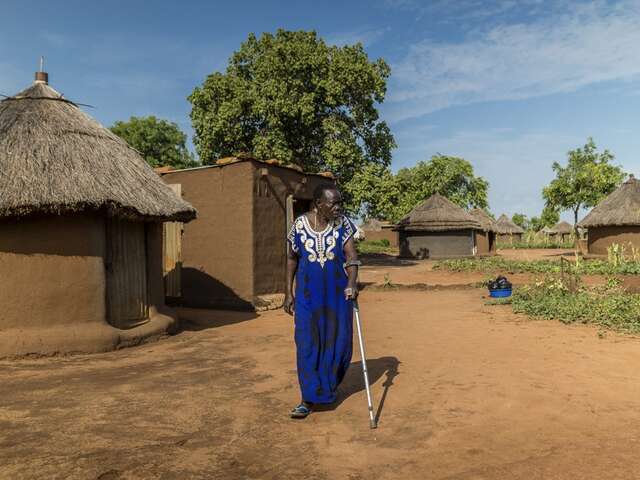
A former nurse in South Sudan, Beatrice continues to support her community by providing health advice and helping her neighbors interpret medical prescriptions.
Photo: Emmanuel Edu for the IRC
Forced to flee
In 2005, the same year the war for South Sudan’s independence ended, her husband passed away. Three of her six children have since died as well.
Then, in 2016, another war took what was left of the life she had built. Her home in South Sudan’s capital Juba sat near the army barracks, close enough that stray bullets landed nearby whenever fighting broke out.
The violence outside her home increased fears already growing in her own family. After Beatrice’s daughter fled an abusive marriage to a soldier and moved back home, her husband became a constant threat to the family.
Beatrice feared that he might come looking for them. When the civil war escalated in Juba, she decided to flee with thousands of others, taking a seat on one of the trucks the Ugandan government sent to evacuate its citizens. “I was very scared,” she says of the journey south to Uganda.
With conflict still simmering in South Sudan and around the region, around 250 people arrive every week in Uganda. The IRC is on the ground to meet them, identifying the most vulnerable individuals to provide immediate, life-saving support.
Rebuilding in Uganda
Beatrice was eventually settled in Adjumani, where she was told that her profession meant she didn’t qualify for cash assistance. “They believed that since I was a nurse, I could do something for myself,” she recalls.
Determined to prove them right, Beatrice applied for paid work with a medical organization and hoped her decades of experience would count for something. Instead, at seventy, she was told she was too old.
By then her own body had begun to fail her too. She had developed a spinal problem, and a knee that doctors said needed surgery that she could never afford.
“Older people like Beatrice often face more challenges because they are not able to move around easily,” said Agnes Oyella, an IRC Program Lead in Uganda. “They struggle to move to health facilities, fetch firewood and hardly earn anything, often depending on neighbors or family for support."
The IRC helped her with cash assistance — the equivalent of US $75 every month which she has used to buy essentials and put her grandchildren into school.
With funding from the Uganda Humanitarian Fund, the IRC is helping over 80,000 vulnerable refugees like Beatrice meet their most urgent needs with cash and shelter, while also helping protect them from abuse and exploitation.
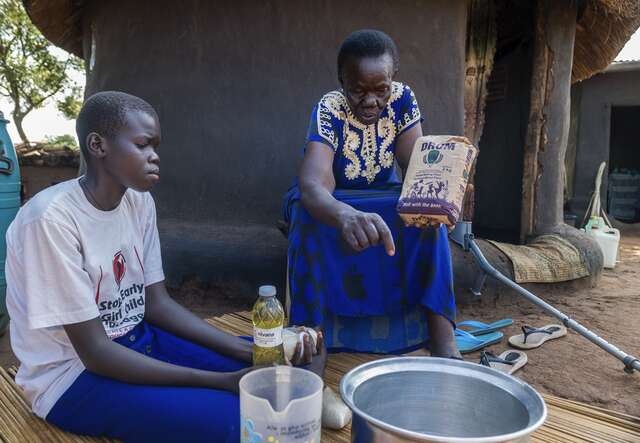
Beatrice has used the remaining capital to start small businesses: baking bread, making soap, and charcoal bought from the host community and resold in small piles around the settlement.
Margret, 16, and her grandmother, Beatrice, sit in the compound of their home in Pagirinya Refugee Settlement, Uganda. Beatrice shows Magaret how to measure baking ingredients for their small pastry business, one of the income-generating activities they expanded after cash assistance from the IRC.
Photo: Emmanuel Edu for the IRC
Now 70, Beatrice plans to stock and open her own drug shop so she can bring medicine closer to her new community. Right now, she is actively saving through her village savings group, where she serves as Secretary.
Beatrice wants her grandchildren to finish school and come back to a community that badly needs trained people, the same way she once did, more than half a century ago.