Intelligent aid
Nearly 240 million people are affected by conflict and disaster, and 118 million have been forced from their homes. At the same time, government donors are scaling back support for humanitarian organizations.
The result is a widening gap between what people need and the resources available to meet those needs.
Artificial intelligence (AI) can help bridge this gap by expanding the reach, scale and impact of humanitarian aid efforts. Used carefully, it can extend what a caseworker, a health worker or a teacher is able to do—reaching more people, sooner, with better information behind every decision.
The International Rescue Committee (IRC) runs AI-empowered humanitarian programs in some of the world’s toughest settings. Here’s how we’re putting them to work.
The IRC has a portfolio of over 20 AI projects at various stages of deployment across the world's most challenging settings. Every one of them is grounded in the IRC's do-no-harm principle: AI must strengthen, never undermine, the equity, safety and dignity of the people we serve. AI does not decide who the IRC services, nor what assistance they receive, and a human is accountable for every decision AI supports.
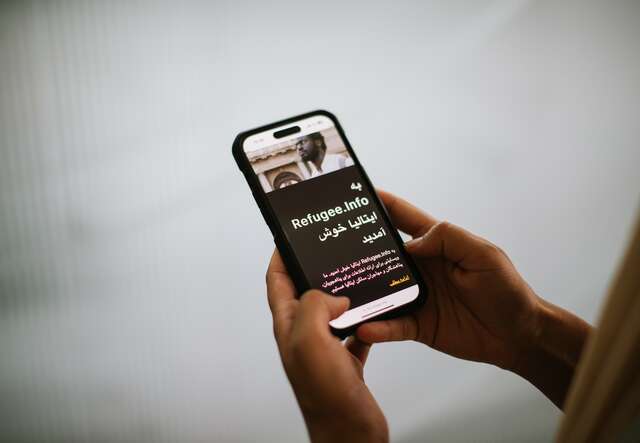
When crisis strikes, people's lives are uprooted. Communication networks break down, public services falter, and infrastructure crumbles. Finding out where to get help—and what information to trust—becomes dangerous and difficult.
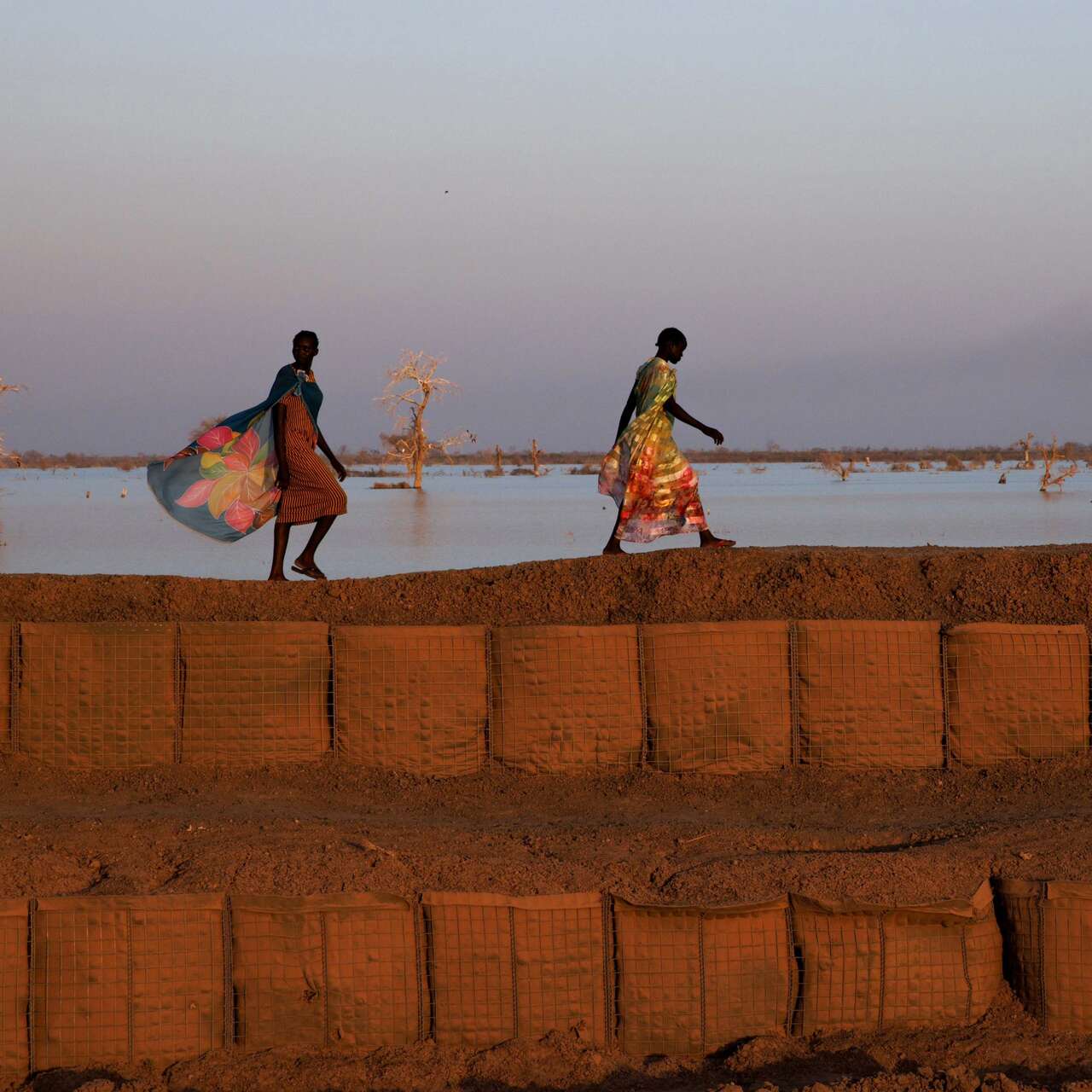
Humanitarian aid has traditionally arrived after a crisis has hit. Acting late costs more and helps less. The IRC is using AI to help forecast floods and release support before they strike.
Follow the Forecasts combines climate forecasting, vulnerability mapping, and rapid contingency planning to anticipate disasters and channel cash assistance to clients up to four times faster than a conventional response. Proven across six responses in five countries and reaching nearly 100,000 people, the model is now scaling into a multi-agency system.
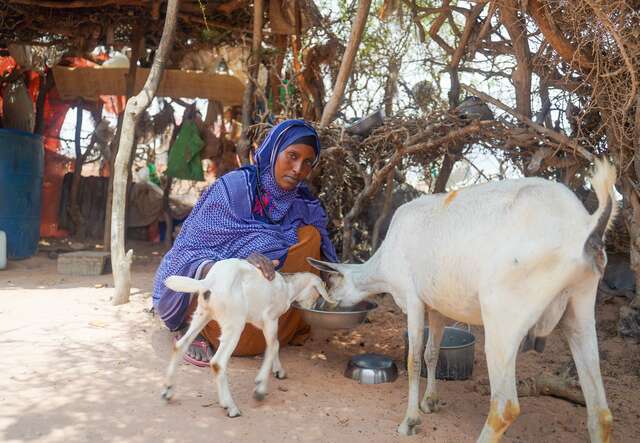
ReachMap applies the same logic to immunization. In humanitarian settings, populations are often on the move because of conflict and climate-related displacement, raising the risk of outbreaks of vaccine-preventable diseases such as measles, polio and malaria.
Building on the IRC-led, Gavi-funded REACH program—which has delivered more than 40 million vaccine doses to children in East Africa at under $2 a dose—ReachMap uses satellite imagery and AI to predict where zero-dose and under-immunized children live and recommend the safest and most efficient ways to reach them, updating plans routinely as access, supply, climate and security conditions shift. The IRC is piloting ReachMap in its immunization programs in East and Central Africa.
More than 70% of epidemic-prone outbreaks now originate in fragile and conflict-affected settings, where conflict and crisis have weakened health systems. The IRC is building smartphone-based diagnostic tools designed for these contexts, starting with mpox.
Using a database of more than 50,000 open-source images, refined with local data, the IRC has developed Sightline, a cost-effective smartphone screening app that allows health workers to take a photo of a patient’s skin lesion and screen them for mpox. Initial field testing shows 95% accuracy and Sightline works offline and runs on older devices.
The IRC now plans to extend the same framework to 10 or more high-consequence diseases, including tuberculosis, leprosy, cutaneous diphtheria, anthrax and skin infections. Over the next two years, the IRC aims to deploy diagnostic tools across 15 countries, serving millions and detecting infectious diseases before they become outbreaks.
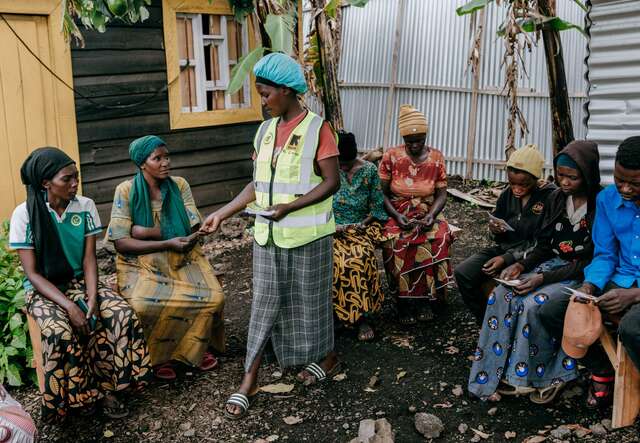
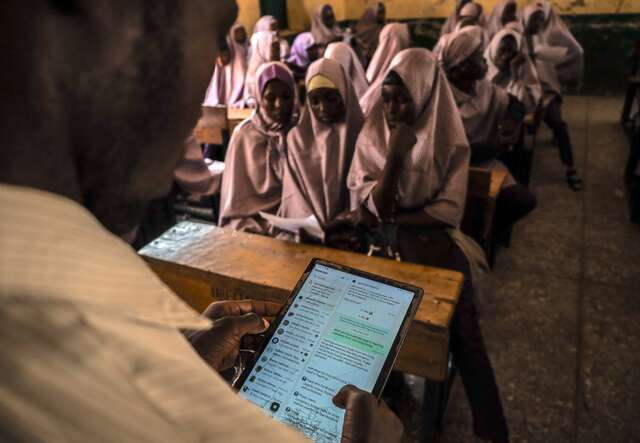
The IRC has developed aprendIA, an AI mentor for teachers and facilitators in crisis-affected contexts. Delivered over WhatsApp, aprendIA offers teachers three kinds of support in their own languages: building their teaching skills, working through real classroom problems as they arise, and finding ready-to-use materials.
aprendIA has been implemented in Ecuador, the Democratic Republic of Congo, Nigeria and Niger. Currently, the IRC is scaling to new regions of Nigeria in partnership with the Ministry of Education. aprendIA is live with over 6,500 teachers in Nigeria, and the IRC expects to scale nationally in 2027, with the potential to reach more than 135,000 teachers each year, supporting over 8.5 million children in Nigeria alone.
In Kenya, the Climate Resilient Education Systems Trial (CREST) uses AI-enabled forecasting and satellite-based triggers to detect climate shocks early and release pre-arranged financing for cash transfers, remote learning and child protection support, keeping children in school. It reached 28,000 learners in 2025.
The IRC is building the tools that reach people others can't. From forecasting disasters before they hit to keeping classrooms running through crisis, innovation is how we stretch every dollar further. Donate today to support the IRC's innovative work across more than 40 crisis-affected countries.
The IRC proudly works with our corporate and foundation partners to tackle the world’s toughest challenges. Together, we are developing the innovative humanitarian responses that are reaching people in the world’s toughest contexts.
Working with a broad coalition of private sector and philanthropic partners, the IRC has been testing what it takes to deploy AI responsibly in humanitarian settings. We have worked with organizations including Anthropic, Cisco, HPE, The Rockefeller Foundation, Zendesk and Zoom.
Learn how your corporation or foundation can partner with the IRC.
Our ratings: We consistently earn top marks from charity watchdog groups for our efficient use of donor contributions and the effectiveness of our work.
Get connected: Follow the IRC on Instagram, LinkedIn, Facebook, Bluesky and X.
Stay informed: Learn more about the world’s most pressing crises and what the IRC is doing to help.
Four-star rated by Charity Navigator · BBB Accredited Charity · Candid Platinum Transparency · CHS certified