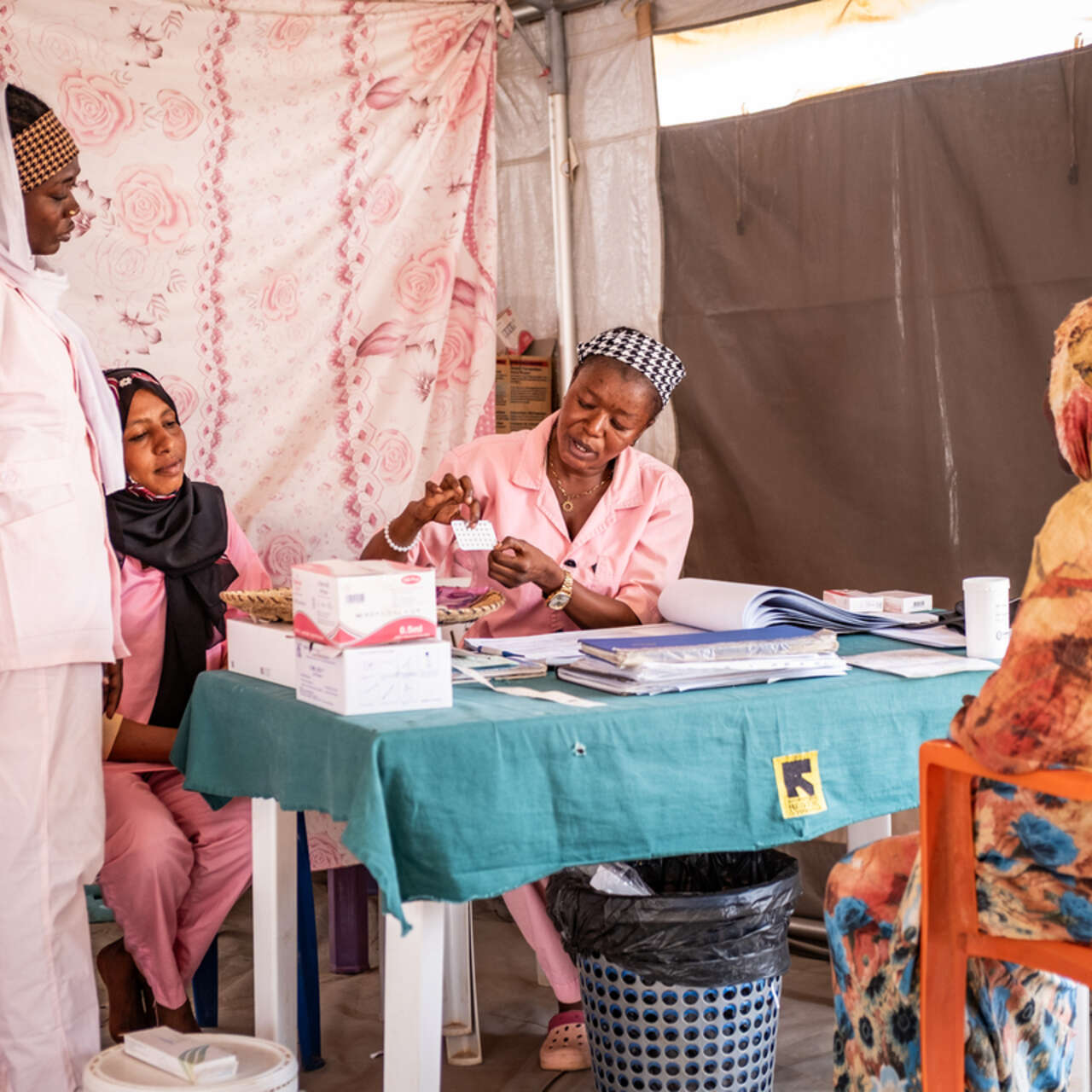
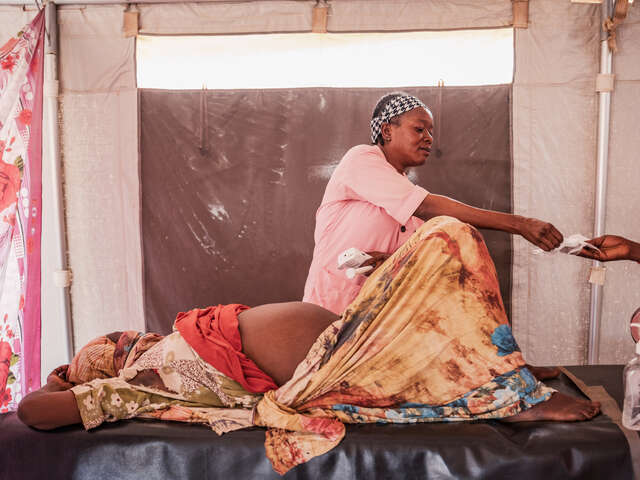
In the maternity ward of the IRC-supported health facility in Aboutengué refugee camp, Njdepa spends her days welcoming women who have already been through more than most people can imagine.
Fleeing war in their native Sudan, some have crossed into Chad after days of walking. Others arrive with no money, little food, and nothing prepared for the baby they are carrying. By the time they reach Njdepa’s clinic, many are tired, frightened, and unsure of what comes next.
“It’s not good for a pregnant woman to stay at home; instead, she is encouraged to come to the health center for a checkup, for the well-being of her child and also for herself” - Njdepa.
Photo: Taiwo Aina-Adeokun for the IRC
Njdepa knows that pregnancy in this setting is never straightforward. Women may have gone months without proper care, and many do not know where to turn when labor begins. The clinic gives them somewhere to go — a place where they can be seen, listened to, and followed through their pregnancy rather than left to manage it alone.
Care in the camp
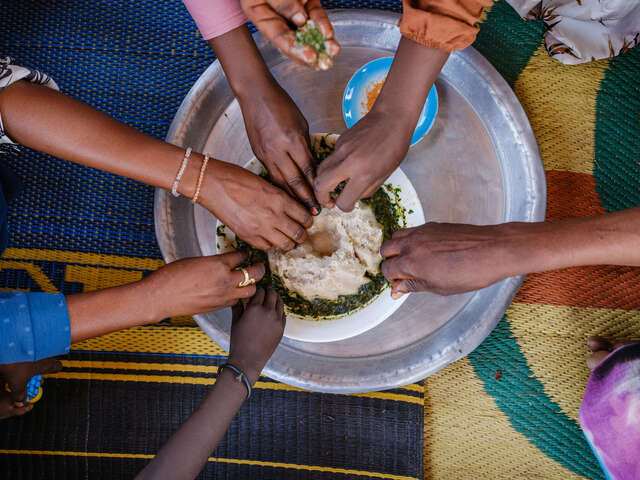
What stands out in Njdepa’s work is how often the support goes beyond the medical room. “Here, in partnership with an NGO or local partner, we can help and provide support right here and now,” she says. “Organizsations step in to provide support with food…Like the flour—they give it to these women, they go home, they prepare it, they eat it, just like pregnant women do.”
That help matters because many of the women who arrive in the camp are already struggling to get by. “The main challenge is getting enough food. There’s nothing to eat. There are no income-generating activities,” Njdepa says. “Once they get here, they don’t know what to do, and they don’t know what to eat. So it’s a bit difficult.”
Mothers share a meal in Aboutengué refugee camp, where food support helps pregnant women stay strong and care for their children.
Photo: Taiwo Aina-Adeokun for the IRC
Mariam*’s journey to Chad
One of the women Njdepa has cared for is Mariam. “They killed my husband in front of us, and six of my children had gone missing. The seventh I carried on my back.” Those are Mariam’s words, and they carry the full weight of what she lived through as she fled Sudan. She arrived in Chad injured, pregnant, and so overwhelmed that parts of the journey remain blurred in her mind.
When she first reached the camp, there was no clinic yet. She later lost her pregnancy at home, without skilled care. For a long time, she lived with grief and uncertainty, holding on while waiting for news of her children. A year later, they were found and returned to her, and slowly, her life began to change.
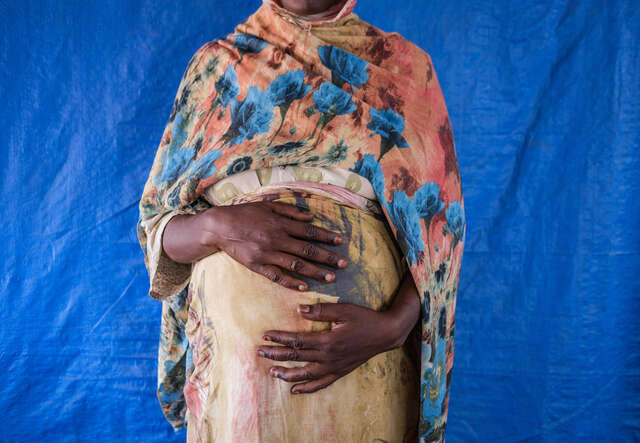
"I hope for my children and me that we will have a good place that is safe so that we can live together comfortably." - Mariam*
Photo: Taiwo Aina-Adeokun for the IRC
Now remarried and seven months pregnant again, Mariam comes regularly to the IRC-supported facility in Aboutengué camp. She has a clear delivery plan, and trained staff are following her pregnancy closely. “I follow up each month, and whenever I’m told the baby is healthy, I feel happy,” she says. After so much loss, these visits bring her something precious: a sense that this time, things may be different.
Njdepa’s hopes for the women
Njdepa talks about the women she sees with a mix of realism and hope. “We can ask them first to trust themselves. To have self-confidence. And also to have trust in the people working with them, such as partners and NGOs working with them,” she says. “We we hope that, day by day, they’ll be satisfied and overcome their situation.”
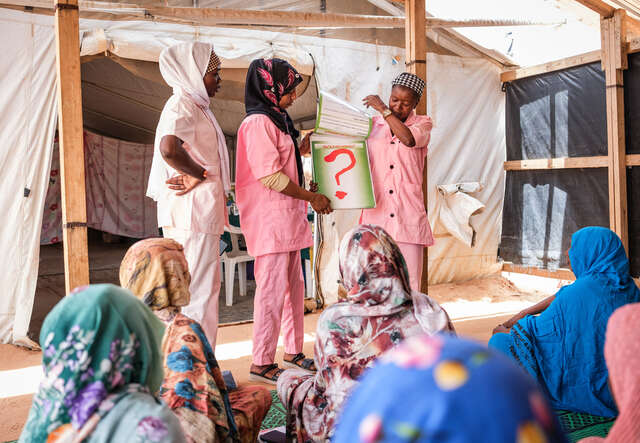
IRC midwives Darassalam, Njdepa, and Sadia give an antenatal session at the maternity ward at the clinic.
Photo: Taiwo Aina-Adeokun for the IRC
Her words reflect what she sees every day: women carrying a pregnancy through hunger, fear, and uncertainty, while trying to keep their families going. Pregnancy already brings enough challenges on its own. But when these women arrive, they lack basic necessities, making their situation even harder — and this is why continued support in Eastern Chad remains crucial.
Why IRC support in Chad matters
For Njdepa, maternity care in the camp is about more than helping a woman give birth. It is about helping her feel seen, supported, and less alone after a journey shaped by loss. The clinic gives women a place to return to, and the IRC support behind it helps keep that care steady when it is needed most. For mothers like Mariam, that can mean the difference between fear and a little peace of mind.
In and around Aboutengué camp in eastern Chad, the IRC helps women and newborns survive and recover by supporting health centers that provide maternal care to refugees and displaced families fleeing conflict and famine in Sudan. The clinics offer antenatal care, safe delivery services, and postnatal follow-up. Working with medical partners and local staff, the program helps keep care close to home, so women like Mariam can begin rebuilding their lives with more safety and dignity.
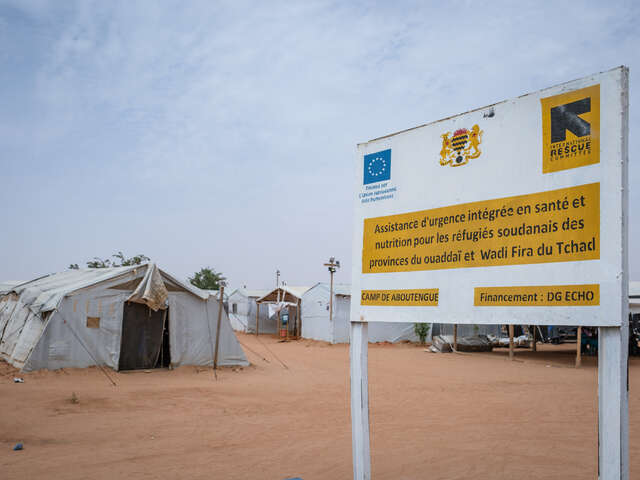
The IRC-supported refugee camp in Aboutengue, where Sudanese and local women receive maternal care and support under Chad Humanitarian Fund.
Photo: Taiwo Aina-Adeokun for the IRC
*Pseudonym used for privacy reasons.