Cash assistance
When the corn ran out: a mother’s resilience in Guatemala’s highlands
As El Niño threatens harvests in Guatemala, Lesvia stretched emergency food assistance from the IRC into weeks of meals for her children.
As El Niño threatens harvests in Guatemala, Lesvia stretched emergency food assistance from the IRC into weeks of meals for her children.
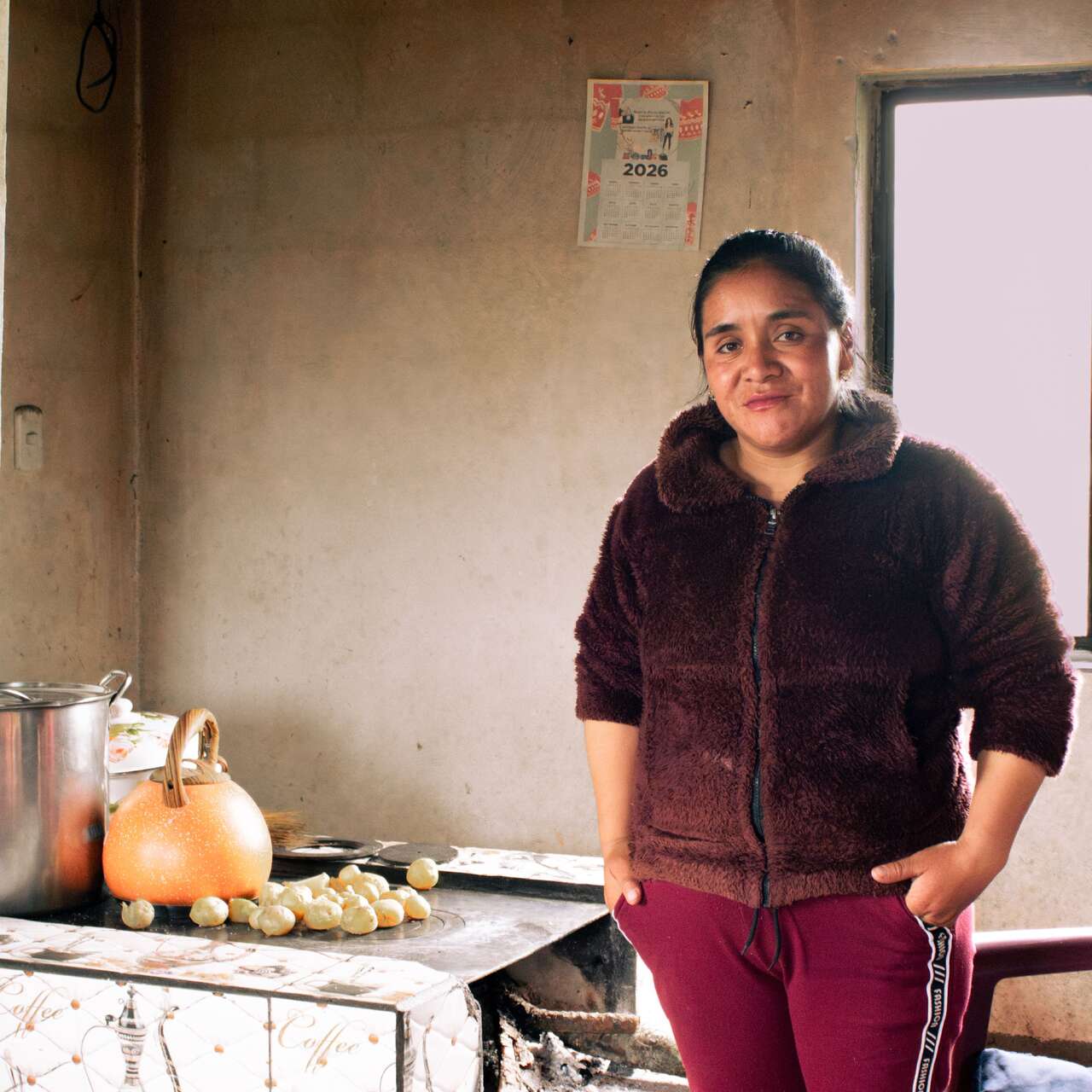
As El Niño threatens harvests across Guatemala, Lesvia, a mother of three and head of her household, turned emergency food assistance from the IRC into weeks of nourishment for her family.
Lesvia vividly remembers the day the assistance arrived. Her family’s supply of corn had run out, and she did not know how she would feed her three children.
She received emergency food assistance, funded by the Humanitarian Fund for Guatemala and delivered through the International Rescue Committee (IRC), and immediately went to buy corn.
“Sometimes it’s better not to have money in your pocket, but to have food in your home,” she reflects.
Lesvia, 30, lives in Nueva Esperanza, a rural community in the municipality of Chiantla, in Guatemala’s western department of Huehuetenango. Most families here make their living from farming and raising sheep, and their ability to put food on the table depends on the season’s rains and harvests.
In 2013, at the age of 17, Lesvia married and moved with her husband to a neighboring community. Complications during her first pregnancy brought her back to Nueva Esperanza, where her mother cared for her.
Her husband later migrated to the United States and started a new family. The support he sends to Lesvia is sporadic and inadequate.
The father of Lesvia’s two daughters also left after they were born and offers only occasional help.
Today, Lesvia is the sole provider for her son, 11, and her daughters, 8 and 4. Her son has faced health problems since early childhood, which she has managed largely on her own.
Lesvia makes a living by washing clothes and harvesting and cleaning crops such as potatoes, cauliflower, broccoli, onions and radishes on local farms, when work is available. She can only work for a few hours a day while her children are at school, and her earnings rarely meet the family’s needs.
Her greatest source of strength is her family. Although her mother has passed away, her father and siblings live nearby and help whenever they can. Her father gave her a plot of land, and over time her siblings helped her build a modest two-room house, where she has lived for the past two years.
“We have always been very close,” Lesvia says. “One way or another, if there’s enough for one of us to eat, there’s enough for all of us.”
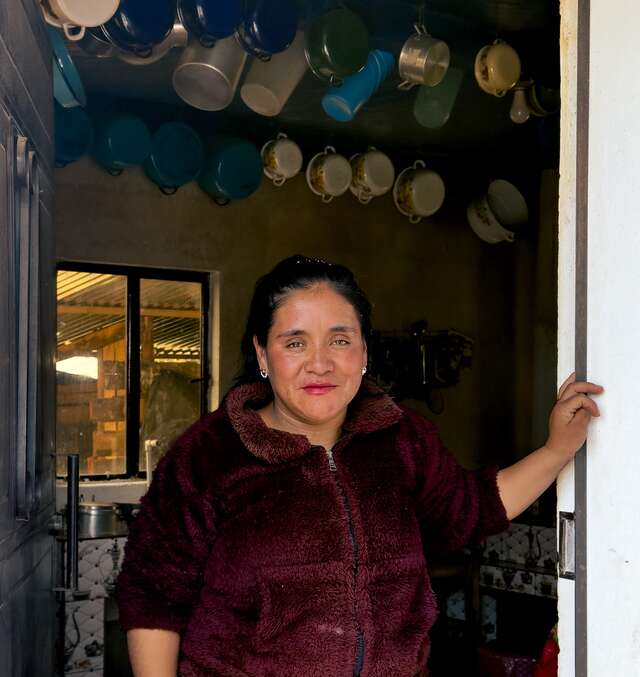
That closeness is visible in her kitchen, where colorful pots and baskets of every size are stacked to the ceiling. Lesvia adds to the collection whenever she can, continuing a tradition she inherited from her mother and shares with her siblings.
For families in Guatemala, the El Niño weather pattern has become synonymous with disrupted rainfall and failed harvests. The World Meteorological Organization expects this year’s El Niño to reach strong or very strong intensity between November 2026 and January 2027, putting extra pressure on families like Lesvia’s.
Corn is the staple of the rural Guatemalan diet, and most of it is grown without irrigation. When the rains fail, harvests fail and households that already live on very little have nothing to fall back on.
Even before El Niño took hold, around 3 million people in Guatemala were facing crisis levels of hunger. Now, as a historic El Niño builds, persistent high temperatures and low rainfall are projected to increase food insecurity throughout Central America by more than 80%.
Lesvia’s household was among those selected for emergency food assistance through an IRC project funded by the Humanitarian Fund for Guatemala. The assistance is delivered in three installments to help families meet their food needs through the most difficult part of the season. The first round of assistance arrived just as Lesvia’s corn ran out.
Alongside the assistance, the IRC offers a workshop called Mi Canasta Que Alimenta (“My Nutritional Basket”), which helps families plan balanced meals and make their resources go further.
Lesvia applied what she learned with great care. She chose to spend most of the money on food: corn, rice, beans, coffee, cooking oil, sugar, lard, milk, cereal for her children, bread, jelly and Incaparina, a fortified nutritional drink. By budgeting carefully, she made the supplies last between 15 and 22 days and still set aside enough to buy firewood for cooking.
“I was able to buy what was most useful, and that is what is sustaining my children and me now,” she says. “Thank God and thank you all for thinking of this community.”
Lesvia is especially grateful that the assistance extended well beyond her own home. In Nueva Esperanza alone, 172 people are receiving support through the project.
“I am very happy because the help wasn’t just for me,” she says. “It reached quite a few others, too.”
In Huehuetenango, the IRC delivers food assistance in four municipalities: Chiantla, Huehuetenango, Santa Cruz Barillas and Santa Eulalia. The program prioritizes families with inadequate food consumption, households headed by women, families with children under five, and Indigenous communities.
Through this programming, the IRC has reached more than 3,000 families, providing assistance to over 15,000 people at risk of food insecurity. The project is implemented in partnership with CARE and Guatemalan organizations CICAM and ASEDE. This consortium also works together to protect women and families from violence and improve access to essential services in Huehuetenango, Quiché and San Marcos.
As El Niño intensifies, the IRC is expanding efforts to reach at-risk families before the crisis peaks—so that fewer parents are left facing an empty pantry, as Lesvia once did.
Whatever the coming months bring, Lesvia holds on to the principle that has always sustained her family: “When one eats, we all eat.”
This project is funded by the Humanitarian Fund for Guatemala.
Four-star rated by Charity Navigator · BBB Accredited Charity · Candid Platinum Transparency · CHS certified