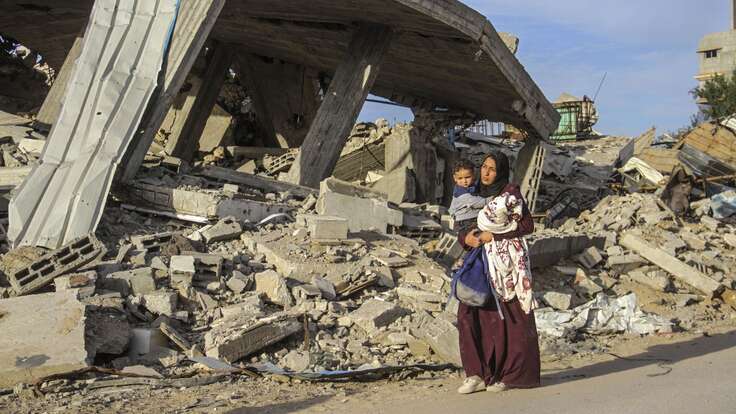
Tens of thousands of households flooded in Gaza, as people face fourth winter in tents
- At least five people, including children, died on Sunday when a rain-soaked embankment collapsed onto tents south of Deir al-Balah.
- Pumping and drainage systems are failing without fuel, engine oil and spare parts, so water pooled around tents and blocked roads.
- Aid groups have about 2,800 tents inside Gaza, against a need of roughly 121,000.
- The IRC and our partners are providing lifesaving services throughout the oPt.
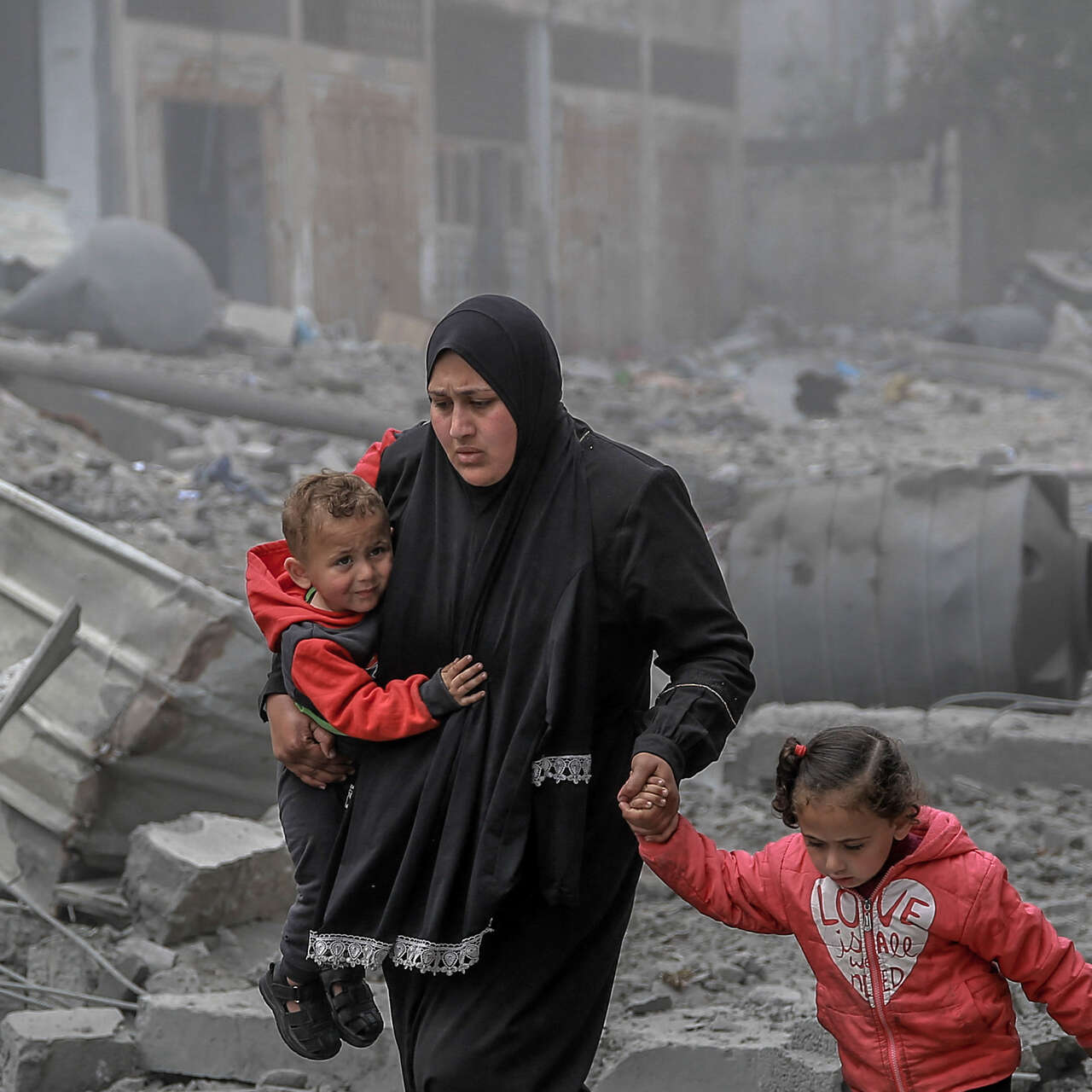
Israeli forces began airstrikes and ground operations after Hamas and other armed groups launched a deadly ground incursion and rocket barrage on southern Israel on October 7, 2023, killing 1,200 people and taking over 200 hostages. Israeli airstrikes, bombing and ground-level fighting have since killed more than 73,000 Palestinians, according to UN OCHA, which bases its figures on the Gaza Ministry of Health statistics. Of the identified fatalities, almost half are women and children. Attacks have also destroyed homes, hospitals, schools, shelters, religious sites and essential services like bakeries, leaving no place safe across the whole of Gaza.
A ceasefire was achieved on October 10, 2025. However, the ceasefire has not sufficiently addressed the massive humanitarian needs in the occupied Palestinian territory (oPt).
To fully protect Palestinian lives and safely scale up humanitarian assistance and service delivery, the IRC urges all parties to ensure that this agreement becomes a first step toward a permanent end to the war, and lasting peace for all people in the Middle East.
3.6 million people are in need of humanitarian assistance across Gaza and the West Bank. Despite a fragile improvement since the October 2025 ceasefire, more than half of Gaza’s population still faces crisis levels of food insecurity or worse, and most families are water insecure.
Israeli operations have caused severe destruction and widespread death in Gaza. According to UN OCHA, more than 73,000 Palestinians have been killed—and of the identified fatalities, more than 50% are women and children. Nearly 175,000 have reportedly been injured. Approximately 85% of Gaza’s roughly 2.3 million residents have been displaced, most multiple times over.
In Gaza, mass displacement due to the ongoing hostilities and the Government of Israel’s displacement orders has worsened conditions in what was already one of the most densely populated places in the world. With over 370,000 housing units destroyed, people are living in tents or self-built shelters that are ill-suited to weather conditions, exacerbate protection risks and fail to provide any sort of privacy or dignity.
The crowded conditions and lack of basic hygiene are creating a public health risk at a time when the health care system is on the brink of collapse. Attacks on and fighting around hospitals have left much of Gaza’s population without access to medical care, and the huge number of casualties has left facilities overwhelmed. More than 50% of hospitals are non-functional, and all are facing extreme shortages in staff, medical supplies, pharmaceuticals, and fuel.
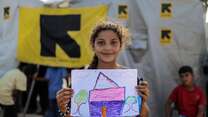
Children are bearing the brunt of the conflict. More than 728,000 school-aged children have been completely out of formal schooling for over two consecutive years. The majority of schools are being used as shelters, and 97% of schools in Gaza have some level of building damage. Thousands of children have been killed or severely injured, while 17,000 have been left unaccompanied or separated from their families. These children face high risks of child labor, exploitation, neglect, extreme hunger, and severe mental health impacts. Reports indicate that children in shock are displaying distressing behaviors, such as clinging to others during loud sounds, bedwetting, nightmares, and seeking safety by sleeping under beds.
Malnutrition remains a serious concern: despite significant improvements in child nutrition, more than 74,000 children aged 6–59 months are likely to require treatment for acute malnutrition, including more than 11,400 severe cases.
The IRC is concerned about the impact of intensifying violence on health care access and the ability to deliver care. Our partners are delivering medical supplies to impacted hospitals, but ongoing fighting near these facilities is obstructing ambulances and restricting Palestinians' access to urgent medical care.
IRC teams are providing emergency assistance. With nearly 600,000 people on the move trying to get home, damaged roads, debris everywhere, and fuel extremely scarce, our teams have relaunched programs and restored services, in addition to expanding to new locations.
In Gaza, the IRC is delivering clean drinking water alongside sanitation and hygiene services, including building emergency latrines and distributing kits that support personal hygiene and safety. We are rehabilitating water infrastructure where feasible and continuing provision of critical water supply. We are also providing cash assistance to help families meet urgent needs.
Our protection programs prioritize the safety and well-being of women and children. In addition to case management, we’re helping children and caregivers cope with distress through mental health and psychosocial support. We're providing child protection case management services, including Identification, Documentation, Tracing and Reunification (IDTR), and establishing community-based protection committees to strengthen protection for returnees and IDPs.
The IRC and partners are expanding sexual and reproductive health services, including antenatal and postnatal care, family planning and breastfeeding promotion. Nutrition screening is part of these services, and anyone who needs further assessment or treatment is referred to nutrition partners through an established and successful pathway. We’re also providing early childhood development activities to help children grow and thrive.
Earlier in the response, the IRC distributed food, supported emergency medical services in the few remaining operational hospitals, screened and treated children for malnutrition, and deployed mobile health teams to deliver essential care, including medicines and supplies.
In the West Bank, the IRC and our partners are providing early childhood development activities and support for children and families affected by violence. This includes mental health care, psychosocial support, and help for survivors of abuse, as well as training frontline workers to respond in a safe and respectful way.
We are also supporting the Ministry of Health in the West Bank in helping communities become more resilient. This involves improving access to health services, training health workers to identify protection concerns, and strengthening emergency preparedness. We're working closely with local partners to make sure efforts align with national plans, connect health services with protection support, and reach the areas most in need.
A ceasefire alone will not address the massive humanitarian needs in Gaza. For the plan to be effective, the following four urgent things must happen:
1. Large-scale, rapid and unimpeded delivery of humanitarian assistance: Food, water, medical, nutrition and shelter supplies and the restoration of basic infrastructure to meet overwhelming needs, particularly in the north where conditions are most severe. To sustain delivery, at least 1.9 million liters of fuel every week must be allowed to enter Gaza. Aid should be measured not just in trucks going in but on whether aid reaches those who need it most.
2. All crossings must be opened to enable rapid delivery of scaled-up assistance and movement of expert humanitarian staff. The IRC alone has over 5 tonnes of life-saving medical supplies prevented from entering Gaza for several months. The UN has 170,000 metric tons of supplies cleared and ready to go.
3. Unlike previous ceasefires, this one must endure and pave the way for lasting peace. A permanent cessation of hostilities and safe conditions on the ground is the only way to fully protect Palestinian lives, allow for the safe, rapid and unimpeded scale-up of humanitarian assistance, and enable Palestinians to begin rebuilding their lives.
4. Sustained funding for humanitarian organizations like the IRC is essential to scale up and meet overwhelming needs. Especially as Gaza heads into winter, investments in shelter, health, nutrition, WASH and education are urgently needed.
Finally, the IRC is calling for all parties to immediately take steps to protect civilians and uphold international law.
Donate: The IRC is delivering life-saving aid to Palestinians in both Gaza and the West Bank—but support from donors like you is critical in maintaining our operations. Your donation can help the IRC provide Palestinians with emergency health care, cash assistance, clean water, hygiene supplies, nutrition treatment, protection services, and early childhood development activities.
Your $80 donation can provide medical care for a malnourished child throughout the course of treatment.
Get connected: Follow our Instagram, LinkedIn, Facebook, Bluesky and X accounts.