Announcement
As refugees and new Americans work to rebuild their lives in Utah, many face the first and most significant hurdle: English language access. While various English as a Second Language (ESL) resources and classes exist, many programs remain overwhelmed by high demand, resulting in lengthy waitlists that can last for months. For families served by the International Rescue Committee (IRC) in Utah, delays in accessing ESL resources frequently meant delays taking the steps needed to achieve long-term self-sufficiency, such as securing gainful employment and the ability to navigate resources on their own.
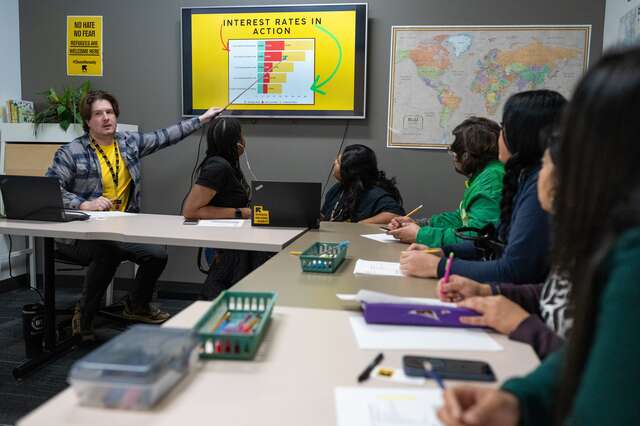
Will Weide, financial capabilities coordinator (left), participates in a Vocational ESL class providing a life-skills lesson on financial literacy related to credit building.
Photo: James Roh
In 2025, the IRC launched its Vocational English as a Second Language (VESL) program to offer families a space to boost learning while working to navigate other resources. Originally designed as an intensive six-week newcomer course, the program has evolved into a flexible, community-based initiative working to establish classes based on participant feedback. The program complements other, more comprehensive ESL programs, like the offerings from the English Skills Learning Center.
Through generous funding provided by the Cultural Vision Fund, the IRC’s VESL program delivered seven learning cohorts in total, serving 99 English Language Learners with a total of 527 instructional hours. Students described the VESL program as the “best place to learn to speak English quickly,” noting that they feel they have "learned a lot" in a very short time.
The VESL program currently offers three levels—beginner, intermediate, and advanced—that are continually tailored to student interests and feedback. Students attend 1.5-hour classes twice weekly, combining traditional classroom instruction with mobile learning via online resources like the EnGen app, with access to free subscriptions supported by the Mobile Learning Fund. Classroom topics shift rapidly to account for student feedback: one week could have a focus on workplace English and the next could dive into academic-level reading & writing skills based on consensus from the group.
“Because the IRC in Utah is focused on holistic case management & wraparound services, the VESL classes can incorporate specialized topics from across IRC programming,” explained Saige Palsson, workforce development program manager at the IRC. This holistic approach ensures that students gain more than just grammar skills.
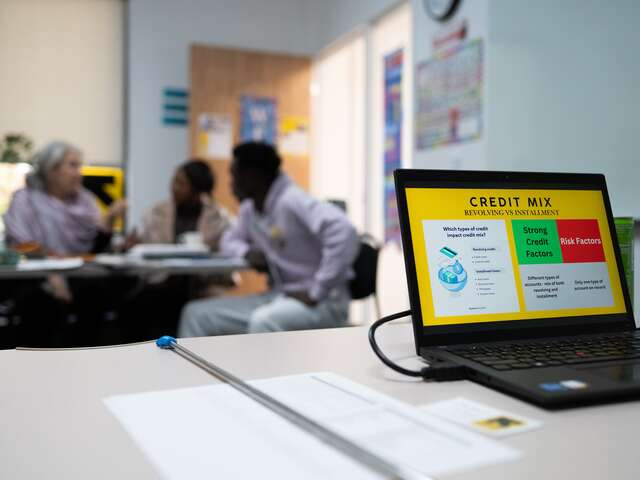
From financial literacy sessions to vocational deep dives, the VESL program empowers students with the knowledge required for long-term self-sufficiency.
Photo: James Roh
Alana Christensen, a VESL instructor, noted that while students know they need English, they often don’t realize they also need support with digital and financial literacy to navigate life in the United States.
“Students rely on their teachers to help them understand what they don’t know as part of their integration into the United States. Digital literacy, financial literacy, etc. are deeply integrated into all of the systems that they encounter—VESL class offers a space to engage with these topics easily,” Alana outlined.
Beyond language, students report gaining "confidence, communication skills, teamwork, and time management." Students particularly value the "friendly environment" and the opportunity for "connecting with people from other countries and cultures," which helps them practice "speaking in front of everyone."
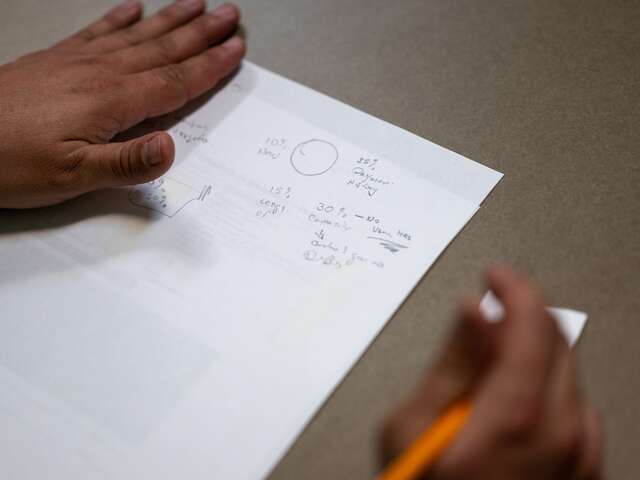
Students described the VESL program as the “best place to learn to speak English quickly,” noting that they feel they have "learned a lot" in a very short time. Beyond language, students report gaining "confidence, communication skills, teamwork, and time management."
Photo: James Roh
The program invites guest presenters from other IRC teams who can help integrate language lessons alongside essential life skills to support long-term self-sufficiency. From financial literacy sessions to vocational deep dives, the VESL program empowers students with the knowledge required for long-term self-sufficiency.
The IRC in Utah continues to offer robust programs that aid refugee and new Americans on their resettlement journey as they work hard to rebuild their lives in our community. You can make sure programs, like Vocational ESL, continue by starting a monthly gift to support our local work. Give today at Rescue.org/GiveSLC »