International Women's Day
In times of conflict, women and girls face the greatest risks—violence, exploitation and limited access to essential care. This International Women’s Day, discover how the International Rescue Committee (IRC) is supporting survivors of gender-based violence in the Democratic Republic of Congo (DRC).
After years of political instability, the DRC has remained on the IRC’s Emergency Watchlist for a decade. Armed groups continue to exploit land and resources, while shortages of clean water and sanitation fuel disease outbreaks. For displaced and vulnerable communities with little access to healthcare, the consequences are life-threatening.
Women and girls are disproportionately affected. Many face heightened risks of sexual and gender-based violence, especially in remote areas where accessing medical and psychosocial support can be nearly impossible.
In partnership with the European Union (EU), the IRC has launched an emergency response in South Kivu province, delivering integrated medical, psychosocial and economic support. The project strengthens protection and care for survivors of gender-based violence, as well as helping them rebuild their lives with dignity and resilience.
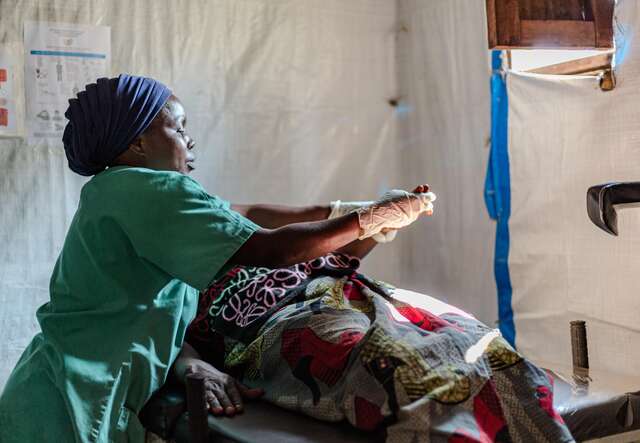
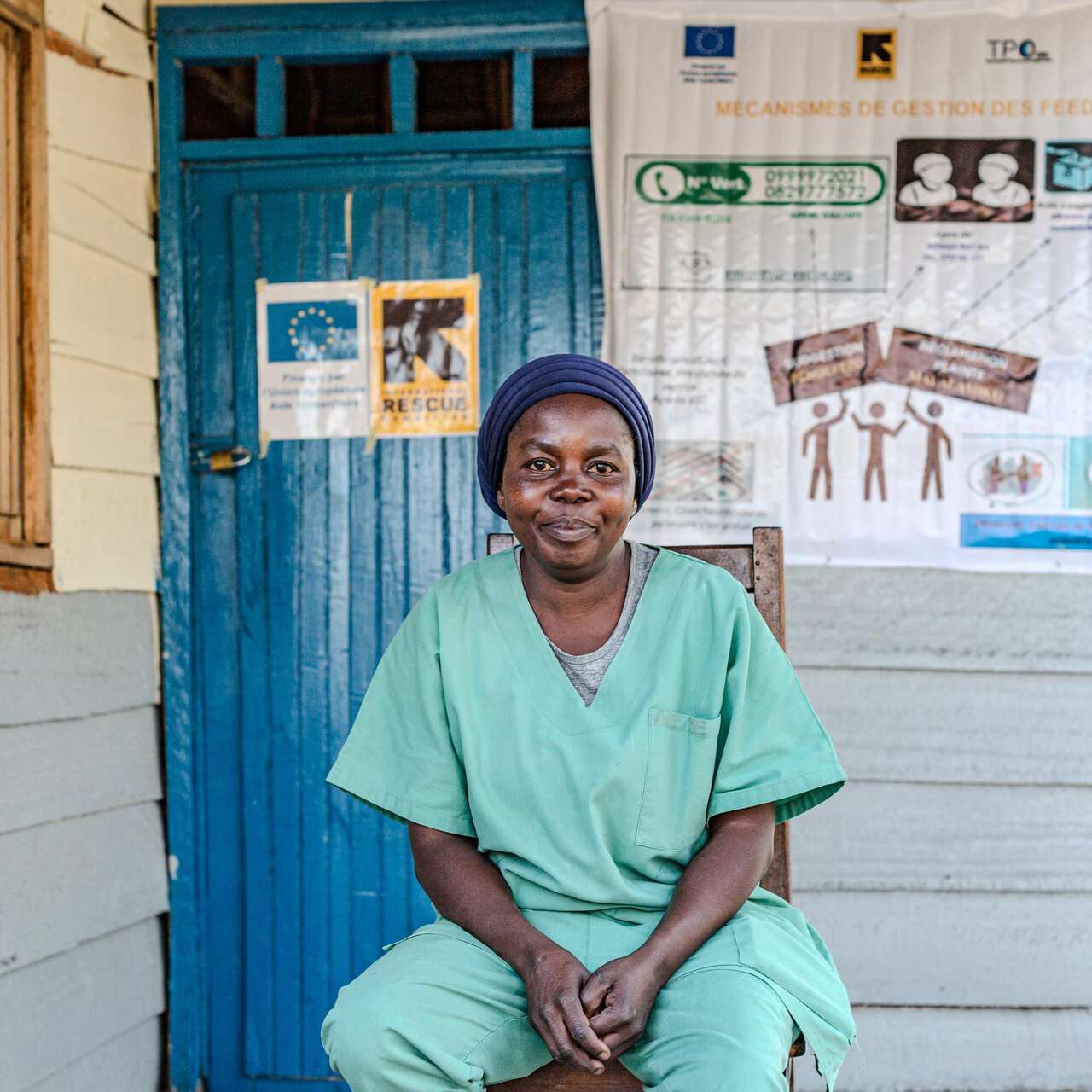
Neema is a thirty-two-year-old midwife living in the isolated district of Numbi, in South Kivu. With fifteen years of experience in the field of reproductive healthcare, Neema is an essential staff member at the local Numbi Health Center, which provides vital medical and psychological support to victims of sexual violence in the area. She does prenatal check-ups and refers patients to psychosocial support services when they are in need of counseling.
Neema explains how many women arrive at the center already in labour, often traumatized because their pregnancies were the result of rape: “When a woman who conceived through rape comes here to give birth, there are many challenges because she was not prepared for it. She has no baby clothes, no blankets to keep the baby warm, no food, and no one to support her through the pregnancy.”
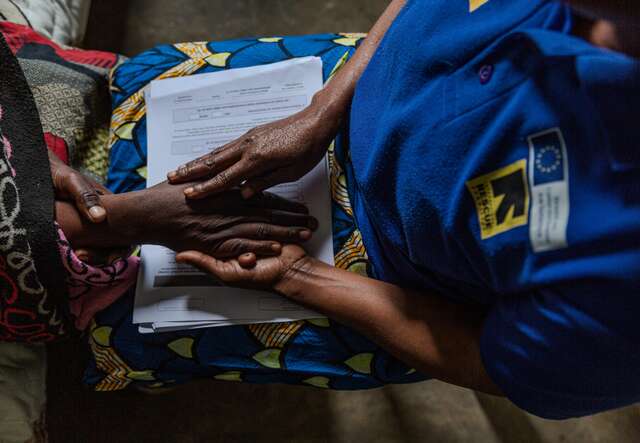
These situations pose challenges for the healthcare providers at the center who do not have the amenities to offer follow-up support for the newborns.
“I lack the means to help her,” Neema says, “This also traumatizes me. We are limited. Once they leave the health center, they continue facing daily struggles without any follow-up.”
The IRC’s EU-funded project strengthens community capacity by organizing training sessions on intervention for victims of gender-based violence, psychological care, and family planning for the staff at the Numbi Health Center. “It has helped us a lot,” Neema says, “Now when we have a case, we have the skills to provide appropriate care at our level.”
To support the center, additional facilities were also built to help equip them provide better healthcare services. This included an antenatal consultation shelter, a building for reception and directing different medical cases, as well as a proper waste disposal facility.
“Here at Numbi Health Center, through the IRC, we have seen a new image emerging,” says Neema. She has strong faith in rehabilitating women who have survived sexual violence: “Through our guidance, they can attempt to return to a normal life once again.”
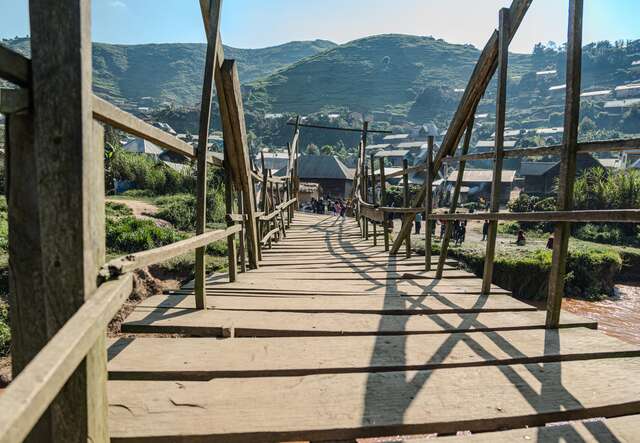
There is still work to be done, as the center is hindered by poor infrastructure, such as a lack of electricity. Access remains difficult since patients must cross a poorly constructed bridge over the river to reach the centre.
Nadine* is a survivor of sexual violence who lives in South Kivu. Her life had taken a dark turn when one day, returning from the fields, she was assaulted by two armed men.
Completely shaken by the trauma of this experience, she chose to remain silent for fear of judgment and shame. Even her husband never knew what she was going through. After finally confiding in her friend, she learned about the IRC-led community-based organization in her are,a where she received the support she needed to regain emotional and psychological stability in the aftermath of her trauma.
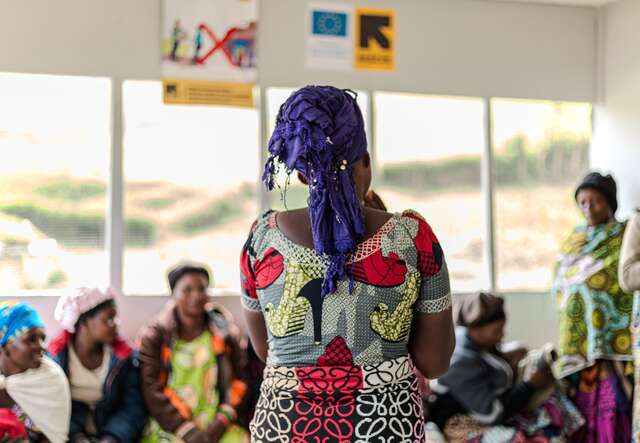
“They spoke to me with an open heart and took care of me,” Nadine* explains. “After taking medication and speaking with them, I felt more mentally stable. After I shared my story with them, they comforted me by saying I was not alone in this ordeal.”
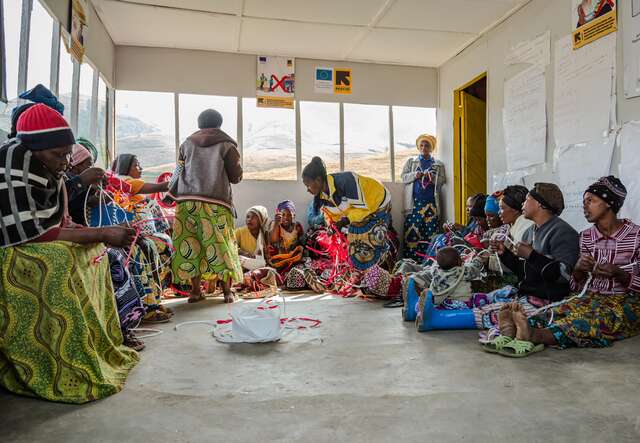
Today, Nadine* is regular a member of the community-based organization, where she extends support to other women by sharing her own experience in an attempt to restore hope. Being a member at the organisation also helps her in many ways—what she gives to the community, she gets back: “Making baskets helps me a lot. Because with the other women at the CBO, we weave baskets while sharing things with each other. This work can help us survive and grow. When I’m here with the others, I forget all the problems at home.”
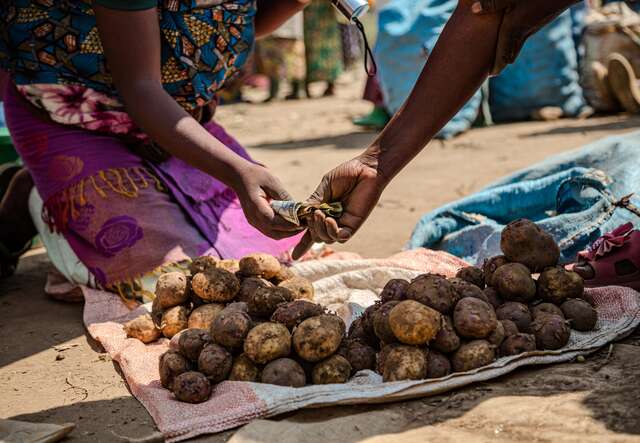
Prior to discovering the organization, Nadine* did small jobs, like carrying sand and stones, in order to provide for her child. However, now, after receiving a small fund and attending entrepreneurial training sessions, both organised by the IRC, she began a business selling sweet potatoes, which allowed her to stand on her own two feet.
“I am confident that I will move forward,” Nadine says. “I will see my income grow, and my children will be able to go to school.”
After facing her fears, she is no longer the same woman. She looks toward a bright future with her thriving business and her growing community of supportive women.
The International Rescue Committee has partnered with the European Union to provide critical, life-saving support and humanitarian aid to the Congolese population affected by the protracted conflict since 1996. With funding by the EU, the IRC provides essential health services, including primary healthcare, sexual and reproductive health, infection prevention and control, as well as water, sanitation and hygiene services.
By training health workers, rehabilitating hospitals, providing safe spaces and support to survivors of violence, bolstering community capacity to promote social cohesion, as well as facilitating economic recovery to local populations, the IRC enables people to survive, recover and rebuild their lives. Find out more about the humanitarian crisis in the Democratic Republic of Congo (DRC) in 2026 and how you can help here.
*Name has been changed for privacy reasons.
The International Rescue Committee partners with the European Union to provide life-saving support to people caught in conflict and disasters around the world. Our work funded by the EU enables people to survive, recover and rebuild their lives.