More with less: 5 ways the IRC is adapting in the new era of aid
Even as critical funding is slashed, the urgent need for humanitarian aid continues worldwide. How can we continue to make a measurable impact when resources are stretched thinner than ever?
April 27, 2026
The global humanitarian system faces one of the most disruptive moments in its history. In 2025, global donors reduced aid budgets dramatically, forcing many essential services, from education to healthcare, to close.
This new landscape is daunting, but it also provides a rare opportunity to recalibrate—to design a humanitarian system that is smarter, stronger, and more sustainable. That means identifying where we can break from the status quo, integrating the most effective innovations wherever they exist, from AI-driven tools to low-cost hardware, and unlocking new capabilities, new actors, and new financing models to accelerate impact.
Airbel Impact Lab, the IRC’s research and innovation team, outlines five ways in which humanitarian aid can evolve to survive and deliver impact under radically tighter constraints.
Your donation helps the IRC test, refine, and scale the most effective approaches—so every dollar delivers greater impact, faster.
1. Cost-effective humanitarian aid: how to deliver better outcomes per dollar
Not all humanitarian programs deliver equal value, especially against the backdrop of collapsing budgets.
The IRC takes a pragmatic approach: for more than a decade, we’ve shown that true cost-effectiveness means delivering better results for every dollar spent, not cheaper programs that sacrifice impact. By rigorously testing interventions, we put cost structures and program results under the microscope and identify efficiencies that preserve, and often enhance, impact.
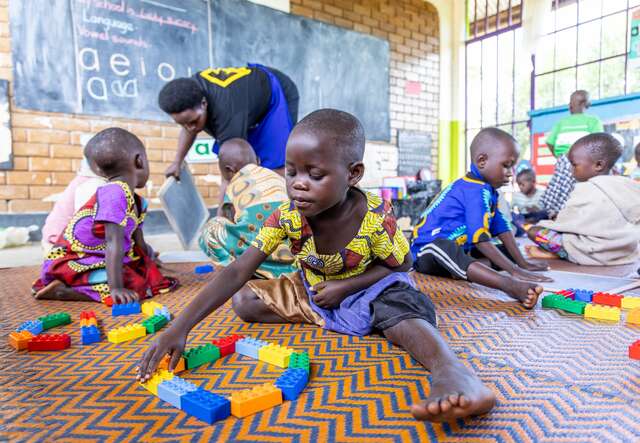
One example is the IRC’s learning through play initiative for children in refugee settings, which delivered significantly stronger results than the average humanitarian education intervention—improving social-emotional learning fourfold and doubling numeracy skills over the course of a school year.
At a cost of $40 per child, and based on comparisons with other education interventions, this approach could reach up to six times as many children while delivering greater impact per dollar spent.
The IRC’s learning through play initiative is proven to help build essential life skills, improve mental health and resilience and encourage a love of learning.
Photo: Derrick Taremwa for the IRC
Another example is the IRC’s simplified approach to treating malnutrition, which streamlines treatment for acute malnutrition. It cuts costs by more than 20 percent compared to the standard protocol, while remaining equally effective in terms of recovery outcomes for malnourished children.
In today’s funding climate, cost-effectiveness can no longer be optional or anecdotal. Donors, governments, and implementers must systematically use evidence to prioritize programs that deliver the greatest impact for the greatest number of people.
2. AI could reduce vaccine delivery costs by 15-25% in conflict zones
Roughly 75 percent of countries with humanitarian appeals have not conducted a census in over a decade, even as conflict, displacement, and climate change reshape populations. While no replacement for frontline workers, AI and data integration can help close this gap.
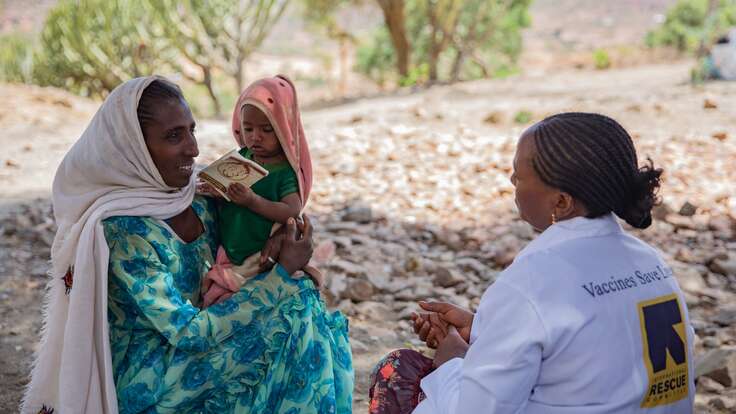
Building on the IRC’s success with REACH, an IRC-led consortium funded by GAVI that has delivered 30 million vaccine doses to children in conflict settings in six African countries, Airbel is developing a tool that combines high-resolution satellite imagery with AI-powered route planning.
By using real population distribution data rather than outdated estimates, the tool could identify 10 to 20 percent more overlooked children—and deliver vaccine doses to them at a cost of 15 to 25 percent less per child.
The IRC’s REACH program has provided over 30 million vaccine doses to children in humanitarian and conflict-affected settings—namely in Chad, Ethiopia, Somalia, Nigeria, South Sudan, and Sudan.
Photo: Martha Tadesse for the IRC
3: Using data to provide aid, before a disaster strikes
Humanitarian aid has long been designed to respond after disasters strike. But when funding is scarce, reacting late is both more expensive and less effective.
The IRC’s Follow the Forecast approach pairs predictive data (such as long-range weather forecasts) with vulnerability data (such as household economic data) to more accurately predict where crises will hit and what the impact on humanitarian need will be. This real-time vulnerability analysis triggers assistance before crises peak. By acting earlier, families can protect livelihoods, reduce losses, and avoid even deeper humanitarian needs.
This approach is impossible without flexible funding, which allows agencies to respond to emerging risks. With aid funding plummeting, deciding where and when to deploy remaining resources becomes a strategic imperative.
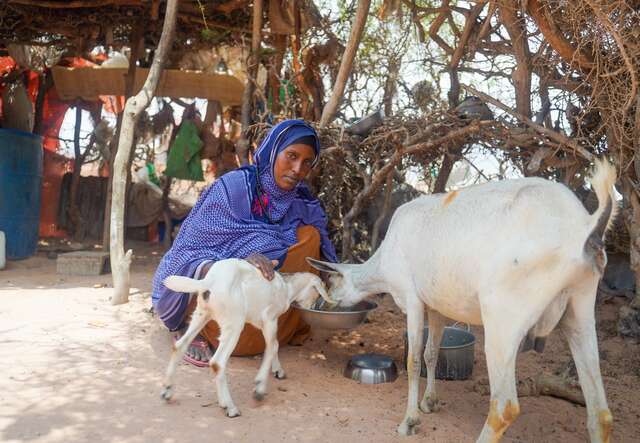
Fadumo received anticipatory cash assistance which helped her family and livestock survive the drought in Somalia’s Mudug Region.
Photo: Mohamed Maalim for the IRC
4. Closing the distance to care
Distance remains one of the most overlooked drivers of failure in humanitarian delivery. Many clients live miles from the nearest health facility, forcing them to navigate conflict, harsh weather, and long distances just to reach basic care. Children living farther from treatment centers arrive sicker and are nearly 50 percent more likely to drop out of care, even when effective treatment exists.
Getting services closer is critical but complex, and models that move products and services closer to clients still lag behind the scale of need.
To address this, Airbel is testing new partnerships with private-sector distributors to shorten supply chains and move essential services closer to clients, particularly in remote or conflict-affected areas where public systems struggle to operate at scale.
In Uganda, for instance, the IRC is working with a local distributor to test the use of smart logistics to deliver medical supplies efficiently to rural areas— increasing impact without increasing cost.
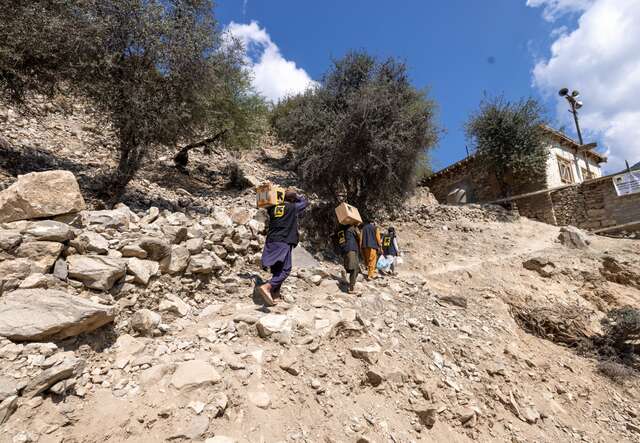
Health workers from the IRC’s mobile health and nutrition team deploy to Afghanistan’s Kunar province to assess health needs and provide health services in a village affected by a deadly earthquake.
Photo: Abdul Khaliq Sediqi for the IRC
5. The next humanitarian breakthrough might come from the private sector
While public aid budgets are shrinking, impact investing is expanding rapidly, now exceeding $1.5 trillion in global assets and powering a growing market of companies developing scalable solutions.
The IRC’s new humanitarian impact investing fund, Airbel Ventures, is designed to accelerate the entry and scale of breakthrough technologies in crisis-affected communities. The fund will invest in companies developing innovative and scalable products for crisis settings, such as solar-powered connectivity for health clinics.
Unlike traditional grants, Airbel’s model recycles returns to fund future innovation, creating multiple cycles of impact per dollar invested. Its first investment is in Signalytic, a company providing low-cost solar devices in Africa that ensure reliable electricity and connectivity for remote health facilities.
The landscape of global humanitarian aid is evolving, allowing us to innovate, test and scale ways to build a smarter, stronger, and more resilient system.
Airbel Impact Lab is the research and innovation arm of the International Rescue Committee. It designs, tests and scales evidence-based solutions that improve outcomes for people affected by crisis, ensuring that scarce resources deliver the greatest possible impact.
More from the IRC
The International Rescue Committee has over 90 years of experience helping people affected by crisis in more than 40 countries to survive, recover and rebuild their lives. We also help refugees and displaced people resettle and integrate into new communities in the U.S. and across Europe.
Our ratings: We consistently earn top marks from charity watchdog groups for our efficient use of donor contributions and the effectiveness of our work.