Watchlist 2026
Haiti's gang violence crisis: What to know and how to help
Nearly 1.5 million Haitians have been forced from their homes—here’s what you need to know.
Nearly 1.5 million Haitians have been forced from their homes—here’s what you need to know.
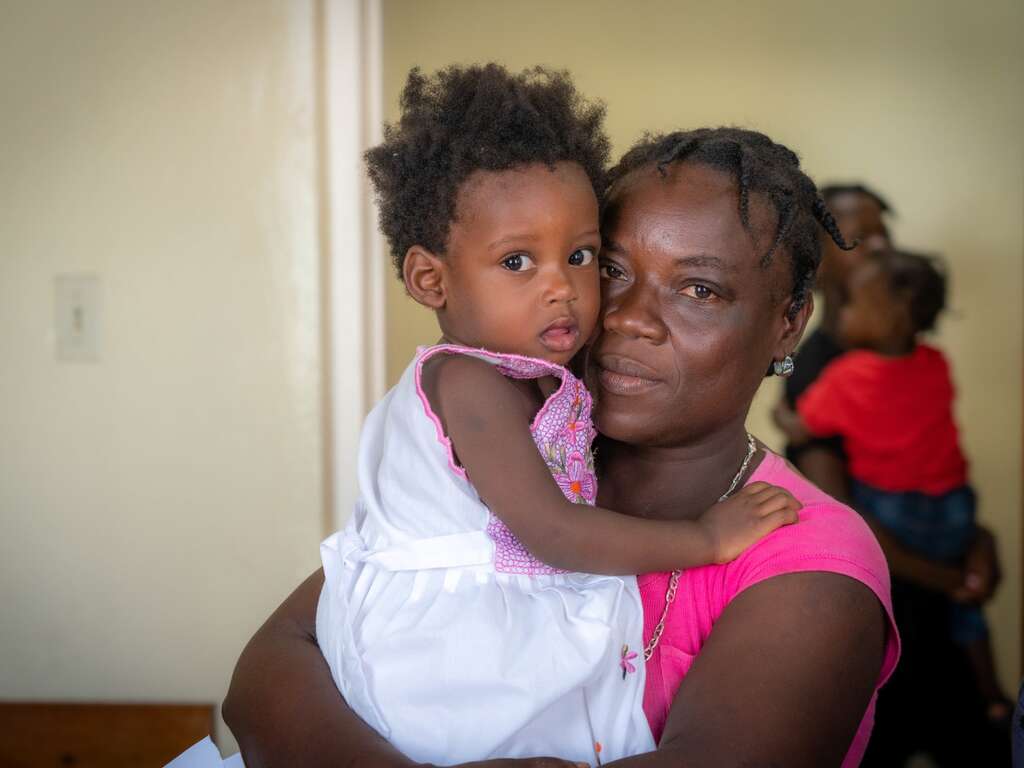
Haiti is facing one of the world’s most severe humanitarian crises. Armed gangs now control much of the country, driving widespread violence, hunger and displacement—while humanitarian funding continues to fall short.
The International Rescue Committee’s (IRC) Emergency Watchlist warns that conditions for millions of Haitians are likely to worsen in 2026 unless urgent action is taken.
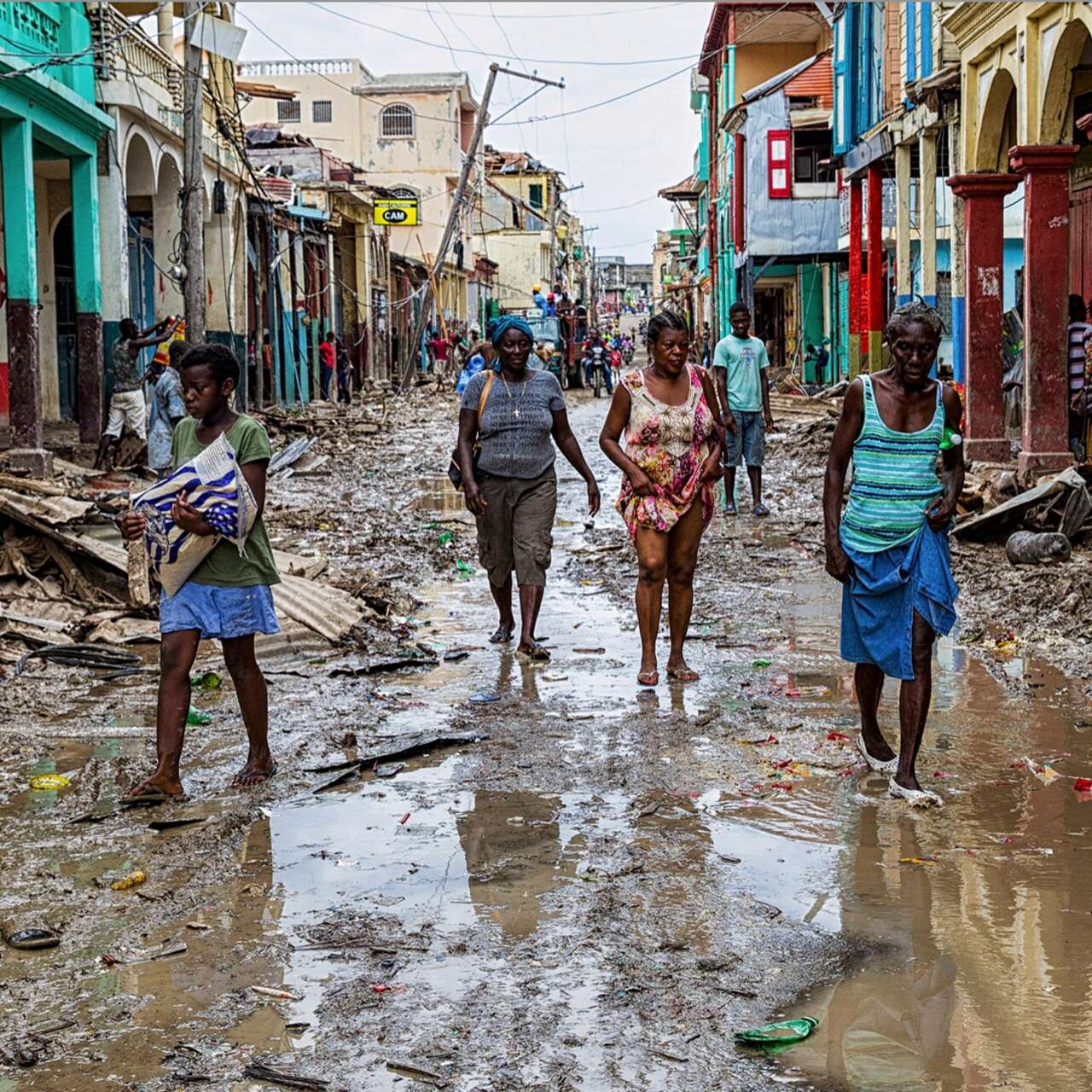
Haiti descended into political chaos following the assassination of President Jovenel Moïse in 2021. Governmental instability and deep economic hardship have allowed armed gangs to exploit the resulting power vacuum. Today, gangs control nearly all of Port-au-Prince, Haiti’s capital city, and are expanding their reach outward.
Armed groups compete violently for territory, showing little regard for civilian lives. As gang control spreads across northern and western Haiti, the humanitarian crisis has deepened, leaving 6.4 million people—more than half of Haiti’s entire population—in need of humanitarian support.
Haiti’s cycle of deadly violence and displacement shows no sign of stopping. Gang attacks on the rural farming community of Kenscoff displaced over 2,600 people in September 2026. Tragically, 50 people were kidnapped and at least 47 were killed in these attacks.
Haitian authorities have struggled to regain control, and internationally supported attempts to restore order have consistently failed.
Haitian civilians face extreme danger as armed gangs use violence, extortion and kidnapping to profit from the country’s instability. Over 1,400 people were killed between April and June 2026 alone.
With no end to the violence in sight, and dwindling aid budgets, Haitian civilians are increasingly exposed to harm, hunger and displacement.
Armed gangs control an estimated 80-90% of Port-au-Prince and are expanding to other parts of Haiti.
In October 2025, the United Nations authorized a new “gang suppression force” in an effort to improve Haiti’s security crisis. However, previous international support missions have failed: a 2024 stabilization effort achieved little as it was underfunded and underequipped. Now as troops begin to arrive in April 2026 for a new intervention, increased clashes between gangs and security forces could drive higher levels of harm if civilians are caught in the crossfire.
Gangs in Haiti are using sexual violence to systematically consolidate control and strike fear in communities. Violence against women and girls is drastically escalating. In 2025 alone, 8,000 cases of gender-based violence were recorded—a 25% rise over the previous year.
Haiti has witnessed a 1,000% increase in sexual violence against children since 2023.
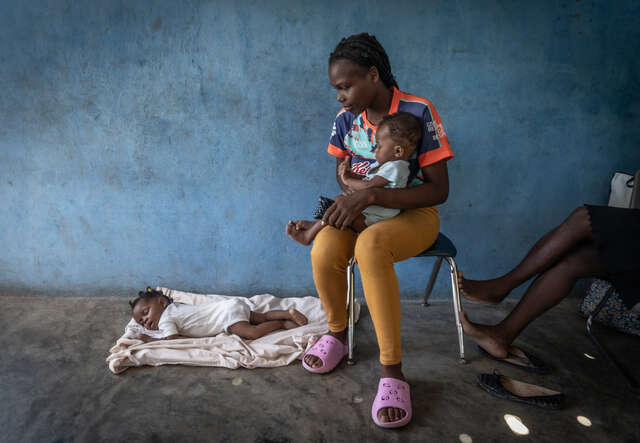
Children face increased risk as forced gang recruitment surges. The U.N. now assesses half of all gang members to be children, with a 200% rise in recruitment in 2025. Many children are coerced into joining armed groups as families lose access to safety, schooling and basic services, placing an entire generation at risk.
As gang violence forces civilians to flee their homes, displacement in Haiti has reached record levels. Nearly 1.5 million people, over 10% of the population, have been driven from their homes, and nearly half are children. An IRC survey conducted in December 2025 found that only 5.5% of respondents live in their homes while the overwhelming majority—73%—felt unsafe where they currently slept.
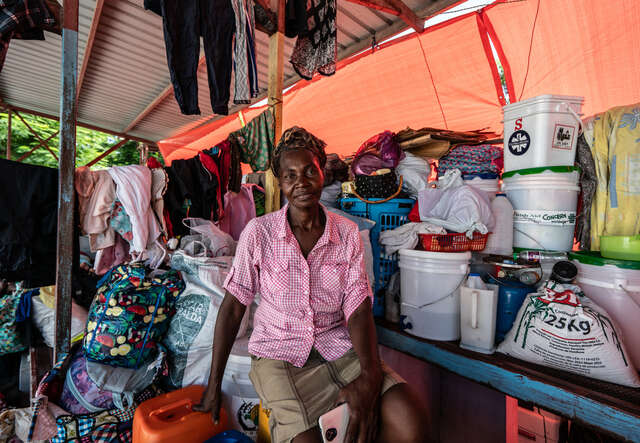
With many forced to flee with little more than they can carry, people are seeking refuge in newly established displacement camps with limited access to food, clean water and health care.
The consequences are dire: over half of the population, 5.8 million people, do not have enough to eat, with inadequate rains caused by the El Niño climate pattern threatening to drive even more people into crisis levels of hunger. In some displacement sites, conditions are so extreme that families face the daily risk of starvation.
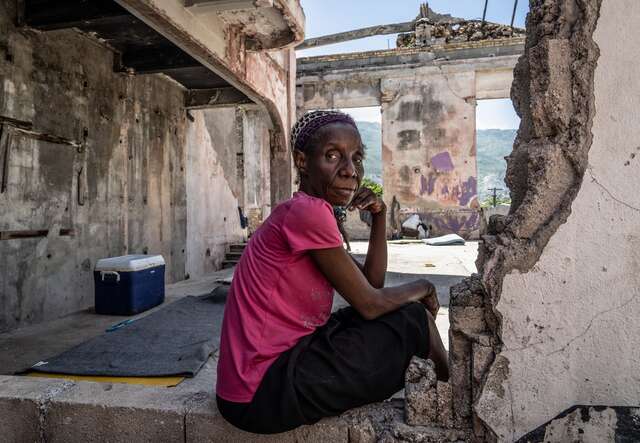
An IRC assessment of 1,243 households in three of Haiti’s most crisis-affected regions found that the collapse of public services is compounding the country’s humanitarian crisis at every level.
More than a third of households are not treating their drinking water, raising the risk of cholera and typhoid outbreaks in communities already stretched beyond capacity. Meanwhile, three in four households reported being unable to afford health services, driving preventable deaths from treatable conditions.
“Public services in many areas have collapsed under gang rule, leaving people with limited or no access to clean drinking water, food, medical care and education,” warns Emergency Country Director for IRC Haiti, Alice Ribes.
“Even public services that remain available are largely inaccessible either due to costs–with nearly 50% of the population surviving on less than $3 a day–or serious safety concerns, especially for women and children.”
Six in ten households don’t have their children in school—not because schools are closed, but because parents fear their children will be kidnapped, caught in crossfire or forcibly recruited on the way there.
The humanitarian crisis in Haiti has reached a breaking point. Yet, the country’s humanitarian response plan is among the least funded in the world. By the end of 2025, only 24% of the necessary funding had been secured, meaning that 1.7 million could be left without critical humanitarian services, including food aid, health care and protection services.
Ongoing violence—and the constant threat of climate-driven disasters such as hurricanes or earthquakes—could rapidly worsen conditions for families already struggling to survive under gang control at a time when funding cuts have left aid capacity at its lowest.
Meanwhile, the Trump administration has taken steps to reduce protections for Haitians living in the United States, including by cutting Temporary Protected Status (TPS) for Haiti. The government attempted to terminate TPS for Haiti in February 2026 but faced a legal challenge that temporarily blocked the termination. The US Supreme Court issued a decision on the case in June 2026, allowing TPS for Haiti to end effective August 7, 2026.
More than 270,000 people were forcibly returned to Haiti in 2025, with current trends signaling continued returns in the year ahead. Many repatriated Haitians arrive with nowhere to go–nearly 20% were already internally displaced before leaving the country and others remain cut off from loved ones due to expanding gang control. With minimal funding for reintegration, returnees are prime targets for harm, exploitation and even murder by gangs.
The IRC has a history of providing humanitarian support in Haiti since 2010, working with a strong network of civil society organizations and local actors to respond to the needs of communities affected by internal displacement and longstanding gang violence.
Since December 2022, our services have focused on expanding access to healthcare, cholera prevention for internally displaced people, child protection, cash assistance, and support for survivors of violence, including gender-based violence.
The IRC reached over 430,000 clients in Haiti in 2025.
With needs mounting and global funding retreating, urgent support is needed to reach Haitians.
The International Rescue Committee has over 90 years of experience helping people affected by crisis in more than 40 countries to survive, recover and rebuild their lives. We also help refugees and displaced people resettle and integrate into new communities in the U.S. and across Europe.
Our ratings: We consistently earn top marks from charity watchdog groups for our efficient use of donor contributions and the effectiveness of our work.
Get connected: Follow the IRC on Instagram, LinkedIn, Facebook, Bluesky and X.
Stay informed: Learn more about the world’s most pressing crises and what the IRC is doing to help.