Refugees in America
Refugees are people who have fled their home country due to war, persecution, or political upheaval. Some eventually return when it’s safe to do so; others stay in temporary refugee settlements or integrate into nearby countries offering asylum, while a tiny fraction—usually one percent or less—resettle in a third country, such as the United States.
Sweeping changes to refugee resettlement have dramatically departed from the long-running, bipartisan tradition of welcoming the most vulnerable refugees, which has been a key aspect of American humanitarian leadership. Since 2025, refugee resettlement has been suspended and then reactivated with a refugee admissions cap that has prioritized Afrikaners from South Africa. Meanwhile, new travel bans have been implemented, blocking the admission of people from several countries, including refugees who have fled danger and persecution.
Support systems that helped refugees rebuild their lives and contribute to their new communities across the U.S. have been eliminated, and refugees who have already passed intensive vetting procedures are being subjected to detention and the re-determination of their refugee status.
These policies aren’t just separating families and leaving the world's most vulnerable people stranded; they’re also eroding trust, destabilizing American communities and workplaces, costing the U.S. billions in economic contributions, wasting taxpayer dollars and government resources and undermining essential services that all Americans rely on. The human cost is immeasurable, and the economic repercussions affect every community across the country.
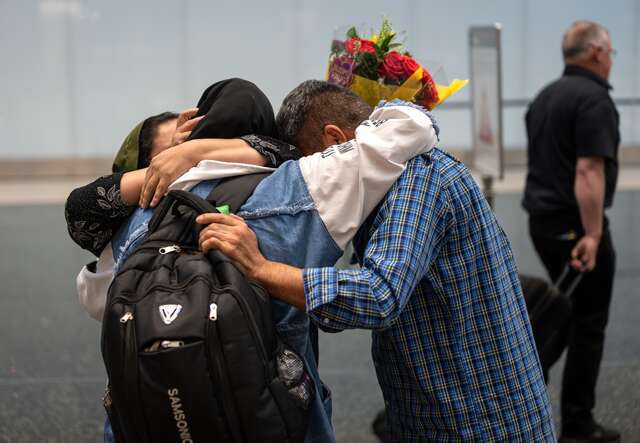
January 20, 2025: The U.S. Refugee Admissions Program (USRAP) was suspended. During the administration's first week in office, the entire refugee resettlement program came to a screeching halt. Thousands of refugees who had already been thoroughly vetted and approved, and were set to travel to the United States were suddenly left in limbo. Flights for more than 10,000 refugees were canceled overnight, families were separated across continents, and Afghan allies who had risked everything to support U.S. missions were stranded.
January 24, 2025: Stop work orders were received by resettlement agencies. Resettlement agencies were ordered to stop providing initial and longer-term integration services to refugees who had recently arrived in the U.S. This left over 22,000 refugees without access to critical services including help to locate safe housing, healthcare and education for their children, workforce development programs, and English classes, among other services. When the IRC received the stop-work order, we were actively assisting nearly 6,000 clients within their first 90 days of arrival—the most critical period for successful resettlement.
February 7, 2025: Executive order on South Africa was issued. The order provides an exception to the refugee resettlement suspension, prioritizing the admission of Afrikaners from South Africa who the US government determines are “victims of unjust racial discrimination.” The first arrivals of resettled Afrikaners began three months later in May 2025.
February 26, 2025: Resettlement agency agreements were terminated. The administration abruptly ended federal contracts (called “cooperative agreements”) with resettlement agencies nationwide, effectively dismantling the infrastructure that had helped refugees integrate into American communities for decades. Organizations that had spent years building relationships with local employers, schools, and healthcare providers were forced to shutter services and lay off hundreds of workers, many of them former refugees themselves.
Although the administration eventually reinstated these cooperative agreements a few months later under revised terms, the interruption has inflicted lasting damage on the networks that underpin successful resettlement.
April 20, 2025: First 90-day report on restarting the resettlement program was due. The executive order that suspended the USRAP requires a report be provided to the President every 90 days on whether and how to restart the program. No report on the program has been published publicly.
June 4, 2025: A new travel ban was issued. The ban blocks people from twelve countries from entering the U.S. and partially restricts people from an additional seven countries, all on the basis of their nationality. While it was not initially clear from its wording whether the ban also blocked refugees, the administration has interpreted it to bar refugees from these countries. Many of the banned countries are at risk of new or worsening humanitarian emergencies, including Afghanistan, Chad, Haiti, Myanmar, Somalia, Sudan, and Yemen.
July 4, 2025: “One Big Beautiful Bill Act” was adopted. The legislation immediately eliminated longstanding eligibility of resettled refugees and people granted asylum from receiving food assistance through SNAP and cut access to healthcare and other critical support services that had helped recently resettled refugees recover and become self-sufficient.
September 30, 2025: Presidential Determination on refugee admissions for fiscal year 2026 was due. Each year, in consultation with Congress, the President must determine the number of refugees who can be resettled. Before leaving office, President Biden set the refugee admissions level at 125,000 for fiscal year 2025.
October 30, 2025: The 2026 Presidential Determination on refugee admissions was published. It set the lowest ever resettlement cap in the history of USRAP. The 7,500 resettlement slots made available are to be “primarily” allocated to Afrikaners from South Africa.
October 31, 2025: Food assistance for newly arrived refugees through SNAP officially ended under new government guidelines from the “One Big Beautiful Bill Act”.
November 21, 2025: A new immigration memo paused processing of green card applications by refugees. It also ordered DHS to potentially subject families admitted during the prior administration to redetermination of their refugee status.
December 16, 2025: The June 4 travel ban was widened. It places total entry bans on citizens of 19 countries and people with Palestinian Authority-issued travel documents and partial restrictions on nationals of 20 countries.
January 9, 2026: Operations are launched to re-review and potentially terminate the protection of previously vetted refugees who arrived through USRAP and did not yet have permanent residence. Dozens of refugee families and individuals following required legal processes to apply for their green cards were detained and transferred away from their homes and communities.
May 21, 2026: The refugee admissions cap for 2026 was increased by 10,000. The entire increase was allocated to Afrikaners from South Africa while broader refugee admissions remain severely restricted.
August 2026: USCIS releases new statistics showing only 265 refugee green card applications processed in 2026, a 99% decrease compared to the first half of 2025. Now, wait times for refugee green cards have tripled to more than 29 months.
October 1, 2026: Eligibility for healthcare coverage for most refugees through Medicaid and the Children’s Health Insurance Program (CHIP) set to end under the “One Big Beautiful Bill Act”.
The Trump administration announced the refugee cap for fiscal year 2027 at 17,500. The administration will primarily resettle Afrikaners from South Africa and did not allocate resettlement slots to refugees who fled danger from anywhere else in the world.
These policies have created a humanitarian crisis both within the United States and abroad. Families who spent years navigating the rigorous refugee screening and security vetting process—which is already the most extensive vetting system for any group entering the United States—now face the prospect of being detained and subjected to yet more interviews to decide whether the government will now cancel their refugee status.
The general resettlement suspension impacts nearly all refugees, apart from Afrikaners, including unaccompanied refugee children, Afghans who supported the U.S. mission, religious minorities in Iran, survivors of torture, LGBTQI+ refugees, and other refugees with U.S. family members and private sponsors awaiting their arrival.
Settling in and contributing to the U.S. has been made even more difficult for refugees by recent legislation passed by Congress. The “One Big Beautiful Bill Act” (H.R.1), a massive funding-related bill that was signed into law in July 2025, restricts access to federal benefits for refugees and other newcomers with lawful immigration status. Under this legislation, newly arrived refugees are no longer eligible at the federal level for Medicaid, the Children’s Health Insurance Program (CHIP), Affordable Care Act subsidies, Medicare, and SNAP.
Suspending refugee resettlement is economically disastrous. The data tells a clear story: from 2005 to 2019, refugees and asylees contributed $123.8 billion in net fiscal benefit to the United States. They generated $581 billion in revenue, which far exceeded the $457.2 billion in services they received. In 2023 alone, refugees' contributions to the US economy included:
Immigration policy restrictions such as suspending refugee resettlement, imposing the 2025 travel ban and ending Temporary Protected Status and humanitarian parole for several countries could leave the U.S. with 4.7 million fewer workers by 2035 than previously projected. The consequence: an estimated $4.2 trillion in lost economic output and $510 billion in added federal debt.
America faces critical workforce shortages across multiple sectors. Refugees fill essential roles in healthcare, childcare, agriculture and manufacturing which are industries that keep American communities functioning. In 2020, an estimated 314,000 U.S. healthcare workers were refugees but they don't just fill critical positions; they also create new jobs, start businesses at higher rates than native-born Americans and breathe new life into struggling communities. In 2023, an estimated 178,000 refugee entrepreneurs generated $6 billion in income.
Beyond economics, refugees represent the best of American values. They are teachers, nurses, business owners, and community leaders who see America not just as a destination, but as home. Their contributions extend far beyond what can be measured in tax revenue or GDP—they strengthen the cultural and social fabric of American communities.
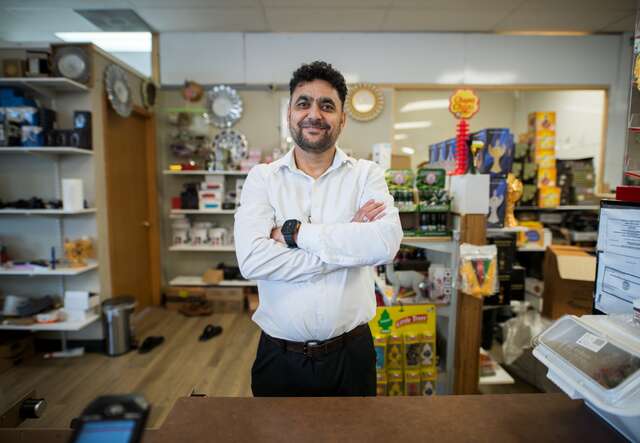
Even amidst this restrictive and exclusionary policy landscape, refugees continue to demonstrate remarkable resilience. Stories emerge daily of refugees who are starting businesses that serve other Americans, mentoring young people in their communities, and rebuilding their lives with extraordinary determination.
Yet for every success story, there are countless others who have been left behind by this administration: parents separated from children, Afghan interpreters forced into hiding, and vulnerable people trapped in dangerous situations with no hope of reaching safety.
The IRC continues to support thousands of impacted refugee clients across the United States. We ensure that people understand their rights and have access to available services, including workforce development, health, and education, to rebuild their lives and regain self-sufficiency; however, these programs are under strain and risk being shuttered entirely.

The US resettlement program doesn’t just affect refugees—it also impacts American communities, local economies, and reflects our nation's core values. It's time to fully restore the refugee resettlement program and honor our pledge to those we have committed to protect by continuing America's leadership in refugee resettlement.
Call on the Trump administration to fully restore the refugee resettlement program, increase the refugee cap and regional allocations for fiscal year 2027 and rescind the travel ban. You can also ask the administration to reconsider the re-review and unnecessary re-vetting efforts that are retraumatizing refugee communities across the United States. Protecting due process, honoring humanitarian commitments, and safeguarding the stability of close‑knit American communities are essential to who we are as a nation.
Contact your members of Congress to share your support for refugees and ask that they restore access to SNAP, CHIP, Medicaid and other critical services that support refugees in their first months in the U.S.
Financial contributions are key for trusted organizations like the IRC to ensure we can continue providing essential services to refugee families already in the United States who are working to rebuild their lives and contribute to U.S. communities.
You can volunteer at a local resettlement agency; become an English tutor, or a mentor to a family; donate money, furniture and household items; educate other people about refugees; and employ or encourage local businesses to hire refugees.
Ways to help right now:
*Name changed for confidentiality.