Emergency Watchlist
What are the most pressing global crises in 2026?
Each year, the International Rescue Committee’s (IRC) Emergency Watchlist identifies the countries at greatest risk of new or worsening humanitarian emergencies and highlights the world’s most pressing crises. The 2026 Watchlist and the Midyear Watchlist Update sound the alarm on a New World Disorder—a dangerous divergence in which humanitarian needs are surging while global support is collapsing.
Read on to learn about five of the most urgent global problems facing the world in 2026 and how we can address them.
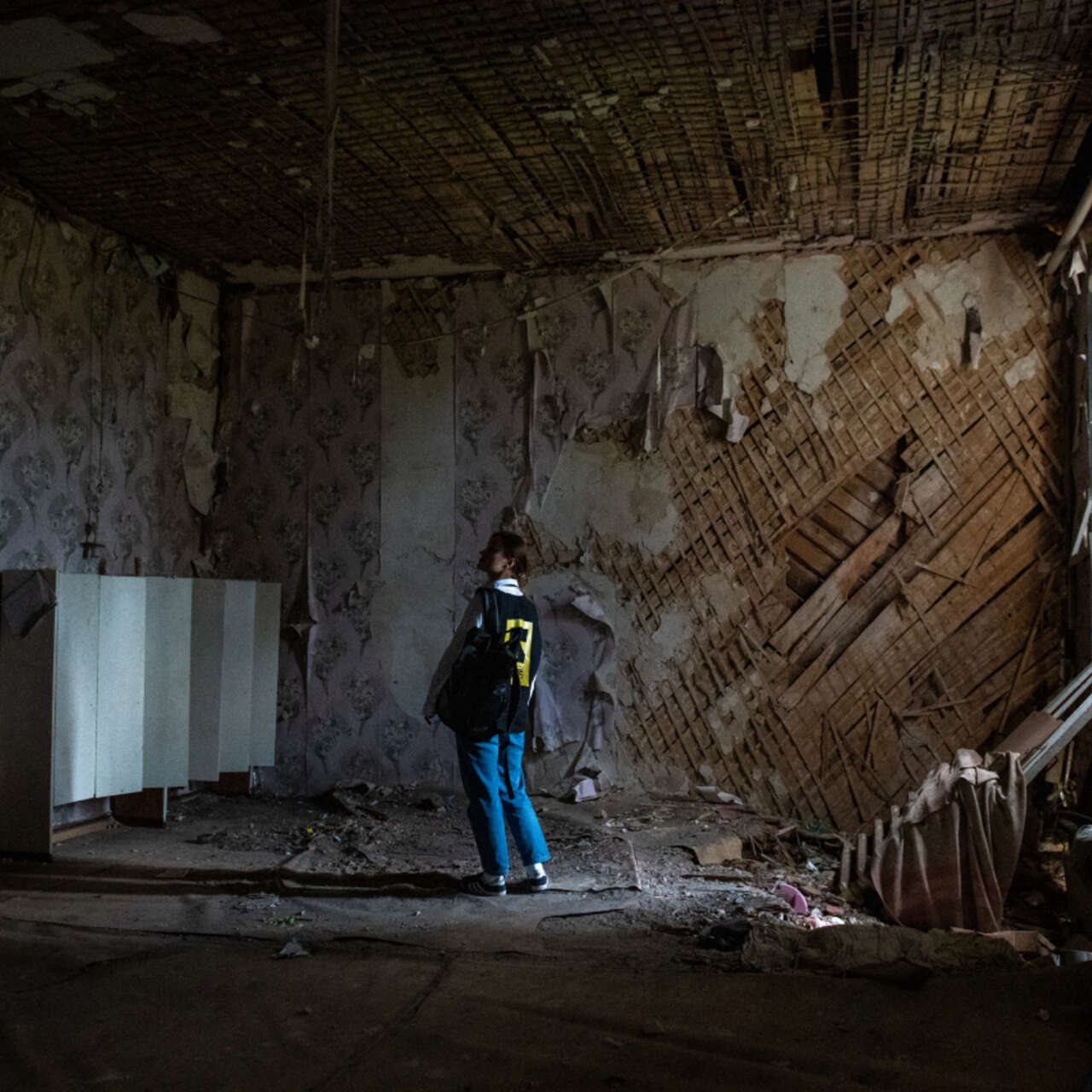
Armed conflict surged to historic highs in 2025. The world is experiencing more active wars than at any point since World War II, with one in seven people globally living with the threat of armed conflict. Wars are more widespread, more persistent and deadlier than in recent decades, driving unprecedented humanitarian fallout.
This brutal trend is likely to continue as conflicts are lasting longer, while diplomatic solutions like ceasefires are becoming more difficult to achieve. This dangerous “New World Disorder” is characterized by shifting alliances and transactional deal-making which have replaced diplomacy and cooperation towards shared goals.
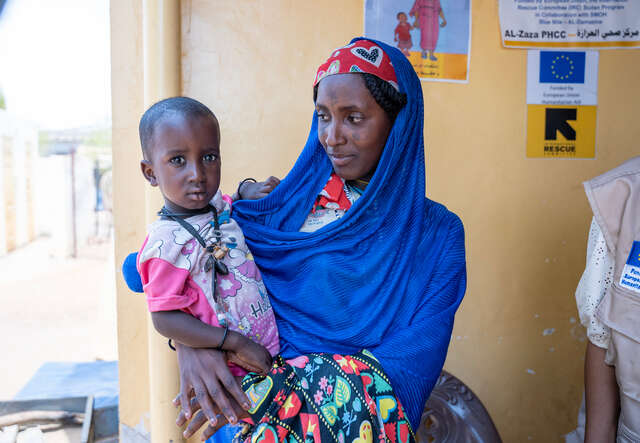
The United States, historically the single largest global donor, has slashed support for humanitarian aid under the new administration. By March 2025, 83% of USAID programs were cancelled, including most funding for maternal and child health, malaria, tuberculosis, family planning and epidemic surveillance. Other major donors such as the UK, Germany and France have also cut back on their aid budgets. And these cuts came after years of aid budgets being stretched increasingly thin; just 25% of aid now goes to the fragile and conflict-affected countries on the IRC Watchlist, despite being home to 50% of people living in extreme poverty.
These cuts are deadly. An estimated 1.8 million additional deaths were projected in 2025 alone, including nearly 700,000 children under five. If funding gaps persist, as many as 14 million preventable deaths could occur by 2030.
Hunger is becoming deeper, deadlier and more concentrated in crisis-affected countries. Thirty-seven million people are now facing IPC Phase 4, the emergency level of food insecurity where families face extreme food gaps, very high malnutrition and rising deaths. This is the highest figure since 2021, and 86% of these cases are in Watchlist countries, up from 79% in 2024.
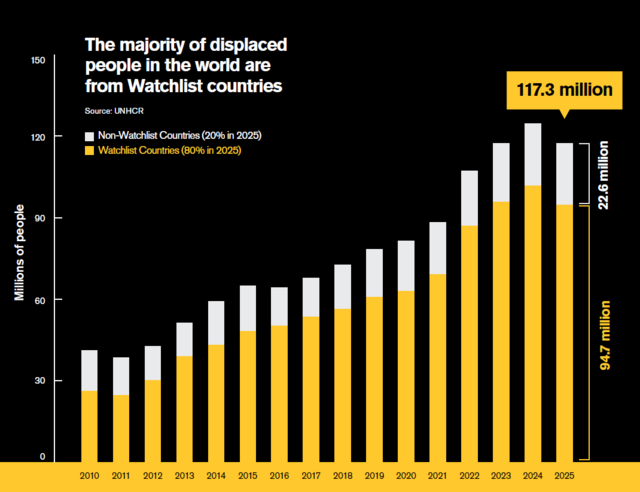
The number of people forcibly displaced worldwide reached a new peak in 2024 before dropping slightly in 2025, to 117.3 million people. Four out of five people displaced globally (80%) have been uprooted by conflict, violence or persecution in Emergency Watchlist countries.
Sudan and Gaza illustrate the speed and scale of today’s crises. Since the war began in April 2023, more than 11.8 million Sudanese have been uprooted, including 9 million displaced inside the country. In Gaza, 1.9 million people, nearly the entire population, are now displaced. Most are women and children, many forced to flee multiple times. The longer that conflicts remain unresolved and civilians are put in harm’s way, the more people are forced to flee their homes each year.
Natural shocks like flooding and droughts are increasing in both frequency and severity. For example, Afghanistan is enduring its worst drought in 30 years, having recorded less than half of its usual rainfall this past winter. These conditions pose a direct threat to both food security and economic stability in a country where over 80% of the population depends on agriculture for their livelihoods. Yet, support for people living through the climate crisis is limited, with only a tiny fraction of climate funding going to climate adaptation programs.
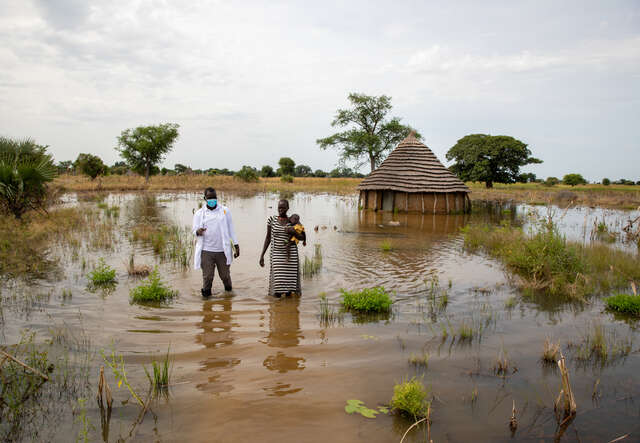
Reading this list might feel somewhat overwhelming given the size and scale of the crises outlined, but these problems have solutions.
Read the full Emergency Watchlist to learn the IRC’s recommendations for this disordered world we are facing. These are the IRC's calls to action for individuals, governments, policymakers on what needs to happen now to protect people caught in the midst of these crises and prevent further global disorder. Recommendations include investing in proven, high-impact solutions – for example, a simplified approach to treating childhood malnutrition - as well as forward-looking policy recommendations to equip peacemakers to resolve conflicts.
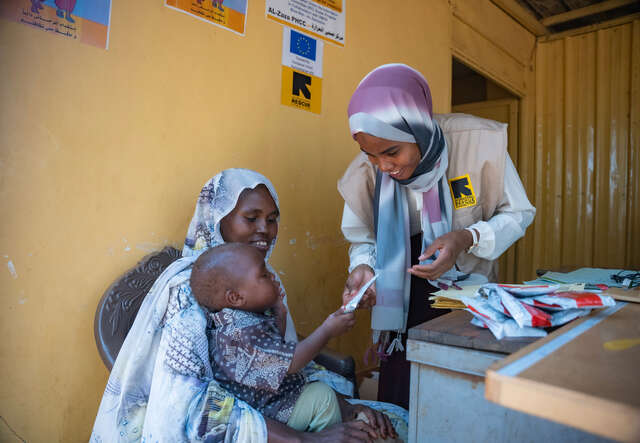
The International Rescue Committee (IRC) helps people affected by humanitarian crises to survive, recover and rebuild their lives. We deliver lasting impact by providing health care, helping children learn, and empowering individuals and communities to become self-reliant, always with a focus on the unique needs of women and girls.
Founded in 1933 at the call of Albert Einstein, we now work in over 40 crisis-affected countries as well as across the U.S. and throughout Europe.