Policy in focus
In this article:
- Which countries are affected by Trump's latest travel ban?
- Every dollar you donate can help a refugee today.
The Trump administration has enacted and expanded a new travel ban that now blocks people from 19 countries and those with Palestinian Authority-issued travel documents from entering the U.S., including family members of refugees. People from an additional 20 countries face partial restrictions and a limited ability to enter the U.S., all on the basis of their nationality.
President Trump’s first travel ban, enacted in 2017, demonstrated that sweeping bans on admissions of certain groups of people are not effective policy. Rather than being based on individualized review and assessment, such policies target entire populations and reinforce stereotypes.
The International Rescue Committee (IRC) is deeply concerned about the humanitarian consequences of this harmful ban. We continue to serve refugees, asylum seekers and other newcomers to America, including our clients in the U.S. whose loved ones will be excluded under this order with accurate information, legal representation, workforce development and other services.
On June 5, 2025, the Trump administration announced a new travel ban that went into effect on June 9, blocking individuals from twelve countries from entering the U.S. Nationals from seven other countries face significant entry restrictions. On December 16, 2025, the Trump Administration announced it would widen the ban, placing total entry bans on citizens of 19 countries and people with Palestinian Authority-issued travel documents and partial restrictions on nationals of 20 countries.
The extended ban went into effect on January 1, 2026.
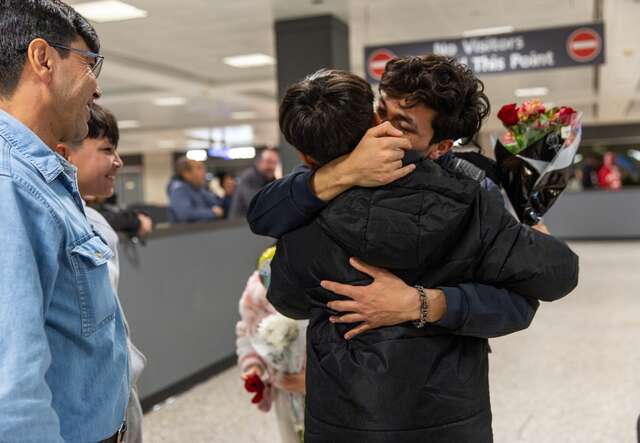
While the ban provides a few specific exceptions, it will exclude the arrival of most others from the listed countries. Since June 2025, the government has been applying the travel ban to refugees from the impacted countries and the family members of refugees and people granted asylum who are already in the U.S. There is no general waiver for urgent humanitarian circumstances.
This proclamation is having far-reaching impacts on the lives of many American families, including refugees, asylees and green card holders, seeking to be reunified with their loved ones.
At a time when conflicts in places like Ukraine and Sudan are displacing millions, the U.S. should be providing refuge—not closing its doors.
The latest travel divides affected countries into two categories of restrictions:
Countries facing full suspension of entry include: Afghanistan, Burkina Faso, Myanmar (Burma), Chad, Republic of the Congo, Equatorial Guinea, Eritrea, Haiti, Iran, Laos, Libya, Mali, Niger, Sierra Leone, Somalia, South Sudan, Sudan, Syria, Yemen and individuals with Palestinian Authority-issued travel documents.
Countries with partial restrictions and limited entry include: Angola, Antigua and Barbuda, Benin, Burundi, Côte d'Ivoire, Cuba, Dominica, Gabon, Gambia, Malawi, Mauritania, Nigeria, Senegal, Tanzania, Togo, Tonga, Turkmenistan, Venezuela, Zambia and Zimbabwe.
Fourteen of the twenty countries on the IRC’s Emergency Watchlist of countries most at risk of new or worsening humanitarian emergencies in 2026 face restrictions under the travel ban.
At a moment when the international community faces the largest refugee crisis on record, the need for resettlement and other pathways to safety is great. The ban has far-reaching impacts on the lives of many, both in the U.S. and around the world. It is a further retreat from American values, following on the heels of the Executive Order indefinitely halting refugee resettlement in the U.S.
Refugees undergo the most rigorous security vetting of any group entering the U.S., making refugee resettlement one of the safest immigration pathways.
Refugees also actively benefit the U.S. economy, contributing $581 billion in tax revenue between 2005–2019. They boast high rates of entrepreneurship and play a crucial role in filling labor gaps in fields like manufacturing, health care and transportation.
Welcoming refugees strengthens the U.S.’s role as a global leader, benefits the economy and provides a critical pathway to safety to families facing some of the toughest challenges imaginable.
The IRC remains steadfast in our commitment to serve refugees, asylum seekers and other newcomers to America, including our clients in the U.S. whose loved ones will be excluded under this order. With continued funding, the IRC can provide:
Join the IRC in our fight to help the world’s most vulnerable survive, recover and rebuild their lives.
Donate: Financial contributions are key for trusted organizations like the IRC, which deliver critical services to refugees in the U.S. and crisis-affected countries around the world.
$36 can help the IRC provide one family with information and transportation while far from home.
Our ratings: We consistently earn top marks from charity watchdog groups for our efficient use of donor contributions and the effectiveness of our work.
Get connected: Follow the IRC on Instagram, LinkedIn, Facebook, Bluesky and X.
Volunteer: Join one of the IRC’s 29 offices across the U.S.
Stay informed: Learn more about the world’s most pressing crises and what the IRC is doing to help.