International Day of Play
How play helps children affected by conflict and crisis
More than 400 million children affected by crisis risk losing access to safe learning and emotional support—play can help them recover and thrive.
More than 400 million children affected by crisis risk losing access to safe learning and emotional support—play can help them recover and thrive.
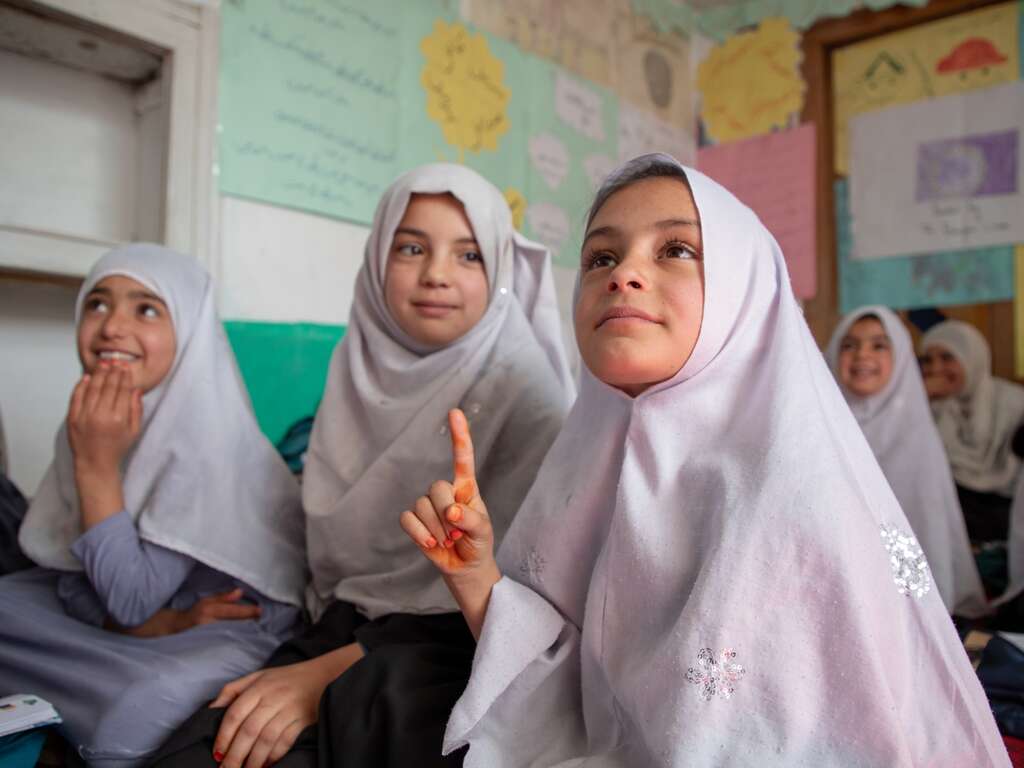
More than 400 million children living in or fleeing conflict zones are at risk of losing access to safe learning, emotional support, and opportunities to play. Conflict, displacement, hunger, and disrupted schooling can have lasting effects on children’s development and wellbeing.
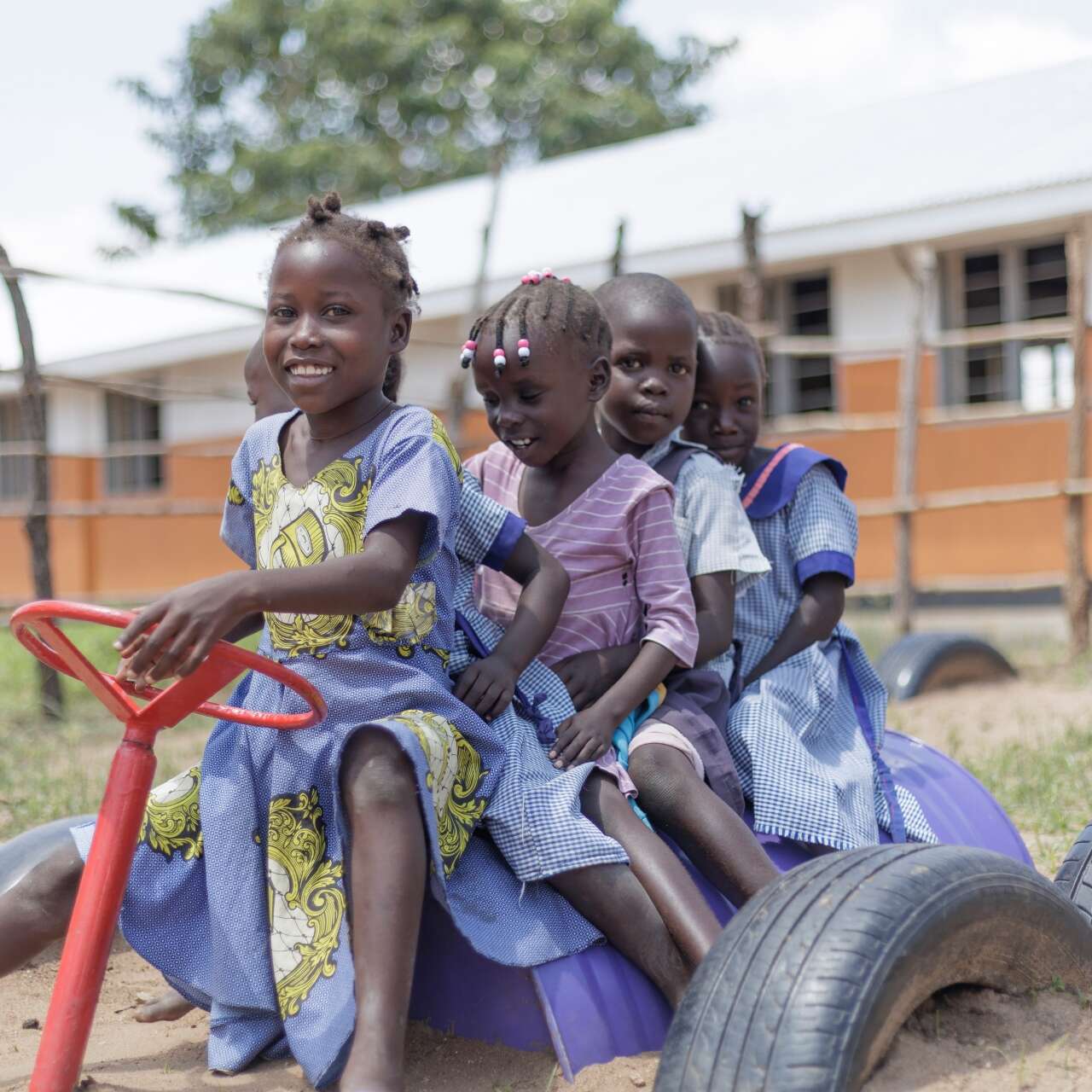
But play is not a luxury—it is a fundamental part of childhood and a powerful tool that helps children heal, learn, build resilience, and thrive.
International Day of Play, observed annually on June 11, celebrates the importance of play in every child’s life, especially for children affected by conflict and displacement.
Together, the International Rescue Committee (IRC) and the LEGO Foundation support millions of children and caregivers through playful learning programs in crisis-affected communities around the world. These programs help children continue learning, build confidence, and regain a sense of normalcy.
Play is a universal right of all children, enshrined in the United Nations Convention on the Rights of the Child and an essential part of healthy childhood development.
For the more than 400 million children affected by conflict and displacement, this right is often disrupted. Many lose access to safe spaces where they can play, learn, and simply be children.
Yet financing for education and early childhood development programs is limited. Less than 4% of aid to crisis-affected countries supports early childhood development—despite strong evidence that early investment has the highest returns.
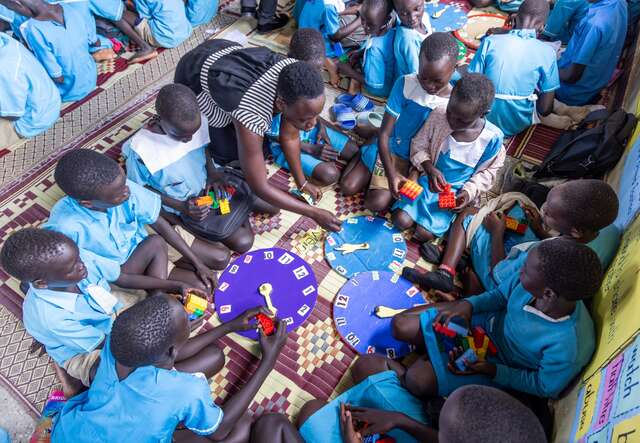
Learning through play is an active teaching and learning method in which children learn through guided, hands-on, meaningful, play-based interactions in safe and inclusive environments.
Research has identified three distinct benefits for children:
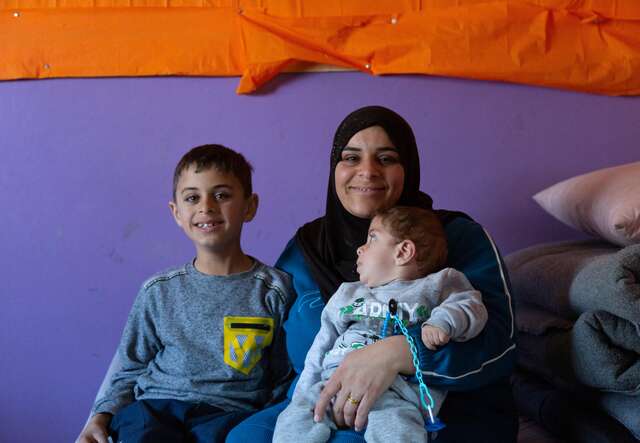
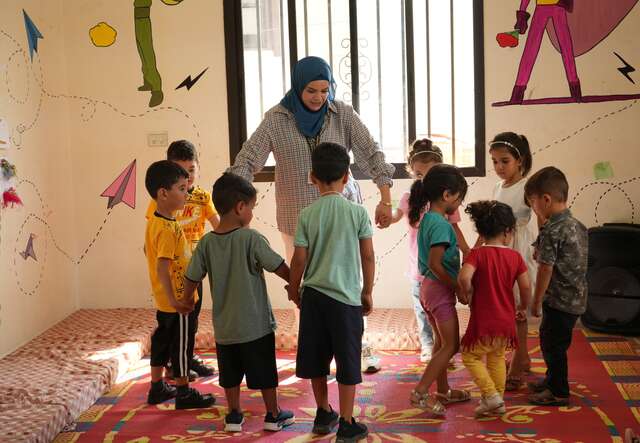
For the second time in three years, seven-year-old Houssam and his family have been displaced from their home in Lebanon. Fleeing with nothing more than what they could carry, Houssam’s family found temporary refuge in a collective shelter in Lebanon’s Bekaa Valley.
The psychological stress on Houssam and his younger brother, Wissam, is immense. His mother, Warda, told the IRC “They [Houssam and Wissam] have trauma from the war. When their father is next to them, they aren't afraid. But when their father leaves, they start getting scared of shouting and loud noises—they love peace and quiet.”
As part of the emergency response in Lebanon, IRC teams are conducting recreational activities for displaced children in collective shelters, providing a safe space for play, self-expression, and stress relief. This work reflects a continuation of the IRC’s partnership with the LEGO Foundation, building on established play-based approaches to support children’s wellbeing and recovery in emergencies.
Since 2019, the IRC and the LEGO Foundation have built and strengthened play-powered pathways to development, learning, and resilience for children living in conflict and crisis. We have supported more than seven million children across 12 countries in Africa, Asia, Latin America, and the Middle East.
Our collaboration has been deepened through the development of a new $97 million, five-year partnership to help more than five million children affected by conflict and crisis across East Africa and the Middle East learn, develop, and thrive by embedding proven play-based early learning approaches into the national systems that already reach children and families.
This partnership will build on a legacy of impact, which includes:
Play to Learn is an innovative humanitarian initiative funded by the LEGO Foundation and delivered through a partnership between Sesame Workshop, BRAC, and the International Rescue Committee (IRC). Combining engaging educational media with hands-on early learning support, Play to Learn aims to reach more than 594,000 children and caregivers in Lebanon, Syria, and Jordan through locally tailored preschool and school readiness programs, caregiver support, play-based emotional support services, and teacher training.
Play to Learn builds on the successful childhood development initiative and educational show, Ahlan Simsim to develop locally relevant learning materials and strengthens education systems so more children can access quality early learning opportunities. Independent research has shown that this approach can improve children’s language, math, and social-emotional skills, as well as caregiver wellbeing, even in crisis-affected settings where services can be difficult to deliver.
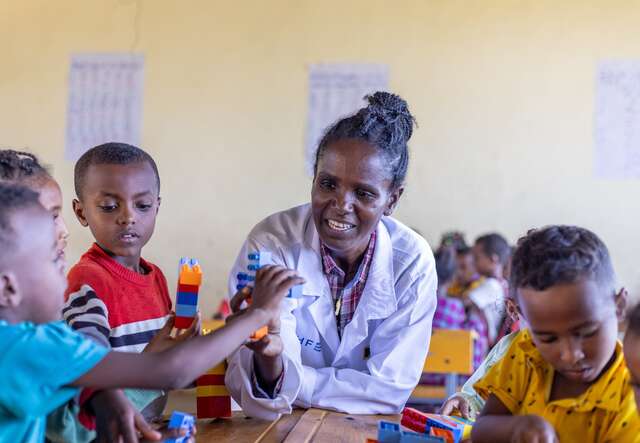
PlayMatters brings learning through play directly into classrooms across East Africa, reaching more than 980,000 young refugee and host community children in over 940 schools. In 2026, a new phase of PlayMatters has expanded services to South Sudan and scaled implementation in Uganda and Ethiopia, with a strong focus on institutionalizing learning through play within education systems. This new phase is supported by the LEGO Foundation, led by the IRC in collaboration with Plan International (PI) and War Child Alliance (WCA).
By training teachers to use hands-on, playful learning methods, the program helps children not only improve academic outcomes but also build the social-emotional skills and resilience they need to thrive—even in the most challenging circumstances.
The IRC designs playful learning programs that help children affected by crisis learn and thrive wherever they are—from classrooms and community spaces to remote and displaced settings.
Programs like Al Aire con Enrique and Dunga use storytelling, educational media, and locally adapted content to support children’s social-emotional learning across diverse contexts and languages. Accessible online, these platforms help children and caregivers continue learning and find emotional support even during crisis and displacement.
Children affected by crisis deserve safe spaces to learn, play, heal, and thrive. Your support can help the IRC provide education, emotional support, and playful learning programs that help children recover and rebuild their futures.
The International Rescue Committee has over 90 years of experience helping people affected by crises in more than 40 countries to survive, recover and rebuild their lives. We also help refugees and displaced people resettle and integrate into new communities in the U.S. and across Europe.
Donate: We consistently earn top marks from charity watchdog groups for our efficient use of donor contributions and the effectiveness of our work.
Get connected: Follow the IRC on Instagram, LinkedIn, Facebook, Bluesky and X.
Stay informed: Learn more about the world’s most pressing crises and what the IRC is doing to help.